
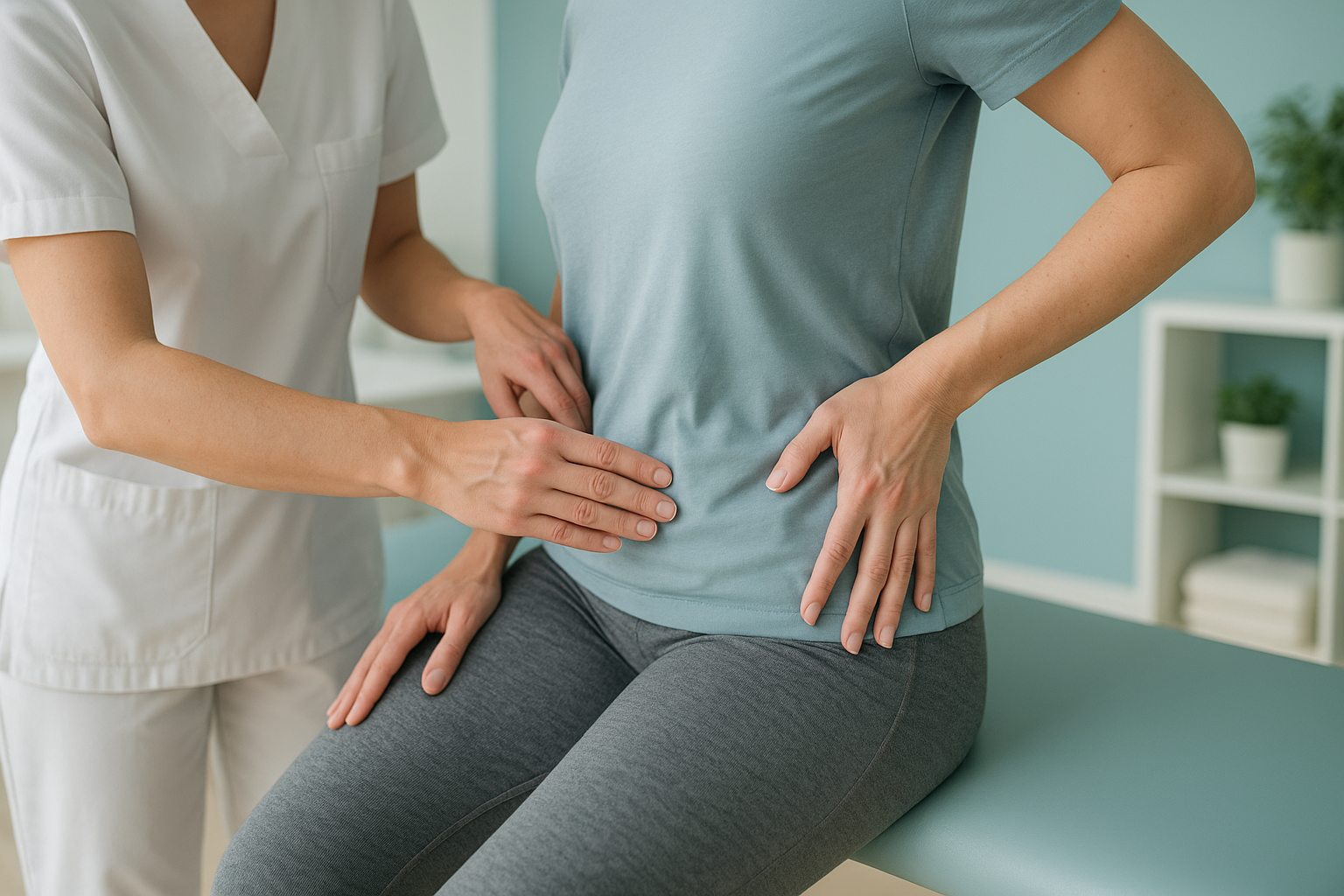
What Causes Greater Trochanteric Pain on the Side of the Hip?
Greater trochanter pain is usually caused by gluteal tendinopathy, where the tendons of the gluteus medius and gluteus minimus become irritated where they attach to the bony point on the outer hip. It is not always bursitis. Pelvic alignment, hip abductor weakness and habitual postures such as side sleeping can all contribute.
Key takeaways
- Lateral hip pain is more often tendon-related than bursa-related.
- Pelvic tilt, leg length discrepancy and hip abductor weakness are common contributing factors.
- Lying-down scans can miss alignment problems that only appear when you stand and bear weight.
- A standing whole-body image shows the pelvis, hips and legs together, revealing where load is uneven.
- ScanAlign is a diagnostic imaging clinic, not a treatment provider.
What is greater trochanteric pain syndrome?
Greater trochanteric pain syndrome (GTPS) is the modern umbrella term for persistent pain over the bony prominence on the outer side of your hip, called the greater trochanter. Clinicians used to label almost all lateral hip pain as trochanteric bursitis, meaning inflammation of the small fluid-filled sac (bursa) that cushions the area. Research now shows that the bursa is only part of the picture. In most cases, the real problem lies in the gluteal tendons.
The gluteus medius and gluteus minimus are your main hip abductor muscles. They keep your pelvis level when you walk, climb stairs or stand on one leg. Their tendons attach directly to the greater trochanter. When those tendons become overloaded, frayed or compressed, the result is gluteal tendinopathy, which is the most common cause of GTPS.
Some people also have a reactive hip bursitis alongside the tendon problem. The two conditions can overlap, which is why the broader term GTPS is now preferred.
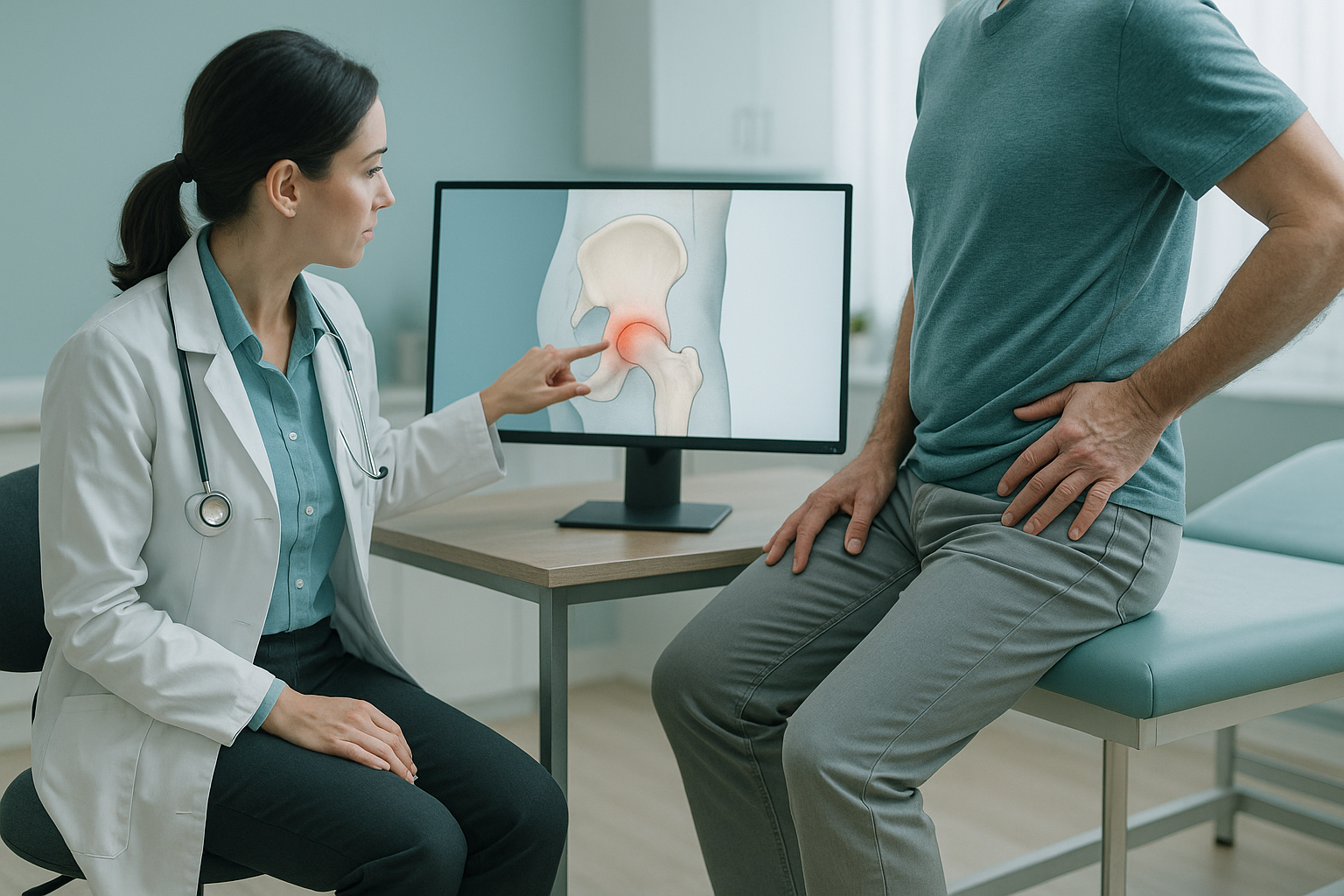
What does lateral hip pain feel like?
GTPS typically causes a deep ache on the outside of the hip. It can be sharp with certain movements and dull the rest of the time. Many people notice it most when lying on the affected side at night.
A focused ache right over the bony point on the outer hip, sometimes spreading down the outer thigh.
Pressure on the greater trochanter during side sleeping compresses the tendons and often wakes you.
Loading the hip abductors on a step puts extra demand on irritated tendons.
Weak gluteal muscles can cause your pelvis to dip on the opposite side when you walk, known as a Trendelenburg sign.
What causes greater trochanter pain?
Gluteal tendinopathy develops when the tendons are repeatedly compressed or overloaded. Several factors raise the risk.
Standing with weight shifted to one hip, crossing your legs, or sleeping on the affected side compresses the tendons against the bone.
When the gluteus medius and minimus are weak, the tendons take more strain with every step.
A lateral pelvic tilt or uneven leg lengths changes how load is distributed across each hip.
A sharp increase in walking, running or hill work can overwhelm tendons that are not conditioned for it.
How does alignment affect lateral hip pain?
Your body is a connected chain from your feet to your head. If one part is out of line, other areas compensate. A small pelvic tilt, for example, shifts more weight onto one hip. The gluteal tendons on that side work harder with every step, and over months or years that extra load can lead to tendinopathy.
The same logic applies to a leg length discrepancy. Even a modest difference can cause the pelvis to sit unevenly, compressing the tendons on one side while overstretching them on the other. This is why many people with GTPS only ever have symptoms on one side.
The difficulty is that these alignment problems are invisible on a standard lying-down scan. When you lie flat for an X-ray or MRI, gravity is removed, your muscles relax, and your pelvis may look perfectly level. Only a weight-bearing, standing image captures how your bones and joints actually line up under load.
What it shows: The pelvis, hips and legs under your full body weight, exactly as they function in daily life. Any pelvic tilt, uneven leg length or asymmetric joint loading becomes visible.
Why it matters for GTPS: You can see which side is bearing more load and whether the greater trochanter is being compressed by the iliotibial band or other structures.
What it shows: Bone structure in a gravity-free position. Good for fractures and joint surfaces, but muscles relax and the pelvis often levels out artificially.
What it can miss: Functional alignment problems. A tilt that causes daily tendon compression may not appear at all when you are lying flat.
How does a standing EOS scan help with greater trochanter pain?
An EOS scan captures your full skeleton from head to feet in a single standing image. For GTPS, this is valuable because it shows the pelvis, both hips and both legs together, under load. Your clinician can see at a glance whether the pelvis is tilted, whether leg lengths differ, and how the hip joints are positioned relative to each other.
EOS uses about 90% less radiation than a standard X-ray, around ten times less. This makes it a practical option when a whole-body view is needed.
At ScanAlign standing imaging, a specialist diagnostic radiographer acquires the scan at 19 Harley Street and a consultant radiologist reports on it. The report is shared with you and, with your consent, with any treating clinician.
Want to find out whether a standing scan could explain your lateral hip pain?
Book a free video consultationWhen MRI is the better tool: EOS shows bones, joints and alignment. If your clinician suspects a gluteal tendon tear, bursitis or soft-tissue inflammation, MRI is usually the better choice because it images tendons, muscles and fluid in detail. In many cases, both scans complement each other.
What generally helps manage greater trochanteric pain?
Treatment for GTPS is guided by what is found on assessment and imaging. ScanAlign is a diagnostic imaging clinic, so we do not provide treatment. The approaches below are widely discussed in clinical guidance and are worth raising with your GP or physiotherapist.
- Load management. Adjusting activity levels so tendons are not repeatedly overloaded, then gradually rebuilding strength.
- Hip abductor strengthening. Targeted exercises for the gluteus medius and minimus are considered central to most rehabilitation programmes.
- Postural changes. Avoiding habitual leg crossing, weight shifting and side sleeping on the painful hip can reduce tendon compression.
- Addressing alignment. If a pelvic tilt or leg length difference is identified, your clinician may factor this into your management plan.
- Have had lateral hip pain for more than three months
- Have been told imaging is "normal" but still have symptoms
- Suspect one leg may be longer than the other
- Want a full picture of your pelvis and hip alignment
- Sudden severe hip pain after a fall or trauma
- Numbness, tingling or weakness in your leg
- Loss of bladder or bowel control
- Fever alongside hip pain
If you experience any red-flag symptoms listed above, contact your GP, call 111, or go to A&E.
Frequently asked questions about greater trochanter pain
Not exactly. Bursitis is inflammation of the bursa and can be one component, but most lateral hip pain is now understood to involve the gluteal tendons as well. Greater trochanteric pain syndrome (GTPS) is the broader term that covers both tendon and bursa involvement.
Gluteal tendinopathy is a condition where the tendons of the gluteus medius and gluteus minimus become irritated, thickened or partially torn where they attach to the greater trochanter. It is considered the most common cause of GTPS.
Lying on the affected side presses the greater trochanter directly against the mattress, compressing the irritated tendons and bursa. This sustained pressure can increase pain significantly and disrupt sleep.
Yes. A lateral pelvic tilt shifts more load onto one hip, which can increase compression and strain on the gluteal tendons over time. A standing scan is one way to check whether your pelvis is level under weight.
No. ScanAlign accepts self-referrals. You can book a standing hip and pelvis scan directly without a GP or consultant letter.
EOS uses about 90% less radiation than a standard X-ray, around ten times less. This makes it one of the lowest-dose skeletal imaging options available.
EOS images bones and joint alignment, not soft tissue in fine detail. If a gluteal tendon tear is suspected, MRI is usually the better tool. EOS and MRI often complement each other, one showing alignment and the other showing tendon or muscle detail.
Duration varies widely. Some people improve within weeks with load management and exercise. Others find symptoms persist for months or longer, especially if an underlying alignment factor is not addressed.
It can contribute. Even a small difference in leg length can tilt the pelvis and alter the load on each hip. A full standing image of both legs and the pelvis is a straightforward way to check.
Pricing details are available on the ScanAlign website. You can start with a free video consultation to discuss whether a scan is appropriate for you.
Could alignment be behind your lateral hip pain?
A free video consultation with our specialist diagnostic radiographer can help you decide whether a standing scan is worth it.
Book a free video consultationSources
- Grimaldi A, Fearon A. Gluteal tendinopathy: integrating pathomechanics and clinical features in its management. Journal of Orthopaedic & Sports Physical Therapy. 2015;45(11):910-922.
- Mellor R, Bennell K, Grimaldi A, et al. Education plus exercise versus corticosteroid injection use versus a wait and see approach on global outcome and pain from gluteal tendinopathy: prospective, single blinded, randomised clinical trial. BMJ. 2018;361:k1662.
- NHS. Hip pain in adults. nhs.uk. Available at: https://www.nhs.uk/conditions/hip-pain/
Written by Abbas Dhami (Specialist Diagnostic Radiographer)
This page is general information and not a diagnosis.
ScanAlign is the trading name of CoreMed Solutions Ltd and operates under The Harley Street Hospital's CQC licence.