
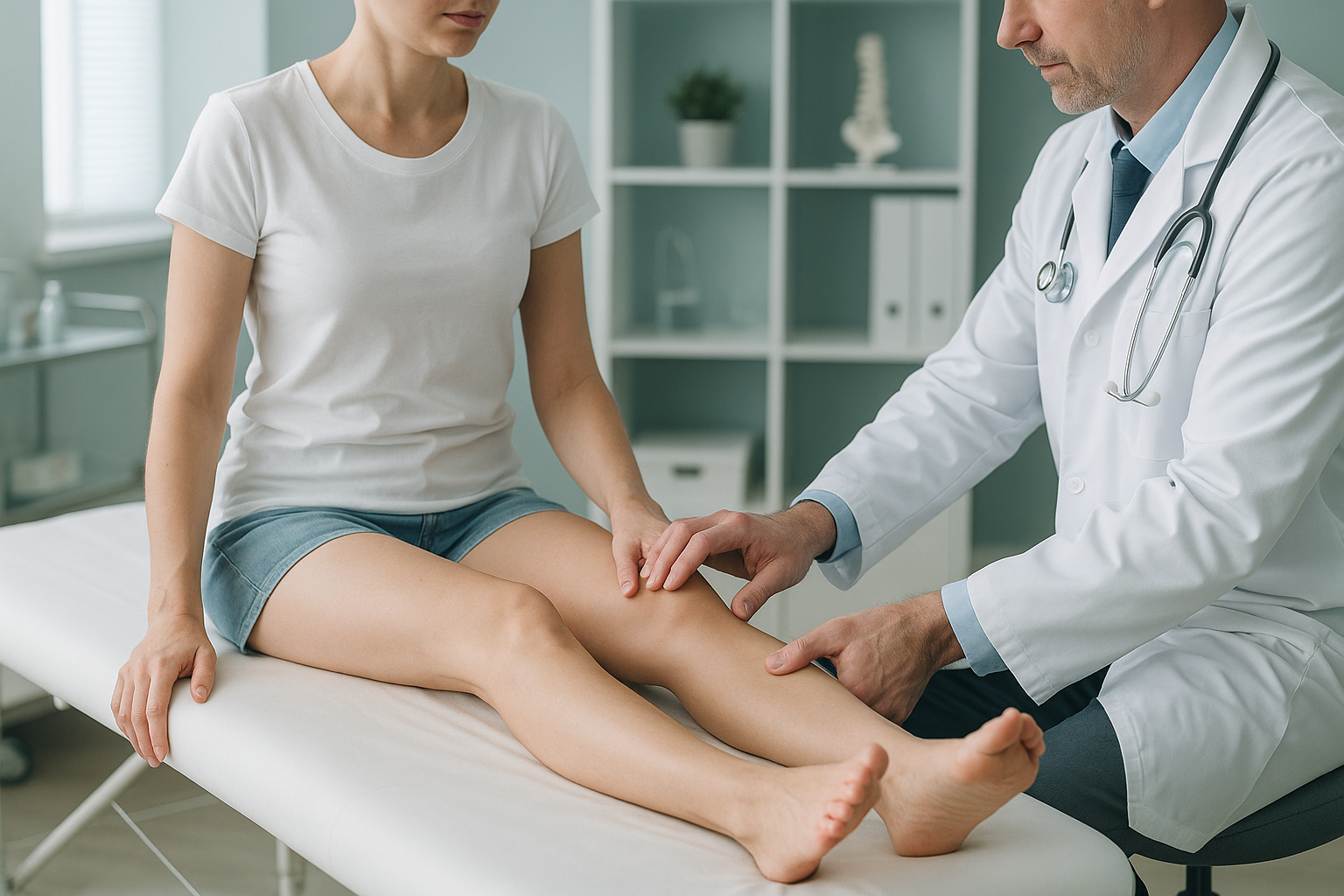
Leg Length Discrepancy: What Is It and Could It Be Causing Your Pain?
A leg length discrepancy means one leg is shorter than the other. This can be a real difference in bone length (structural) or an apparent difference caused by pelvic tilt or muscle imbalance (functional). Even a small difference can change how you stand and move, creating pain in the hip, back or knee over time.
Key takeaways
- A leg length discrepancy can be structural (bone length) or functional (alignment and muscle related).
- Pain often appears in the hip, lower back or knee rather than in the shorter leg itself.
- Lying-down imaging can miss the difference because gravity and relaxed muscles hide it.
- A standing, full-body scan measures both legs under real weight-bearing conditions.
- Accurate measurement is the first step, so any management plan addresses the right cause.
What is the difference between structural and functional leg length discrepancy?
A structural leg length discrepancy is a measurable difference in actual bone length between the two sides. A functional discrepancy is when the bones are similar in length, but the legs appear unequal because of the way the pelvis, hips or muscles are positioned.
Structural means the thigh bone (femur) or shin bone (tibia) is genuinely shorter on one side. This can be something you were born with, or it can result from a fracture that healed with some shortening, or from a joint replacement. A structural discrepancy does not change when you stretch or correct your posture.
Functional means the bones may be the same length, but a tilted pelvis, tight hip muscles or a scoliosis makes one leg appear shorter. This type can sometimes improve with targeted exercises or manual therapy because the underlying cause is muscular or postural rather than skeletal.
Knowing which type you have matters. A shoe lift may help a structural discrepancy but could make a functional one worse. Accurate, weight-bearing imaging helps clinicians tell the difference.
What are the symptoms of a leg length discrepancy?
Many people with a small discrepancy feel nothing at all. When symptoms do appear, they usually show up away from the shorter leg itself, in the places that are compensating.
If you experience sudden numbness, weakness in either leg, or any loss of bladder or bowel control, seek urgent medical attention from your GP, 111, or A&E. These are red-flag symptoms that need immediate assessment.
What causes one leg to be longer than the other?
There are several reasons one leg can end up shorter or appear shorter. Some are present from birth, others develop over time.
Your body is a connected chain from your feet to your head. When one link changes, the links above and below adjust to keep you balanced. That is why a short leg can lead to hip pain, a curved spine, or a sore knee. The pain often appears well away from the original cause.
How is leg length discrepancy measured when you are standing up?
The most reliable way to assess a leg length discrepancy is to image the entire body while you stand on both feet, with your muscles and gravity doing what they normally do. Lying-down imaging relaxes the muscles and lets the pelvis settle into a neutral position. This can mask a functional discrepancy entirely and make a structural one harder to measure accurately.
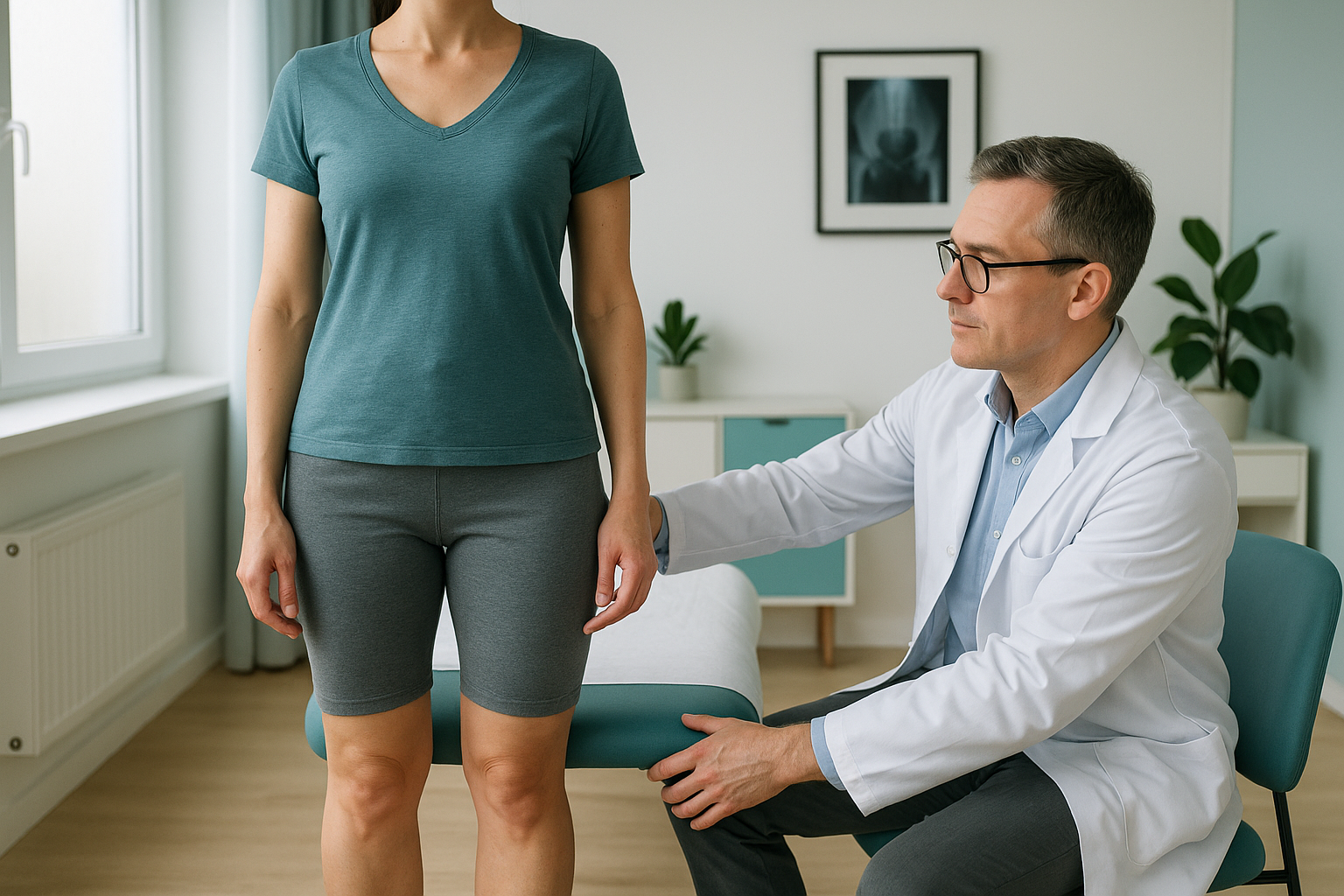
An EOS scan captures both legs, the pelvis, spine and feet in a single standing image using about 90% less radiation than a standard X-ray, around ten times less. Because it images you upright, the resulting picture shows how your body actually aligns under load. Your clinician can then see whether the discrepancy is structural, functional, or a combination of both.
Not sure whether a standing scan would help your situation?
Book a free video consultationHow is leg length discrepancy usually managed?
Management depends entirely on the type and size of the discrepancy, and on the symptoms you are experiencing. ScanAlign is a diagnostic imaging clinic, not a treatment provider, so the role of the scan is to give you and your clinician accurate, weight-bearing measurements to guide the right next step.
In general terms, management options that clinicians may consider include:
- Observation. Small discrepancies with no symptoms may need no intervention at all.
- Shoe lift or insole. For structural discrepancies, a heel lift can level the pelvis and reduce compensatory strain. The correct height depends on accurate measurement.
- Physiotherapy or exercise. Functional discrepancies caused by tight muscles or pelvic tilt may respond to targeted strengthening and stretching.
- Surgical review. Larger structural discrepancies, or those linked to a previous fracture or replacement, may need specialist orthopaedic assessment.
Whatever the approach, it starts with knowing the exact situation. A standing, whole-body image gives clinicians the full picture of alignment rather than a guess based on a tape measure or a lying-down scan.
When MRI is the better tool. EOS shows bones, joints and alignment clearly. If your clinician suspects soft-tissue problems, nerve compression or disc issues, MRI is usually the better choice. The two scans complement each other well.
Frequently asked questions about leg length discrepancy
Common clues include uneven shoe wear, a noticeable lean to one side, or persistent pain in the hip, back or knee on one side. A standing scan is the most reliable way to confirm and measure it.
Yes. Even a small difference can tilt the pelvis, which forces the spine and joints to compensate. Over months or years, this extra strain can lead to pain in places well away from the shorter leg.
Structural means the bones are genuinely different in length. Functional means the bones are similar, but muscle tightness, pelvic tilt or spinal curvature makes one leg appear shorter. Treatment differs for each type, so accurate diagnosis matters.
When you lie down, gravity and relaxed muscles let the pelvis settle into a neutral position, hiding the way your body truly aligns. Standing imaging captures both legs, the pelvis and spine under real weight-bearing conditions, giving a much more accurate measurement.
Yes. An EOS scan uses about 90% less radiation than a standard X-ray, around ten times less. You can find more details on safety, preparation and what to expect on our FAQs page.
No. ScanAlign is a private, self-pay clinic. You can refer yourself directly. We recommend starting with a free video consultation so we can check that a standing scan is the right next step for you.
Pricing details are available on our FAQs and cost page.
A shoe lift can help level the pelvis when the discrepancy is structural and accurately measured. If the discrepancy is functional, caused by muscle or alignment issues rather than bone length, a lift alone may not address the root cause. Accurate imaging helps your clinician decide what is appropriate.
Research suggests that a long-standing discrepancy can place uneven load on the hip and knee joints, which may contribute to wear over time. Early identification and appropriate management can help reduce that uneven strain.
You speak with a specialist diagnostic radiographer who reviews your symptoms and history. They will let you know whether a standing, whole-body scan is likely to add useful information for your case, with no obligation to proceed.
Find out what is really going on
A standing, whole-body scan shows your true alignment under load. Start with a free video consultation to see if it is right for you.
Book a free video consultationLearn more about how EOS standing imaging works, or read about alignment issues affecting the hip, knee and spine.
Written by Abbas Dhami (Specialist Diagnostic Radiographer)
Sources
- Khamis, S. & Carmeli, E. (2017). "A new concept for measuring leg length discrepancy." Journal of Orthopaedics, 14(2), 276-280.
- NHS. "Hip pain in adults." NHS.uk (accessed 2024).
- Illés, T. & Somoskeöy, S. (2012). "The EOS imaging system and its uses in daily orthopaedic practice." International Orthopaedics, 36(7), 1405-1411.
This page is general information and not a diagnosis.
ScanAlign is the trading name of CoreMed Solutions Ltd and operates under The Harley Street Hospital's CQC licence.