
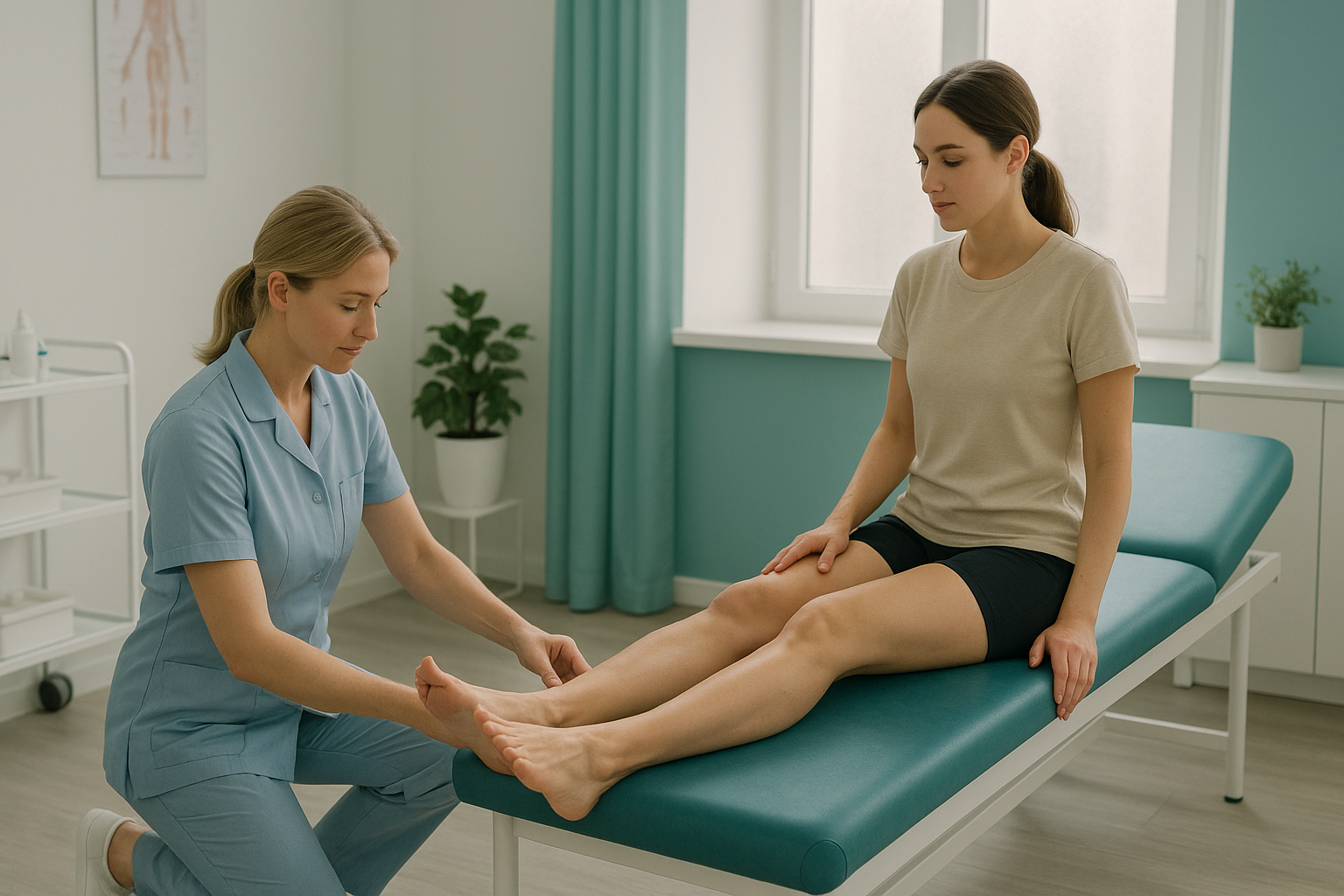
Where Can You Get a Leg Length Assessment in London?
You can get a precise leg length assessment in central London at ScanAlign, full-body standing imaging in Harley Street. Using EOS technology, both legs are captured on a single standing image with about 90% less radiation than a standard X-ray, around ten times less. No GP referral is needed. You can self-refer as a private, self-pay patient.
Key takeaways
- A leg length assessment measures whether one leg is longer than the other, and by how much.
- Standing imaging captures your legs under real weight-bearing load, giving a more accurate picture than lying-down scans.
- EOS technology fits both full legs on one non-magnified image, so measurements are true to life.
- ScanAlign is based at 19 Harley Street, London. You can self-refer without a GP letter.
- The scan uses about 90% less radiation than a standard X-ray, around ten times less.
What is a leg length assessment?
A leg length assessment is a clinical measurement that checks whether your legs are the same length. Even a small difference can change the way your body distributes weight, which over time may contribute to pain in the lower back, hip, knee or ankle.
A leg length discrepancy is surprisingly common. Many people live with one without knowing. The difference can be structural, meaning the bones themselves are different lengths, or functional, where muscle tightness or pelvic alignment makes one leg behave as if it is shorter.
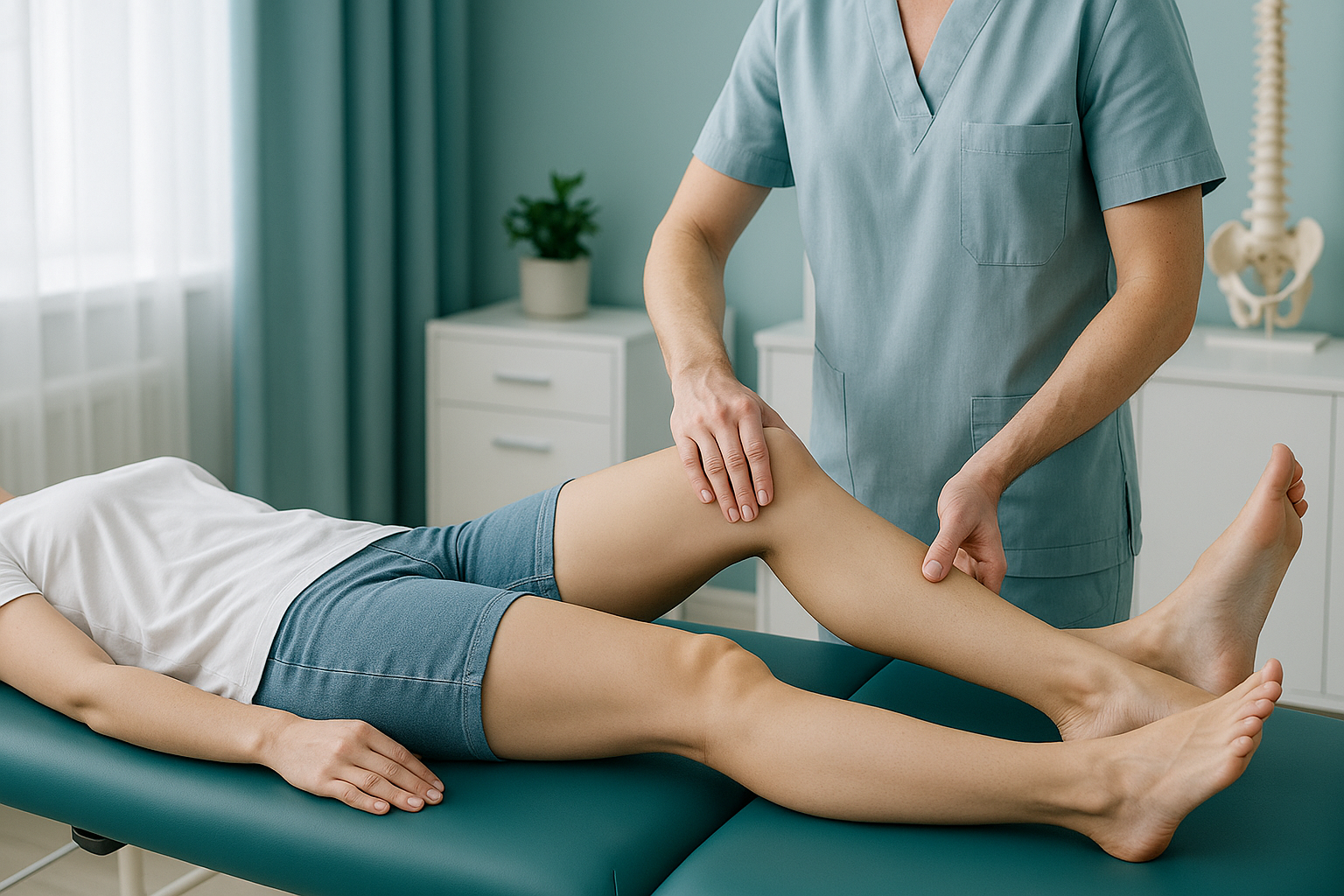
A proper assessment needs accurate imaging. Tape-measure methods in a consulting room give a rough idea, but they cannot reliably detect small differences or tell you exactly where the discrepancy sits, at the thigh bone, the shin bone, or both.
Why does a standing scan give a more accurate leg length measurement?
A standing scan captures your legs under real gravitational load, exactly as they function when you walk. Lying-down imaging relaxes your muscles and can change the position of your pelvis and joints, which may hide the true difference.
A full-leg standing x-ray shows both legs from hip to ankle on a single, non-magnified image. Because the image is true to life, measurements taken from it reflect your real anatomy. Your muscles, joints and pelvis are loaded naturally, so any tilt or compensation shows up clearly.
A conventional X-ray or CT scan is taken while you lie flat. Without gravity pressing through your skeleton, the pelvis can shift, and the true functional difference between your legs may not be visible. Separate images of each leg also introduce stitching errors.
EOS imaging captures both legs from hip to floor in a single pass. There is no need to stitch separate images together, which removes a common source of measurement error. The result is a reliable, non-magnified long-leg film that your specialist, podiatrist or orthopaedic surgeon can use to make decisions about treatment.
You can read more about how this technology works in our guide to EOS scanning for leg length discrepancy.
What are the signs you might need a leg length assessment?
You may benefit from a leg length assessment if you have persistent, unexplained symptoms that have not responded to standard treatment. Common signs include the following.
Pain that always favours one side could mean your pelvis is tilting to compensate for unequal leg lengths.
If one shoe sole wears down faster than the other, your gait may be uneven due to a leg length difference.
Repeated strain on one hip or knee can be a sign that the joint is working harder to compensate.
Others may notice you lean or dip to one side when walking, even if you are not aware of it yourself.
Your body is a connected chain from your feet to your head. When one leg is shorter, the pelvis tilts, the spine curves to compensate, and pain can appear in places far from the actual cause. That is why single-area imaging often misses the full picture.
What happens during a leg length assessment at ScanAlign?
Your visit to ScanAlign at 19 Harley Street follows a straightforward process. The whole appointment is quick and comfortable.
Free video consultation
A short call to discuss your symptoms and confirm the scan is right for you. No referral letter needed.
Attend 19 Harley Street
You arrive at our central London clinic. No special preparation is required. You simply stand in the EOS scanner in comfortable clothing.
Standing full-leg image
The EOS system captures both legs from hips to ankles in a single standing scan. It takes only a few seconds, and the radiation dose is about 90% less than a standard X-ray, around ten times less.
Detailed report
A specialist radiographer analyses the image and produces a detailed report. You can share this with your orthopaedic surgeon, physiotherapist or podiatrist to guide any next steps.
Who benefits from a standing leg length scan?
A standing leg length assessment is useful for a wide range of people. It is equally helpful whether you are investigating a new problem or checking something that has been bothering you for years.
- Persistent one-sided back, hip or knee pain
- Considering a shoe raise or orthotic
- Pre-operative planning for hip or knee surgery
- Monitoring a known leg length discrepancy
- Referral from a podiatrist or physiotherapist
- Suspected soft-tissue injury (muscle, tendon, ligament)
- Nerve-related symptoms such as tingling or numbness
- Need to see discs or cartilage in detail
When MRI is the better tool. EOS excels at showing bones, joints and alignment under load. If your clinician suspects a soft-tissue problem, a disc issue or nerve involvement, MRI is usually more appropriate. The two scans answer different questions and are often complementary.
Not sure which scan you need? Our free video consultation can help you decide.
Book a free video consultationFrequently asked questions about leg length assessments in London
No. ScanAlign is a private, self-pay clinic. You can book a leg length measurement directly, without a GP letter or specialist referral.
We do not list prices on this page, but you can find the latest pricing information on our FAQs page. Your free video consultation will also confirm exactly what is included.
Yes. The EOS system uses about 90% less radiation than a standard X-ray, around ten times less. It is one of the lowest-dose skeletal imaging methods available.
The scan itself takes only a few seconds. Your overall appointment will be longer to allow for positioning and checks, but the process is quick and comfortable.
When you stand, gravity loads your skeleton naturally. Your pelvis, joints and muscles sit in their true positions. Lying down relaxes these structures and can mask the real difference between your legs.
It can. Even a modest discrepancy changes the way your body distributes weight. Over time, the pelvis tilts, the spine compensates, and symptoms may develop in the back, hip or knee on either side.
A long-leg film is an X-ray that captures the full length of both legs, from hips to ankles, on one image. EOS produces a non-magnified long-leg film while you stand, which gives highly accurate measurements.
Yes. The report provides precise measurements that your podiatrist, physiotherapist or orthopaedic surgeon can use to decide on a shoe raise, orthotic, or other approach.
ScanAlign is at 19 Harley Street, central London. The clinic is easy to reach by public transport and is a short walk from several Underground stations.
Wear comfortable clothing without metal fastenings around the legs and hips. You will be asked to stand still for a few seconds while the image is taken. No other preparation is needed.
Ready to find out if your legs are the same length?
Start with a free video consultation. We will explain how a standing leg length assessment works and confirm whether it is right for you.
Book a free video consultationSources
- Sabharwal S, Kumar A. Methods for assessing leg length discrepancy. Clinical Orthopaedics and Related Research. 2008;466(12):2910-2922.
- Deschênes S, Charron G, Beaudoin G, et al. Diagnostic imaging of spinal deformities: reducing patients' radiation dose with a new slot-scanning X-ray imager. Spine. 2010;35(9):989-994.
- NHS. Back pain: causes, treatment and when to see a GP. nhs.uk. Available at: https://www.nhs.uk/conditions/back-pain/
Written by Abbas Dhami (Specialist Diagnostic Radiographer).
This page is general information and not a diagnosis.
ScanAlign is the trading name of CoreMed Solutions Ltd and operates under The Harley Street Hospital's CQC licence.