
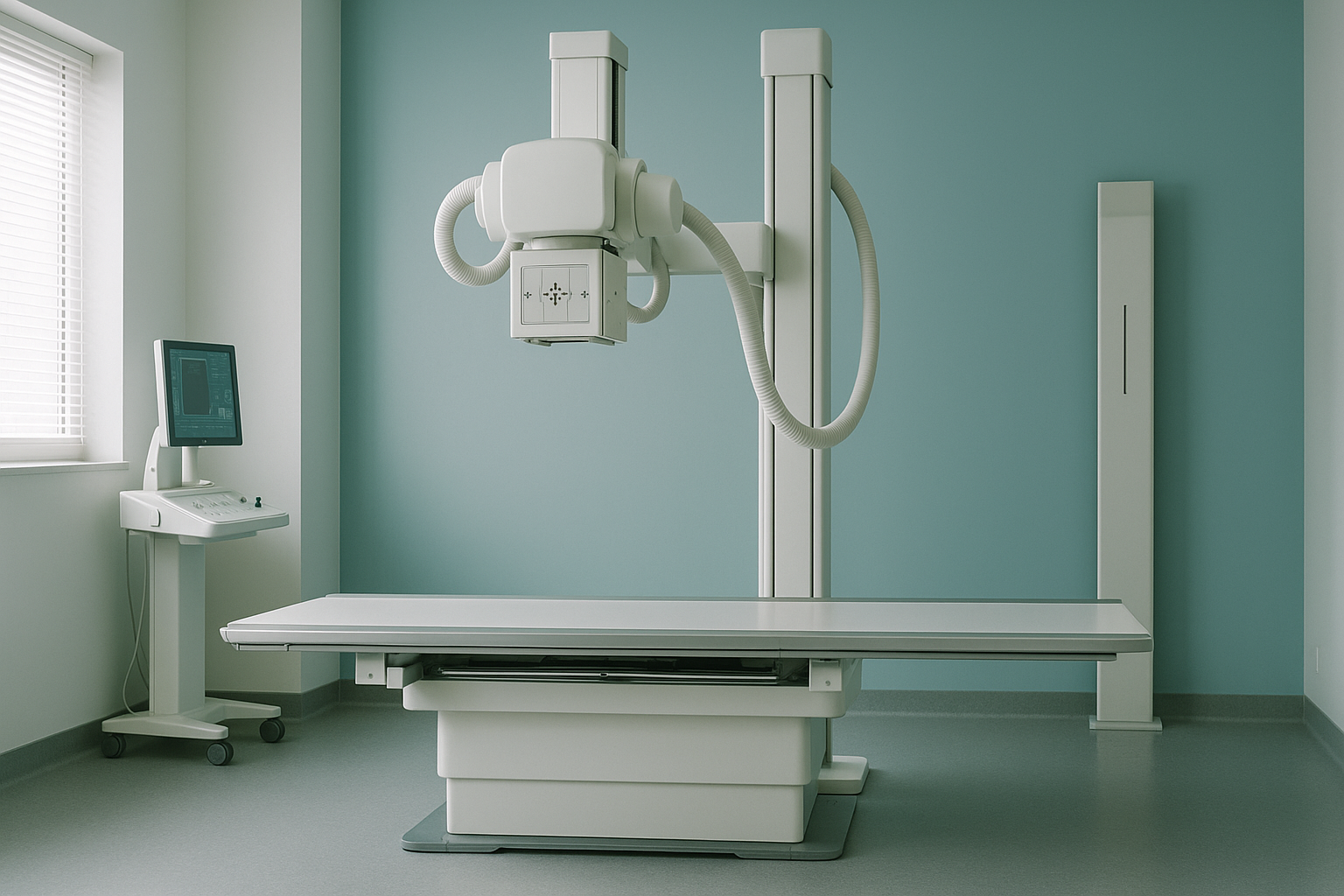
What Does Low-Dose Imaging Actually Mean?
Low-dose imaging means capturing detailed diagnostic pictures while using significantly less radiation than a conventional x-ray. EOS slot-scanning technology uses about 90% less radiation than a standard x-ray, around ten times less. You get the clinical detail your specialist needs with a fraction of the exposure.
Key Takeaways
- "Low dose" is not marketing language. It describes measurably lower radiation per image.
- EOS uses about 90% less radiation than a standard x-ray, around ten times less.
- The technology works through slot scanning and ultra-sensitive detectors, not by simply turning the power down.
- Lower dose does not mean lower quality. EOS captures full, standing whole-body images in a single pass.
- Every scan at ScanAlign follows IRMER regulations and the ALARA principle, keeping your exposure as low as reasonably achievable.
What does "low dose" mean in medical imaging?
"Low dose" means the imaging system delivers a measurably smaller amount of ionising radiation to produce a diagnostic image. It is not a vague claim. It refers to the effective dose, measured in units called millisieverts (mSv), being significantly lower than the dose from a standard x-ray of the same body area.
To put everyday radiation exposure in context, you are exposed to natural background radiation every day from the ground, buildings and cosmic rays. A standard chest x-ray delivers a very small dose, roughly equivalent to a few days of that natural background. A low-dose system like EOS reduces the dose even further.
Two principles guide every imaging decision in the UK. First, justification: every scan must have a clear clinical reason. Second, optimisation, often called ALARA (As Low As Reasonably Achievable). This means the radiographer uses the lowest dose that still produces images good enough for diagnosis. Low-dose imaging technology makes optimisation far easier because the system is engineered from the ground up to need less radiation.
How does EOS achieve such a low dose?
EOS achieves its low dose through a fundamentally different approach to capturing images, not simply by turning down the x-ray power. Three engineering features work together.
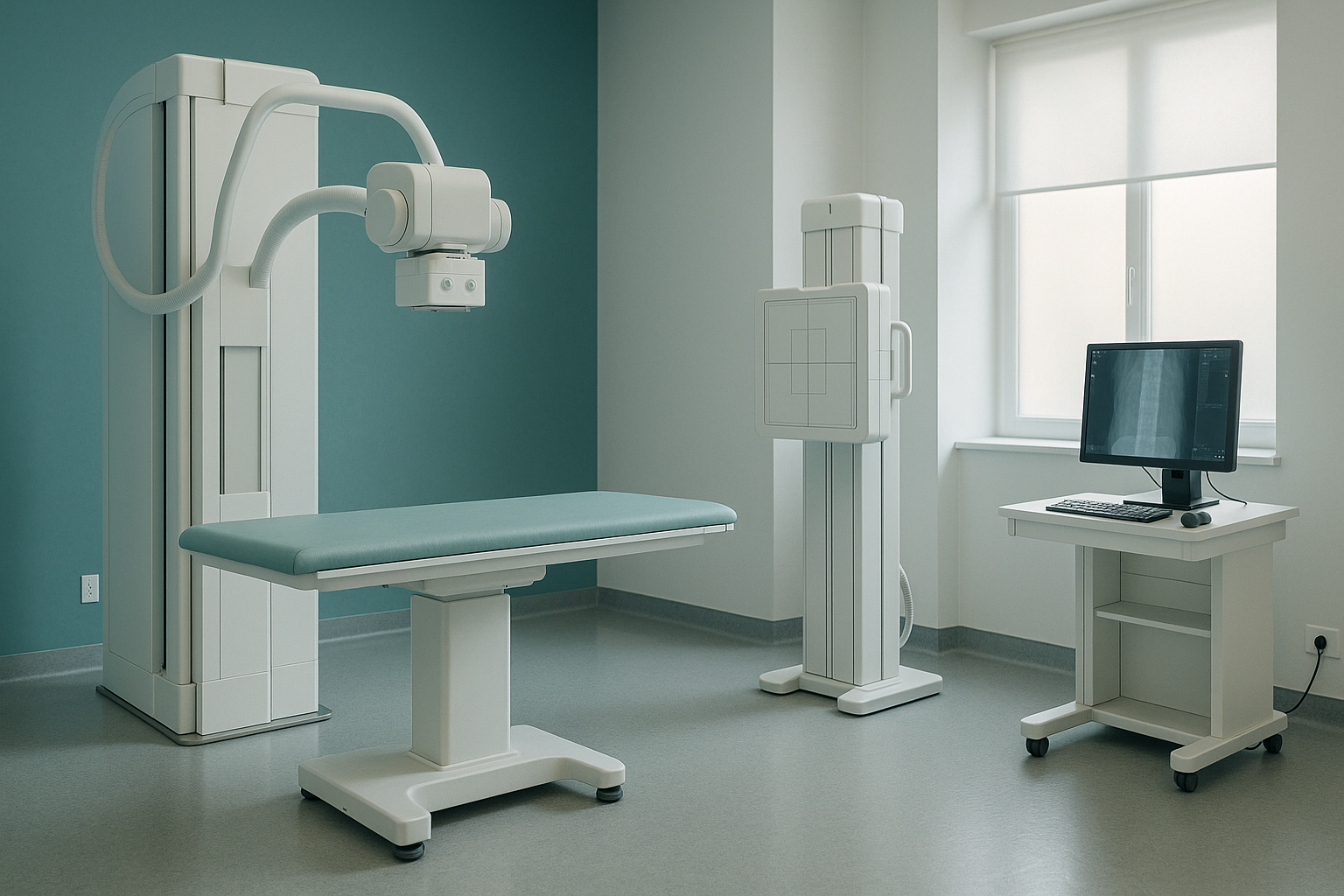
A narrow slit beam sweeps from head to toe, exposing only a thin slice of tissue at any moment instead of flooding the entire body with radiation at once.
Nobel Prize-winning gaseous detector technology captures more information from fewer x-ray photons, so the system needs far less radiation to build a sharp image.
The beam is carefully shaped to cover only the area being imaged. Scatter radiation, the stray energy that adds dose without adding diagnostic value, is drastically reduced.
The result is a full-length, weight-bearing image from head to feet, captured in a single standing pass, with about 90% less radiation than a standard x-ray. That is around ten times less. Learn more about the EOS standing x-ray and how it differs from lying-down imaging.
How does EOS radiation compare to other imaging?
EOS delivers about 90% less radiation than a standard x-ray, around ten times less. The table below gives a general comparison. Exact doses vary by body area, patient size and the clinical question being asked.
| Imaging type | Relative dose | Weight-bearing? | Full-body in one image? |
|---|---|---|---|
| EOS (low dose) | About 90% less than standard x-ray | Yes, standing | Yes |
| Standard x-ray | Baseline | Sometimes | No (one area per image) |
| CT scan | Higher than standard x-ray | No (lying down) | Multiple images, lying down |
| MRI | No ionising radiation | No (lying down) | One area at a time |
A note about MRI. EOS shows bones, joints and whole-body alignment clearly. For soft tissue, discs or nerves, MRI is usually the better tool. The two are complementary, not competing. Your clinician can advise which you need.
Is low-dose imaging safe?
Yes. All imaging at ScanAlign, low dose standing imaging is carried out under IRMER (the Ionising Radiation (Medical Exposure) Regulations), the UK law that governs every medical x-ray. Every scan is justified by a qualified practitioner and optimised by the radiographer to keep your dose as low as reasonably achievable.
With EOS, the dose is already engineered to be about 90% lower than a standard x-ray before the radiographer applies any further optimisation. That makes it one of the lowest-dose x-ray options available for full-body skeletal imaging. Read more about EOS scan safety and radiation.
Concerned about radiation and want to understand whether an EOS scan is right for you? Talk to us first, at no cost.
Book a free video consultationHow do I book a low-dose EOS scan?
You do not need a GP referral. You can book a low dose scan directly as a self-pay patient. Here is what to expect.
Free video consultation
A short call to discuss your symptoms and confirm that EOS imaging is appropriate for you.
Your scan at 19 Harley Street
You stand in the EOS system for under a minute. No injections, no enclosed tunnel, no preparation needed.
Expert reporting
Your images are reviewed by a specialist radiologist who produces a detailed written report.
Results and next steps
Your report and images are shared with you and, if you wish, with your clinician or surgeon, so they can plan treatment with the full picture.
Wondering whether is an EOS scan safe? We have published a detailed breakdown of the evidence.
Frequently asked questions about low-dose imaging
EOS uses about 90% less radiation than a standard x-ray, around ten times less. This is achieved through slot scanning and highly sensitive detectors, not by reducing image quality.
ALARA stands for "As Low As Reasonably Achievable." It is a radiation safety principle that requires every scan to use the minimum dose needed for a good diagnostic image. EOS technology supports this principle by design.
Yes. EOS produces high-quality diagnostic images that are widely used by orthopaedic surgeons and spinal specialists. The sensitive detectors extract more information from fewer x-ray photons, so clarity is maintained at a much lower dose.
No. You can self-refer. We offer a free video consultation first to make sure the scan is appropriate for your situation.
ScanAlign is a self-pay service. For current pricing details, please visit our FAQs page or ask during your free video consultation.
They serve different purposes. EOS excels at showing bones, joints and full-body alignment under gravity. MRI is better for soft tissue, discs and nerves. Many patients benefit from both, depending on their clinical question.
The significantly lower dose per scan means your cumulative exposure over time remains much smaller than it would be with repeated standard x-rays. Every scan is individually justified under IRMER to make sure it is clinically necessary.
When you lie down, gravity no longer compresses your joints and spine. Muscles relax and alignment problems can disappear from the image. Standing imaging shows your skeleton exactly as it functions during daily life, revealing issues that lying-down scans may miss.
Slot scanning uses a very narrow x-ray beam that moves vertically across your body rather than exposing the whole area at once. Only a thin strip of tissue is irradiated at any moment, which dramatically reduces the total dose and almost eliminates scatter radiation.
The scan itself typically takes under a minute. You stand still inside an open cabin while the system sweeps from head to toe. There is no enclosed tunnel and no special preparation required.
Ready to see what low-dose standing imaging can show?
Start with a free video consultation. No referral needed, no obligation, just honest advice about whether an EOS scan is right for you.
Book a free video consultationWritten by Abbas Dhami (Specialist Diagnostic Radiographer)
Sources
- Public Health England, "Doses from Computed Tomography (CT) Examinations in the UK," PHE-CRCE-013 (2014).
- International Commission on Radiological Protection (ICRP), "The 2007 Recommendations of the ICRP," ICRP Publication 103, Annals of the ICRP 37(2-4), 2007.
- Deschênes S et al., "Diagnostic imaging of spinal deformities: reducing patients radiation dose with a new slot-scanning x-ray imager," Spine, 35(9):989-994, 2010.
This page is general information and not a diagnosis.
ScanAlign is the trading name of CoreMed Solutions Ltd and operates under The Harley Street Hospital's CQC licence.