
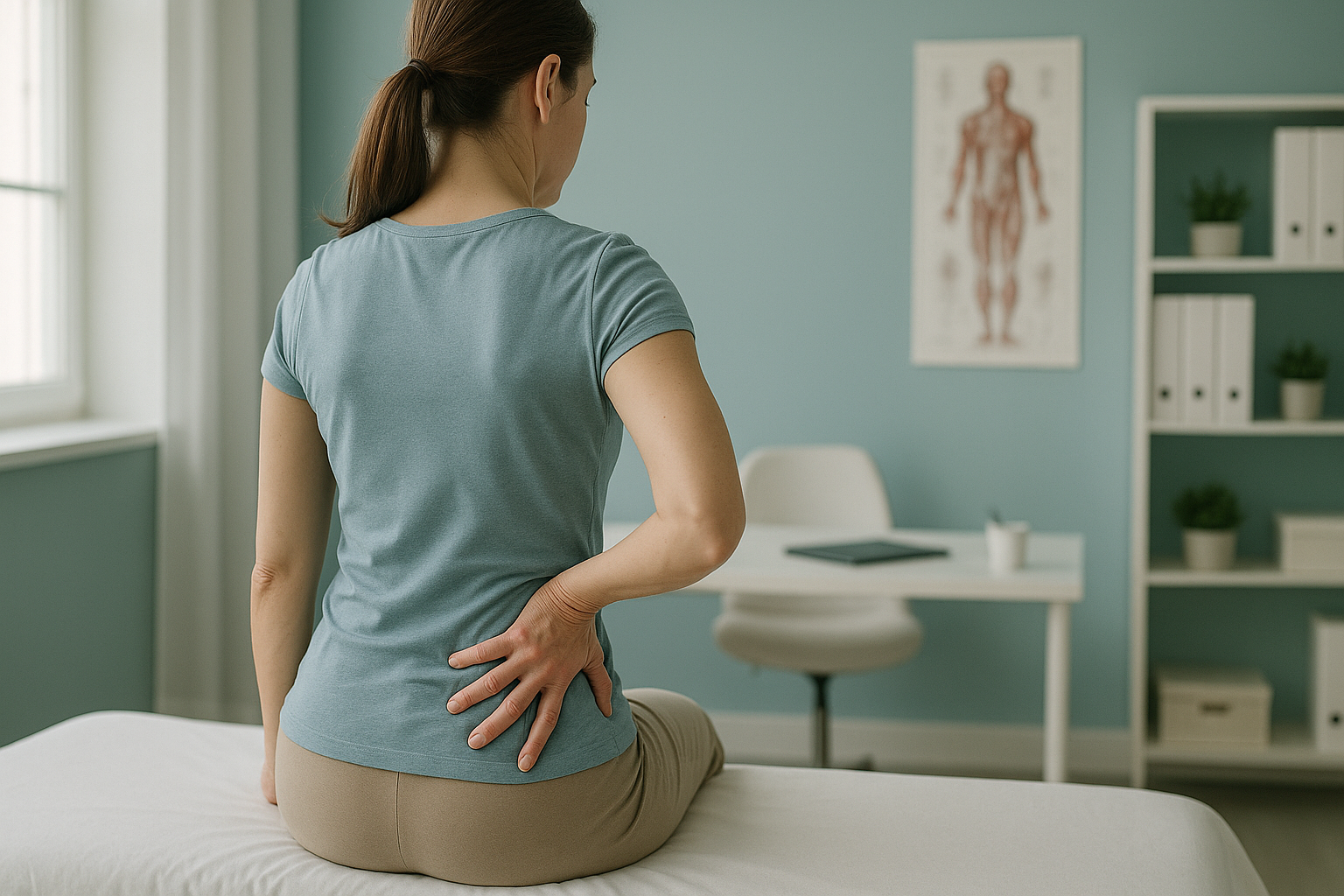
Why Is One Side of My Body Always Tighter?
When one side of your body is consistently tighter than the other, it usually means your skeleton is not evenly balanced when you stand. A tilted pelvis, a difference in leg length, or a subtle spinal curve can force muscles on one side to work harder. Because the body is a connected chain, the tightness you feel may be far from its actual cause.
Key takeaways
- One side of your body tighter than the other is rarely just a flexibility problem.
- Alignment issues such as a lateral pelvic tilt or leg length discrepancy are common structural causes.
- Muscles tighten to protect and stabilise an uneven frame. This is called protective guarding.
- Lying-down scans relax the body and can hide the asymmetry. Standing, weight-bearing imaging shows what is really happening.
- Measurement first, then targeted action. Stretching alone may not fix a structural cause.
What does it mean when one side of your body is tighter than the other?
It means your muscles are responding to an imbalance in how your body carries its weight. Your skeleton is the foundation. When that foundation is even slightly off-centre, the muscles on one side shorten and grip to keep you upright. This protective guarding is your body doing its job, but it creates the persistent, one-sided tightness you notice during stretching, exercise or even sitting.
Think of it like a building on uneven ground. The structure itself tilts, and everything attached to it has to compensate. Your hip flexor, shoulder, hamstring or back on that side is not "randomly tight." It is reacting to something below or above it in the chain.
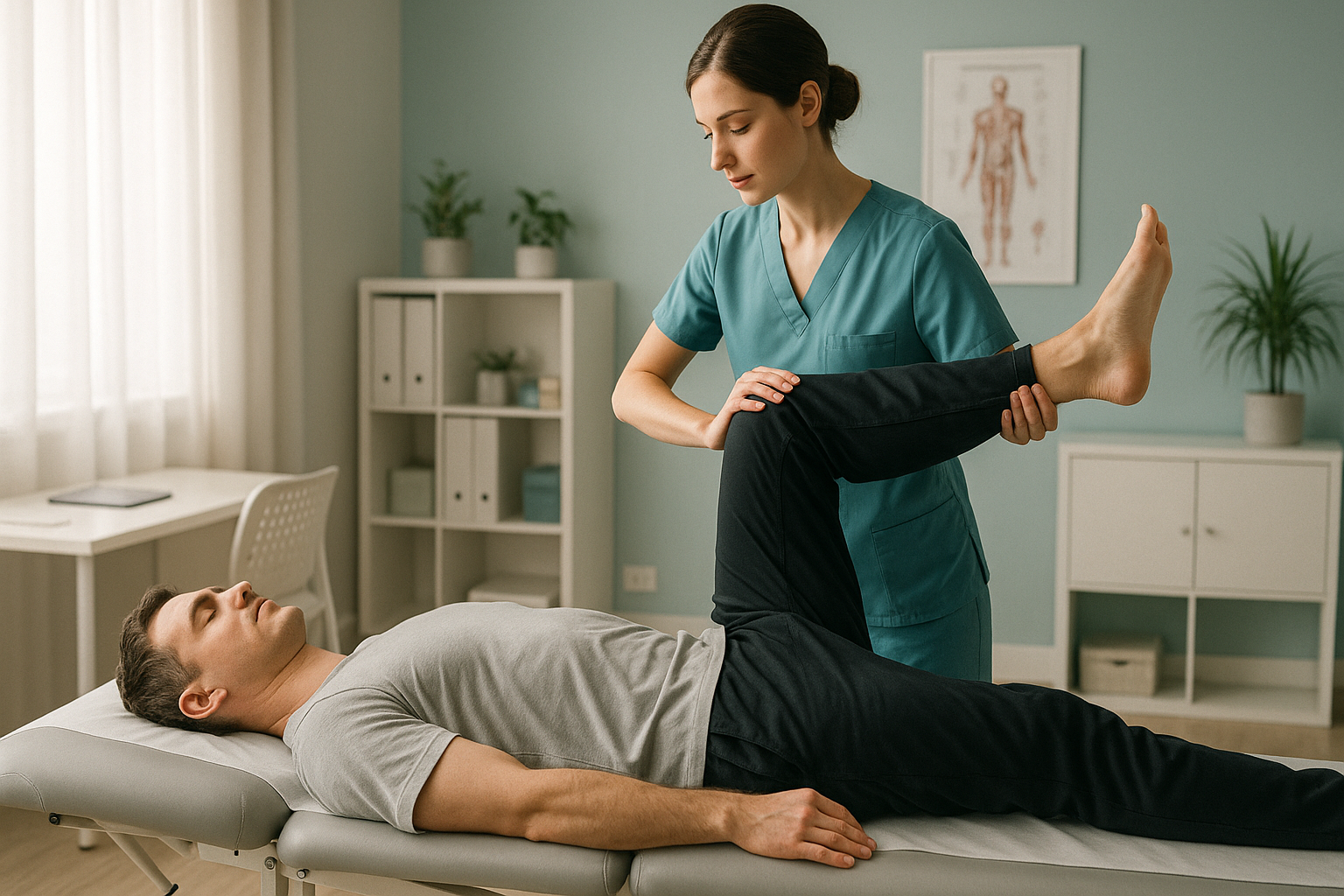
How do you know if your tightness is one-sided?
Most people notice it gradually. You might always feel stiffer stretching one hip or find that one shoulder sits higher. Here are common patterns.
If tightness on one side keeps returning despite regular stretching, it is worth asking whether the problem is structural rather than muscular.
What causes asymmetrical tightness?
Asymmetrical tightness has several possible causes. Some are structural, some are habitual, and often it is a mix of both.
A muscle imbalance is often the result, not the root cause. The muscles are doing what the skeleton is telling them to do. That is why stretching one side more can bring temporary relief but never a lasting change.
How does standing imaging reveal asymmetrical tightness causes?
Standard imaging, including X-rays, CT and MRI, is usually performed lying down. When you lie flat, gravity is taken out of the equation. Your muscles relax, your pelvis levels out, and a tilt or rotation that causes daily tightness may simply disappear from the image.
Weight-bearing EOS imaging captures your entire skeleton from head to feet while you stand naturally. It shows exactly how your pelvis tilts, whether your legs are different lengths, and how your spine curves to compensate. Every measurement is made under real-world loading, the same conditions that produce your tightness.
The scan uses about 90% less radiation than a standard X-ray, around ten times less.
Lying-down scans remove the effect of gravity on your skeleton. Muscles relax, the pelvis flattens, and mild tilts or leg length differences can disappear. This means the images may look normal even when your body is clearly not balanced during daily life.
At ScanAlign, full-body standing imaging captures the whole picture in a single scan, so the relationship between your feet, knees, hips, pelvis, spine and shoulders is visible together. That is how the real source of one-sided tightness is found.
When is MRI the better choice? EOS shows bones, joints and alignment. If your clinician suspects a soft-tissue injury, a disc problem or nerve involvement, MRI is usually the better tool. The two investigations complement each other.
What can you do about one-sided tightness?
The single most useful first step is measurement. Without knowing whether your pelvis is level, whether your legs are the same length, or whether your spine is straight, any corrective work is guesswork.
Once you have accurate, standing measurements, a physiotherapist, osteopath or consultant can target the actual cause rather than chasing symptoms from side to side.
Book a free video consultationGeneral approaches that professionals may consider after imaging include targeted strengthening for the weaker side, manual therapy to address joint restrictions, and, where a true leg length difference exists, a heel lift or orthotic. The right approach depends entirely on what the imaging reveals.
If you experience sudden numbness, weakness, or loss of bladder or bowel control alongside your tightness, please seek urgent medical attention through your GP, 111 or A&E rather than booking a scan.
Frequently asked questions
Persistent one-sided tightness usually means your skeleton is not evenly balanced when you stand. A tilted pelvis, a difference in leg length, or a spinal curve forces muscles on one side to work harder and shorten over time.
Yes. Using your dominant hand for most tasks means the muscles on that side develop differently. Over years, this can reinforce asymmetry, especially if a structural imbalance is also present.
A consistently tighter hip flexor on one side often points to a pelvic tilt or a slight leg length difference. The hip flexor shortens to stabilise the pelvis when it is not level.
Stretching can give temporary relief, but if the cause is structural, such as a pelvic tilt or leg length difference, the tightness will keep returning. It is better to identify the underlying cause first.
Protective guarding is when your muscles tighten automatically to stabilise an area that feels unstable. If your pelvis or spine is uneven, muscles on one side grip harder to keep you upright. It is a normal response to an abnormal position.
An EOS scan captures your entire skeleton while you stand, showing exactly how your pelvis, legs and spine are aligned under real weight-bearing conditions. This reveals imbalances that lying-down scans can miss.
Yes. EOS uses about 90% less radiation than a standard X-ray, around ten times less. It is a very low-dose system designed for full-body imaging.
No. ScanAlign accepts self-referrals. You can book a full-body standing scan directly through a free video consultation.
Pricing details are available on the ScanAlign FAQs page.
Yes. Even a small leg length discrepancy tilts the pelvis, which forces muscles along the spine, hip and shoulder on one side to work harder. This is one of the most common structural causes of asymmetrical tightness.
Find out why one side is always tight
A free video consultation lets you discuss your symptoms with a specialist radiographer before deciding whether a standing scan is right for you.
Book a free video consultationWritten by Abbas Dhami (Specialist Diagnostic Radiographer)
Sources
- Khamis, S. & Yizhar, Z. (2007). Effect of feet hyperpronation on pelvic alignment in a standing position. Gait & Posture, 25(1), 127-134.
- Gurney, B. (2002). Leg length discrepancy. Gait & Posture, 15(2), 195-206.
- NHS. Lower back pain. nhs.uk/conditions/back-pain.
This page is general information and not a diagnosis.
ScanAlign is the trading name of CoreMed Solutions Ltd and operates under The Harley Street Hospital's CQC licence.