
Overpronation or Supination: How Do You Tell Which One You Have?
Overpronation means your foot rolls too far inward during each step. Supination (also called underpronation) means it rolls too far outward. Both change how force travels up through your ankle, knee and hip. Checking your shoe wear, doing a wet foot test, or having a standing whole-body scan can help you work out which pattern you have.
Key takeaways
- Overpronation is far more common than supination, but both create problems higher up the body.
- Shoe wear patterns and the wet foot test give useful clues at home.
- A standing, weight-bearing scan shows foot, ankle and full lower limb alignment in one image.
- EOS imaging uses about 90% less radiation than a standard X-ray, around ten times less.
- ScanAlign is a diagnostic clinic. It does not prescribe treatment, but its imaging helps guide what comes next.
What is overpronation and what is supination?
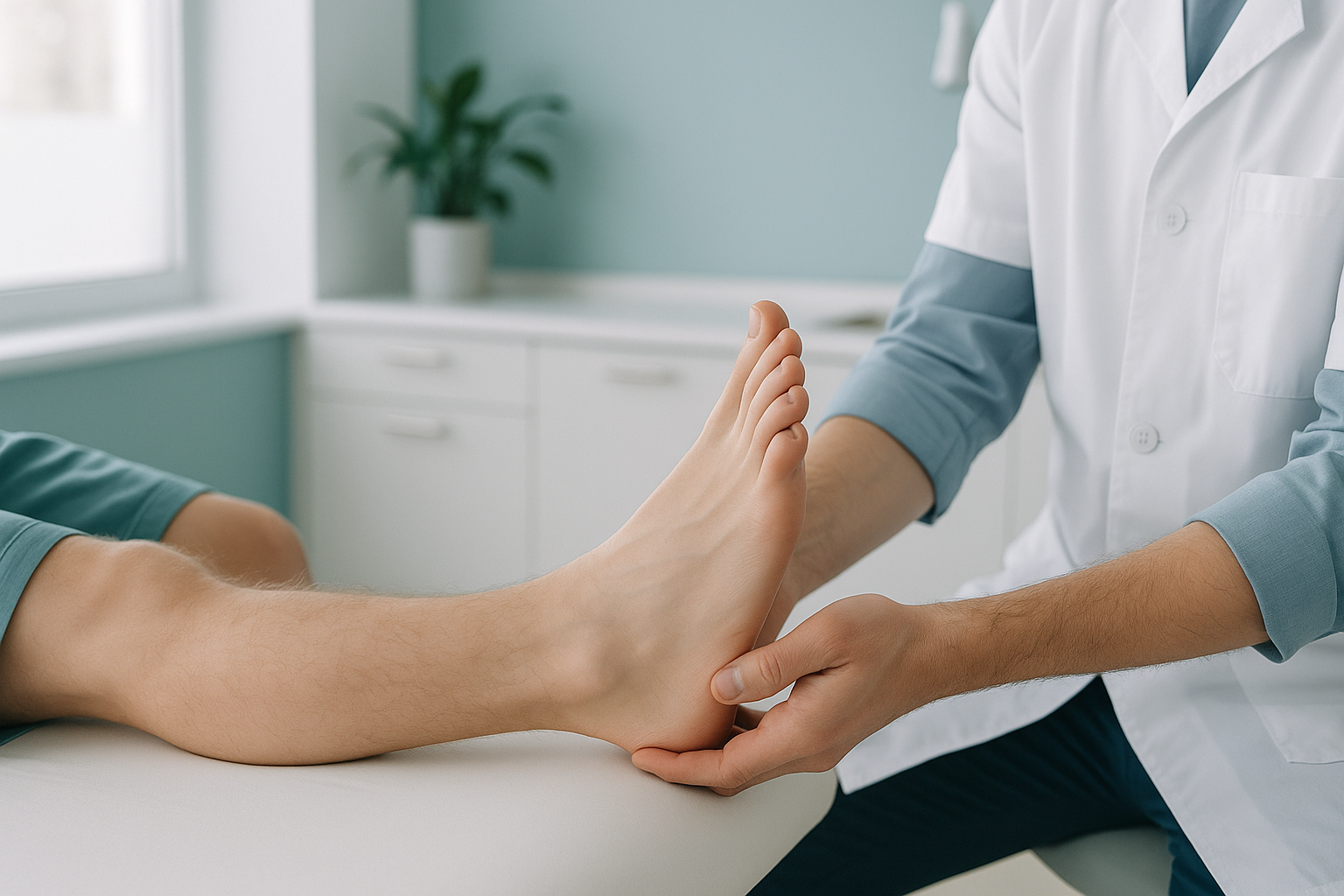
Pronation is a normal part of walking. When your heel strikes the ground, your foot naturally rolls slightly inward to absorb shock. This movement happens mainly at the subtalar joint, just below the ankle.
Overpronation occurs when the foot rolls inward too much. The arch flattens more than it should, and the ankle drops toward the midline. This is the more common pattern.
Supination (sometimes called underpronation) is the opposite. The foot stays rolled outward through the stance phase of the gait cycle. The arch stays rigid, and shock absorption is reduced.
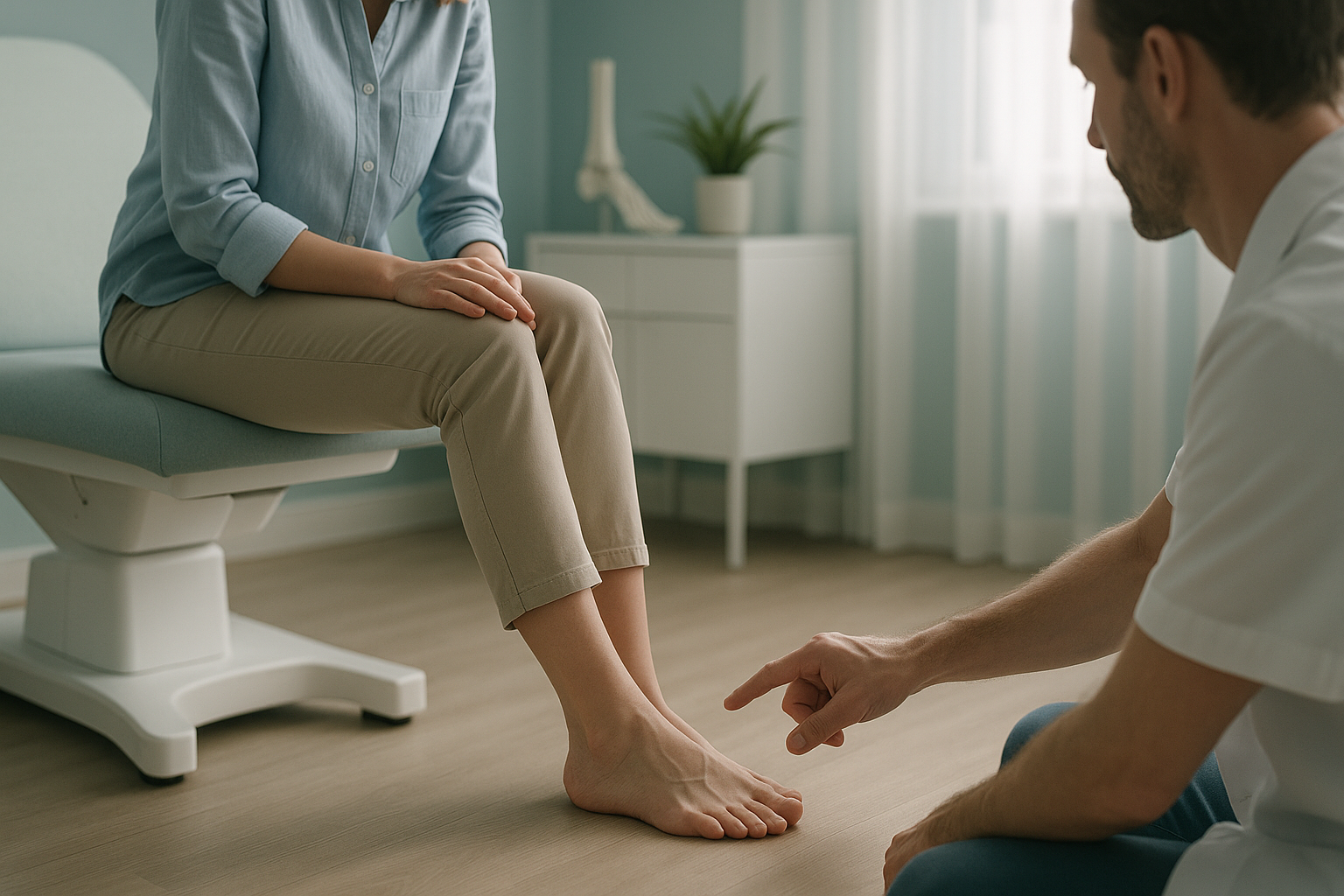
Neither pattern exists in isolation. When your foot rolls one way, it twists the tibia (shin bone), which changes knee tracking, hip position and even how your pelvis sits. That connected chain is why foot alignment problems can cause pain in places you would never think to connect to your feet.
How do you know if you overpronate or supinate?
You can often spot clues yourself by looking at your shoes and paying attention to where you feel discomfort.
What causes overpronation or supination?
Both patterns can be inherited, developed over time, or linked to other alignment issues higher up the body.
Because your body is a connected chain, a hip or pelvic problem can cause your foot to compensate, and a foot problem can cause your knee or hip to compensate. Pain often shows up away from its true source. Understanding postural sway and balance can help explain why standing assessments matter.
Can you do a pronation test at home?
Yes. Two simple checks give a rough idea of your foot type, though they cannot show the full picture of what is happening higher up.
How to do it: Wet the sole of your foot and step onto a piece of dark card or a paper bag. Step off and look at the print.
Flat, wide print (almost the whole sole visible) suggests overpronation. Narrow print with a thin or missing arch strip suggests supination. A moderate curve is closer to neutral.
This test shows static arch shape. It does not tell you what your foot does during movement, which is why a full gait analysis explained in detail can add more context.
How to do it: Place a well-worn pair of everyday shoes on a flat surface. Look at the soles from behind.
Inner-edge wear points to overpronation. Outer-edge wear points to supination. If the shoe leans noticeably to one side, it confirms the pattern.
This is a useful quick check, but it only shows the end result of your movement pattern, not the cause.
Why does standing imaging show more than a lying-down scan?
Most imaging, including standard X-rays, CT and MRI, is done while you lie down. When you lie flat, gravity is removed, muscles relax, and the foot, ankle and leg sit in an unloaded position. That can hide how your joints actually behave when you stand and walk.
An EOS scan takes a full-length, weight-bearing image from your feet to your head while you stand naturally. It captures the subtalar joint angle, tibial rotation, knee tracking and hip alignment in one exposure, using about 90% less radiation than a standard X-ray, around ten times less.
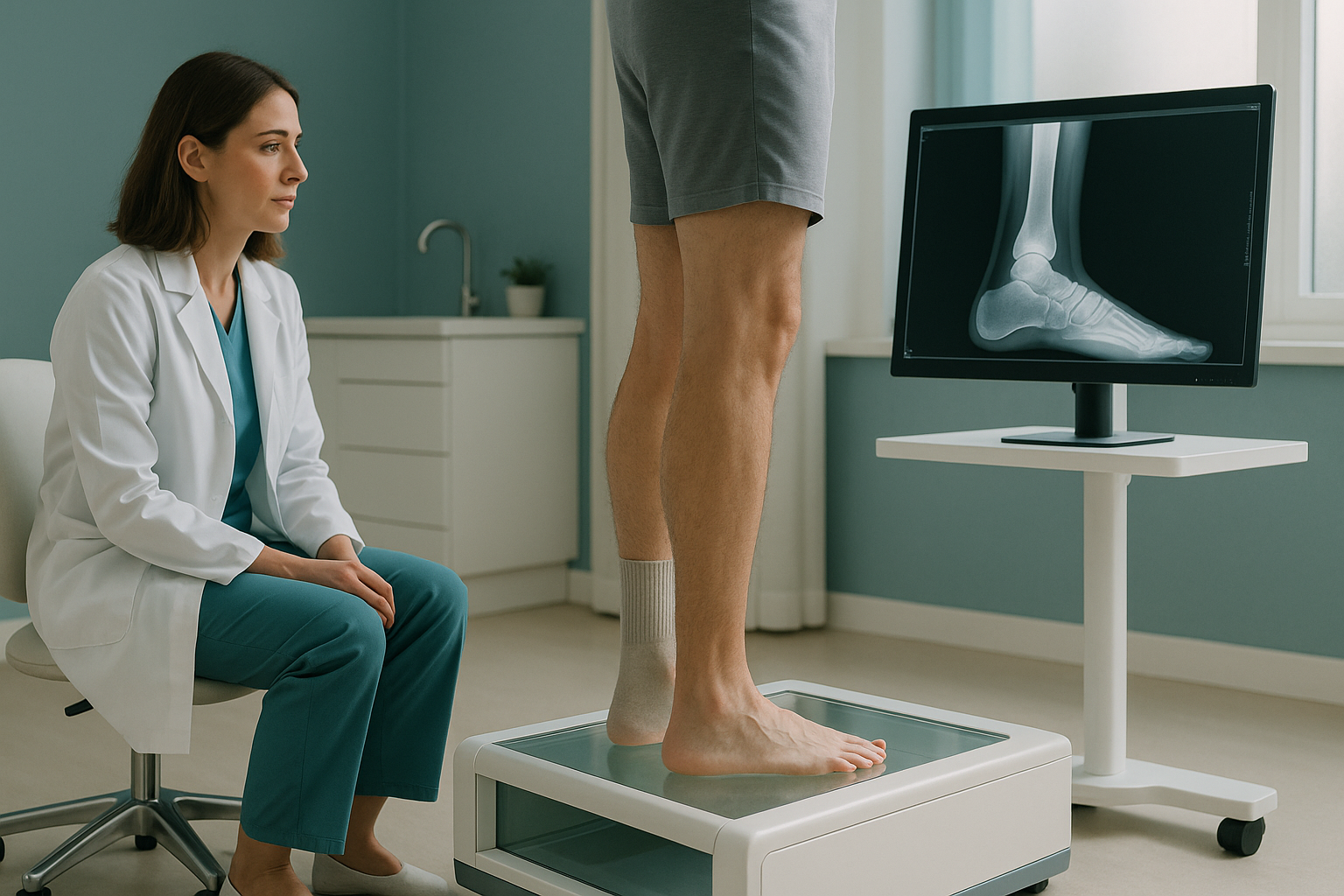
This matters because a pronation or supination problem that looks mild when unloaded may be significant when your full body weight is on it. The scan gives your clinician precise information to guide decisions about orthotics, footwear, physiotherapy or further investigation.
Want to see how your feet, knees and hips line up under your own body weight? Book an alignment assessment at ScanAlign, private standing EOS imaging in London.
When MRI is the better choice: EOS shows bones, joints and alignment clearly. If your clinician suspects soft-tissue damage, such as a torn tendon, ligament injury, or nerve compression, MRI is usually the better tool. The two types of imaging complement each other well.
What helps manage overpronation or supination?
The right approach depends on the severity, the cause, and what is happening elsewhere in your body. Common options include the following.
- Appropriate footwear. Motion control or stability shoes can help overpronation. Neutral, cushioned shoes suit supinators. A proper assessment ensures you choose the right category.
- Custom orthotics. Insoles prescribed on the basis of accurate imaging can support the arch or correct rearfoot motion more precisely than off-the-shelf options.
- Targeted strengthening. Physiotherapy exercises for the foot, ankle and hip muscles can improve control through the gait cycle.
- Whole-body alignment review. Because the foot does not work in isolation, looking at the full chain of alignment helps find the root cause rather than just treating the symptom.
ScanAlign provides the diagnostic imaging to support these decisions. It does not prescribe or deliver treatment directly.
Frequently asked questions
Check the soles of a well-worn pair of shoes. If the inner edge is worn down, you likely overpronate. If the outer edge is worn, you likely supinate. A wet foot test on dark card also gives clues about your arch shape.
Yes. Overpronation is significantly more common. It is associated with flat or low arches, which affect a large proportion of the population. Supination is less frequent and is more often seen in people with high, rigid arches.
It can contribute to it. When the foot rolls inward too far, the shin bone rotates, which changes knee tracking and can alter hip position. Pain often appears above the foot rather than in the foot itself.
Stability or motion control shoes are designed to reduce excessive inward roll. However, the right shoe depends on how much you overpronate and what is happening higher up your body. An alignment assessment can help guide that choice.
They are the same thing. Supination and underpronation both describe a foot that rolls outward instead of going through a normal inward roll during each step.
An EOS scan captures your entire skeleton from head to foot in one standing image, showing how all your joints line up under your own body weight. A standard X-ray typically covers one area and is often taken lying down, so it cannot reveal the same alignment information.
Yes. EOS uses about 90% less radiation than a standard X-ray, around ten times less. It is a well-established imaging system used in hospitals and specialist clinics.
No. You can self-refer. The process starts with a free video consultation to make sure a standing scan is appropriate for your situation.
Pricing details are on the ScanAlign FAQs page.
Orthotics support the foot while you wear them, but they do not usually change the underlying bone structure permanently. They work best as part of a broader plan that may include strengthening exercises and appropriate footwear. Accurate imaging helps ensure the orthotic prescription matches your actual alignment.
See how your whole body lines up, standing
A free video consultation helps you find out whether a standing EOS scan is right for your foot or alignment concern. No referral needed.
Book a free video consultationSources
- Neal BS, Griffiths IB, Dowling GJ, et al. Foot posture as a risk factor for lower limb overuse injury: a systematic review and meta-analysis. Journal of Foot and Ankle Research. 2014;7:55.
- Illés T, Somoskeöy S. The EOS imaging system and its uses in daily orthopaedic practice. International Orthopaedics. 2012;36(7):1405-1411.
- NHS. Flat feet. nhs.uk. Available at: https://www.nhs.uk/conditions/flat-feet/
Written by Abbas Dhami (Specialist Diagnostic Radiographer)
This page is general information and not a diagnosis.
ScanAlign is the trading name of CoreMed Solutions Ltd and operates under The Harley Street Hospital's CQC licence.