
What Causes Plantar Fasciitis, and Why Does It Keep Coming Back?
Plantar fasciitis is inflammation of the thick band of tissue under your foot. It causes sharp heel pain, especially with your first steps in the morning. It often keeps returning because the real cause is not always in the heel itself. Problems higher up, such as tight calves, a tilted pelvis, or a difference in leg length, change how load travels through your feet when you stand and walk.
Key takeaways
- Plantar fasciitis is the most common cause of heel pain in adults.
- It keeps coming back when the underlying alignment or loading problem is not addressed.
- Your body is a connected chain. A problem at the hip or knee can overload your foot.
- Standing, weight-bearing imaging can reveal alignment issues that lying-down scans miss.
- EOS imaging captures your whole skeleton from head to feet in one low-dose standing image.
What is plantar fasciitis?
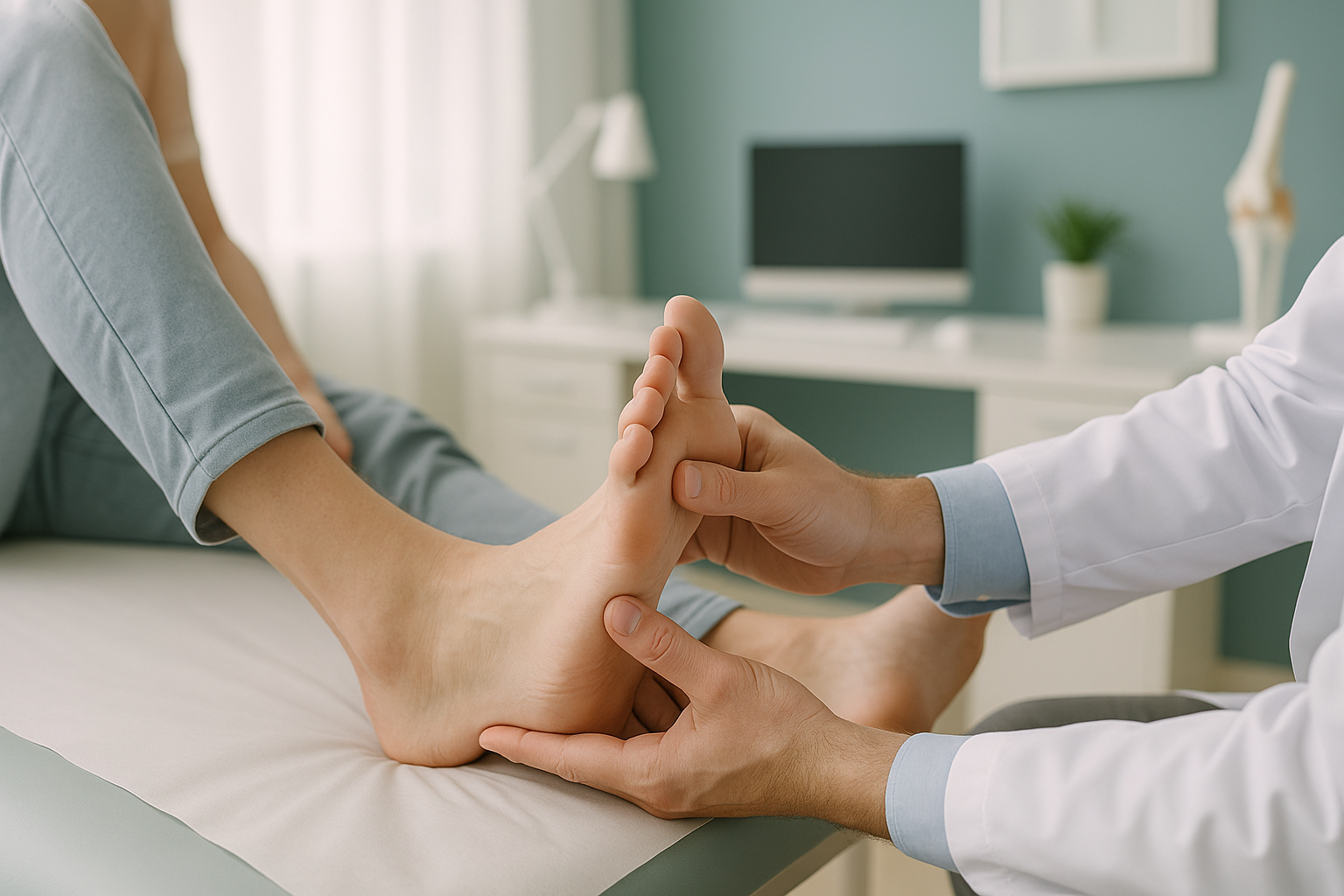
Plantar fasciitis is irritation or small tears in the plantar fascia, a strong band of connective tissue that runs along the sole of your foot from your heel bone to the base of your toes. This band supports your arch and acts like a bowstring, absorbing shock each time your foot hits the ground.
When the fascia is overloaded repeatedly, it becomes inflamed and painful. The pain is usually worst at the underside of the heel, though it can spread along the arch. A heel spur, a small bony growth on the heel bone, sometimes appears on X-rays in people with plantar fasciitis, but the spur itself is not usually the source of pain. It is a sign that the fascia has been under strain for a long time.
How do you know if you have plantar fasciitis?
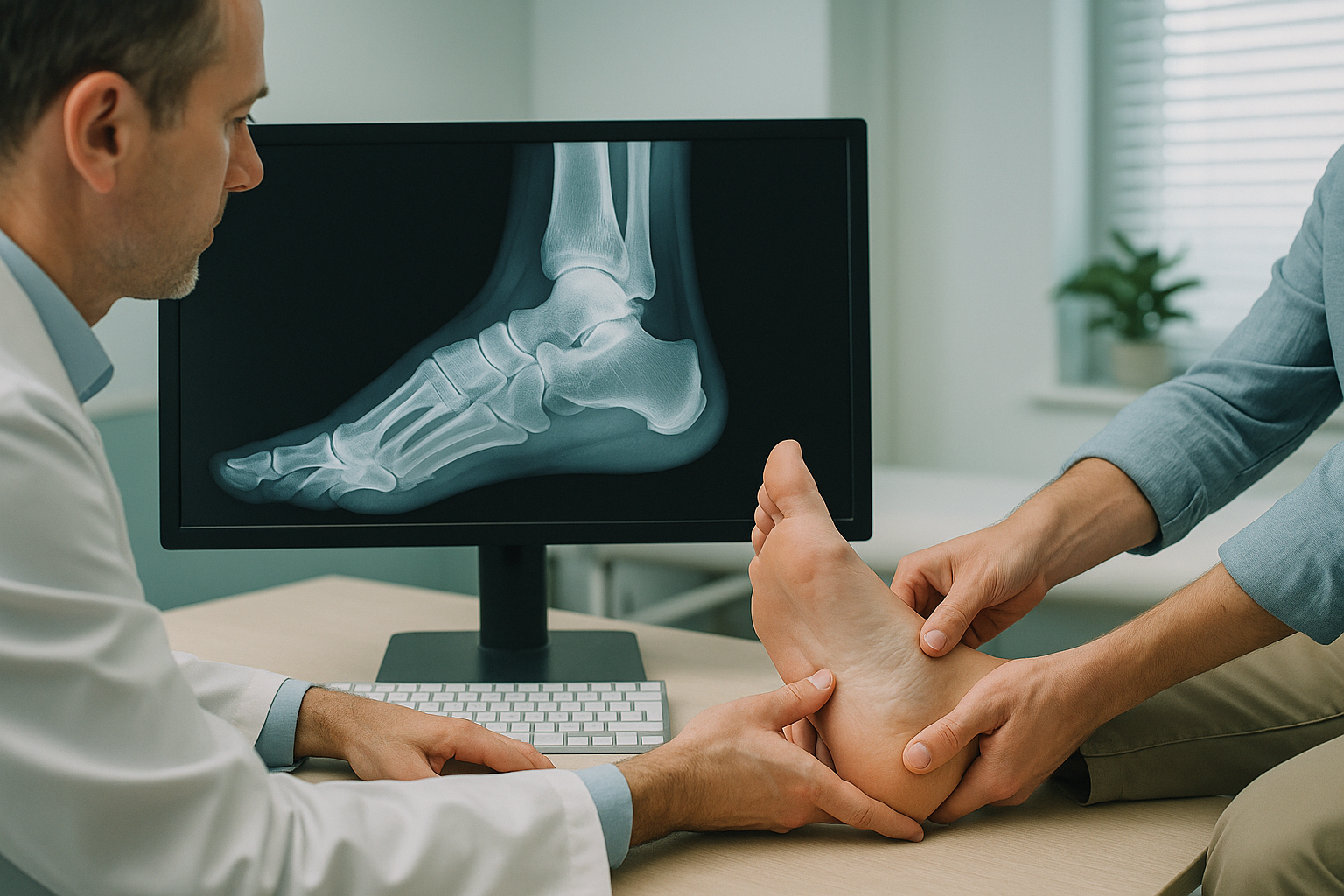
The hallmark symptom is a sharp or stabbing pain in the heel when you take your first steps after rest. Most people notice it first thing in the morning. The pain may ease as you move around, then return after long periods of standing or walking.
A sharp ache under the heel with your first steps each morning or after sitting for a while.
Aching or burning under the heel after being on your feet for a long stretch.
A tight, pulling feeling along the sole, especially when you push off to walk.
A specific tender spot when you press the inside of the heel.
If you also have numbness, tingling, weakness in your foot, or sudden severe pain after an injury, seek urgent medical attention from your GP, 111, or A&E. These may point to a different problem that needs prompt assessment.
What causes plantar fasciitis?
Plantar fasciitis develops when repeated stress damages the fascia faster than it can repair. Several factors increase that stress.
Long hours on your feet, sudden increases in activity, or carrying extra body weight.
Tight calf muscles pull on the heel, increasing tension through the plantar fascia with every step.
Very flat or very high arches, or a foot that rolls inward too much, can overload the fascia unevenly.
A tilted pelvis, rotated hip, or leg length discrepancy can shift extra load onto one foot.
Footwear matters too. Worn-out shoes or thin, unsupportive soles fail to cushion the heel fat pad, letting more force reach the fascia directly.
Why does plantar fasciitis keep coming back?
It keeps returning because most treatment focuses on calming the pain in the heel, not on what is overloading it. Insoles, stretches and rest can reduce symptoms, but if the reason your foot is taking too much strain has not changed, the fascia will be overloaded again as soon as you return to normal activity.
Your body is a connected chain from your feet to your head. When one part is out of alignment, other areas compensate. A slight difference in leg length, for example, can cause your pelvis to tilt. That tilt changes your gait analysis pattern, altering how each foot strikes the ground. One heel absorbs more force than it should, and the fascia on that side breaks down first. Treat the heel alone and the underlying imbalance remains.
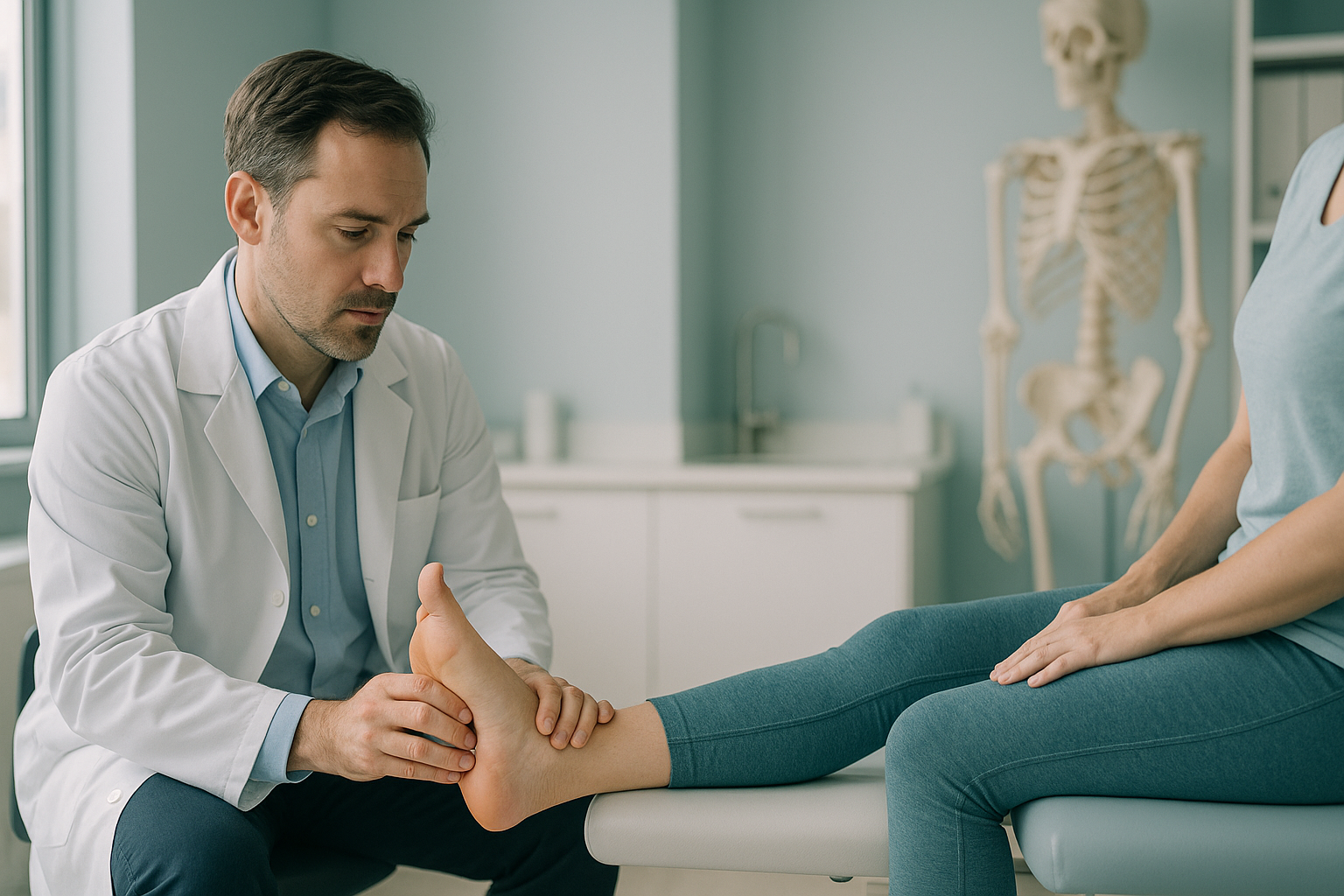
This is why IT band syndrome and load problems in the outer thigh often appear alongside plantar fasciitis. Both can stem from the same alignment issue. Addressing the symptom without checking the whole chain means you may be treating the wrong area.
How does a standing scan help with recurring heel pain?
A standing, weight-bearing scan shows your skeleton under real-life load, exactly as it works when you walk. Standard imaging, whether that is an X-ray, CT or MRI, is usually done lying down. When you lie flat, your muscles relax, your pelvis levels out and small alignment differences disappear. The image looks normal, yet you still have pain.
ScanAlign EOS imaging captures your entire body, from head to feet, in a single standing image using about 90% less radiation than a standard X-ray, around ten times less. Because the whole chain is visible in one picture, your clinician can see exactly where alignment breaks down and how that affects your foot.
If your heel pain keeps returning despite treatment, a full-body standing assessment may reveal the alignment problem behind it.
Book a free video consultationWhen MRI is the better choice: EOS shows bones, joints and alignment. If your clinician suspects a torn plantar fascia, a stress fracture, or nerve entrapment, MRI is usually the better tool because it images soft tissue in detail. The two types of scan complement each other.
What helps plantar fasciitis long term?
Most people improve with conservative approaches. The key is combining local care for the heel with attention to the wider loading pattern.
Local measures
- Calf and Achilles stretches. Reducing tension in the calf takes strain off the fascia. Gentle stretching several times a day is a common starting point.
- Supportive footwear and insoles. Shoes with good arch support and cushioned heels reduce the impact on the fascia. Off-the-shelf or custom insoles can help redistribute pressure.
- Activity adjustment. Temporarily reducing high-impact activities like running, then building back gradually, allows the tissue to recover.
- Rolling and massage. Rolling the sole of your foot on a cold water bottle or a firm ball can ease tightness.
Looking at the bigger picture
- Alignment assessment. Checking whether your pelvis is level, whether one leg is functionally shorter, and how your knees and hips are aligned can uncover why one foot is overloaded.
- Gait review. Understanding how you walk highlights compensations that keep overloading the fascia.
- Strength work. Strengthening the foot, ankle and hip muscles helps support the arch and stabilise your alignment from the ground up.
ScanAlign does not provide treatment. It provides the diagnostic imaging that helps your treating clinician, whether that is a physiotherapist, podiatrist or orthopaedic surgeon, understand exactly what is happening under load so they can target the right area.
Is a standing alignment scan right for you?
- Have plantar fasciitis that keeps returning despite treatment
- Feel your heel pain is worse on one side
- Have been told you have a leg length difference or pelvic tilt
- Want to understand your whole alignment before starting a new exercise plan
- Need imaging to share with a physiotherapist, podiatrist or surgeon
- Have new heel pain that has not yet been assessed by your GP or a physiotherapist
- Need soft-tissue detail (MRI is more suitable)
- Have numbness, weakness, or sudden severe symptoms (seek urgent medical help first)
Frequently asked questions about plantar fasciitis
Most people describe a sharp, stabbing pain under the heel. It is usually worst with the first few steps after sleep or a long rest, then eases as you move. It may return after prolonged standing or walking.
Not quite. A heel spur is a bony growth on the heel bone that sometimes develops alongside plantar fasciitis. Many people have heel spurs without pain. The spur is a sign of long-term fascia strain, not usually the cause of the pain itself.
Yes. Your body works as a connected chain. A tilted pelvis, rotated hip, leg length difference, or knee misalignment can change how load travels to your feet. One heel may absorb more force than the other, leading to fascia strain on that side.
While you sleep, the plantar fascia tightens in a shortened position. When you take your first steps, the fascia stretches suddenly under your body weight, causing that sharp first-step pain. This usually eases after a few minutes of walking.
Insoles can help by supporting the arch and cushioning the heel, reducing the load on the fascia. However, if an alignment problem higher up is driving the overload, insoles alone may not be enough to prevent the pain from returning.
A standard X-ray is usually taken of one body area, often lying down. A standing EOS scan captures your whole skeleton from head to feet while you bear weight. This shows alignment and loading patterns that lying-down imaging can miss, using about 90% less radiation than a standard X-ray, around ten times less.
No. ScanAlign accepts self-referrals. You can book a full-body standing scan directly without a GP letter. You are welcome to share your results with your GP or treating clinician afterwards.
Yes. The EOS system uses about 90% less radiation than a standard X-ray, around ten times less. The scan takes only a few seconds and you stand still fully clothed in light, metal-free clothing.
Pricing details are on the ScanAlign FAQs page. A free video consultation is available so you can discuss whether a scan is right for you before committing.
Calf stretches, Achilles stretches, and gentle rolling of the sole on a ball or frozen bottle are commonly recommended. Strengthening exercises for the foot and ankle can also help. A physiotherapist can guide you on the right programme for your situation.
Stop chasing the pain. Find the cause.
If your heel pain keeps coming back, a full-body standing assessment can show what is really going on. Start with a free video consultation.
Book a free video consultationWritten by Abbas Dhami (Specialist Diagnostic Radiographer)
Sources
- NHS. Plantar fasciitis. nhs.uk/conditions/plantar-fasciitis (accessed 2024).
- Riddle DL, Schappert SM. Volume of ambulatory care visits and patterns of care for patients diagnosed with plantar fasciitis: a national study of medical doctors. Foot Ankle Int. 2004;25(5):303-310.
- Dubois B, Esculier JF. Soft-tissue injuries simply need PEACE and LOVE. Br J Sports Med. 2020;54(2):72-73.
This page is general information and not a diagnosis.
ScanAlign is the trading name of CoreMed Solutions Ltd and operates under The Harley Street Hospital's CQC licence.