

IT Band Syndrome: What Causes It and Why Does the Pain Keep Coming Back?
IT band syndrome is pain on the outer side of the knee or hip caused by the iliotibial band, a thick strip of connective tissue running from the hip to just below the knee. It often flares during repetitive activities like running. Pain that keeps returning usually points to an underlying alignment issue in the leg, hip or pelvis that standard lying-down imaging can miss.
Key takeaways
- The IT band runs from the hip to the knee. When it tightens or rubs, it causes pain on the outer leg.
- Repetitive movement, weak hip muscles and leg alignment problems are the most common causes.
- Lying-down scans relax the muscles and can hide the alignment issues driving the problem.
- A standing, weight-bearing EOS scan captures the full leg from hip to ankle under real load.
- ScanAlign is a diagnostic imaging clinic. It does not treat IT band syndrome, but its imaging helps guide the right treatment.
If you have been told your IT band is "tight" but stretching, foam rolling and rest have not solved the problem, there may be something else going on. Your body is a connected chain. When one part is out of line, other areas compensate. The IT band is often caught in the middle.
What does IT band syndrome feel like?
IT band syndrome typically causes a sharp or burning pain on the outer side of the knee. It can also show up as a dull ache along the outer thigh or at the hip. The pain usually gets worse with repetitive bending and straightening of the knee, for instance during running, cycling or walking downhill.
Symptoms usually build up gradually. Many people notice the pain appears at a predictable point during a run, then eases with rest, only to return the next time they exercise.
What causes IT band syndrome?
IT band syndrome is usually caused by a combination of overuse and biomechanical factors. The band itself does not stretch much. When the structures around it, the hip, pelvis and lower leg, are not properly aligned or strong enough, the IT band takes on extra load and becomes irritated.
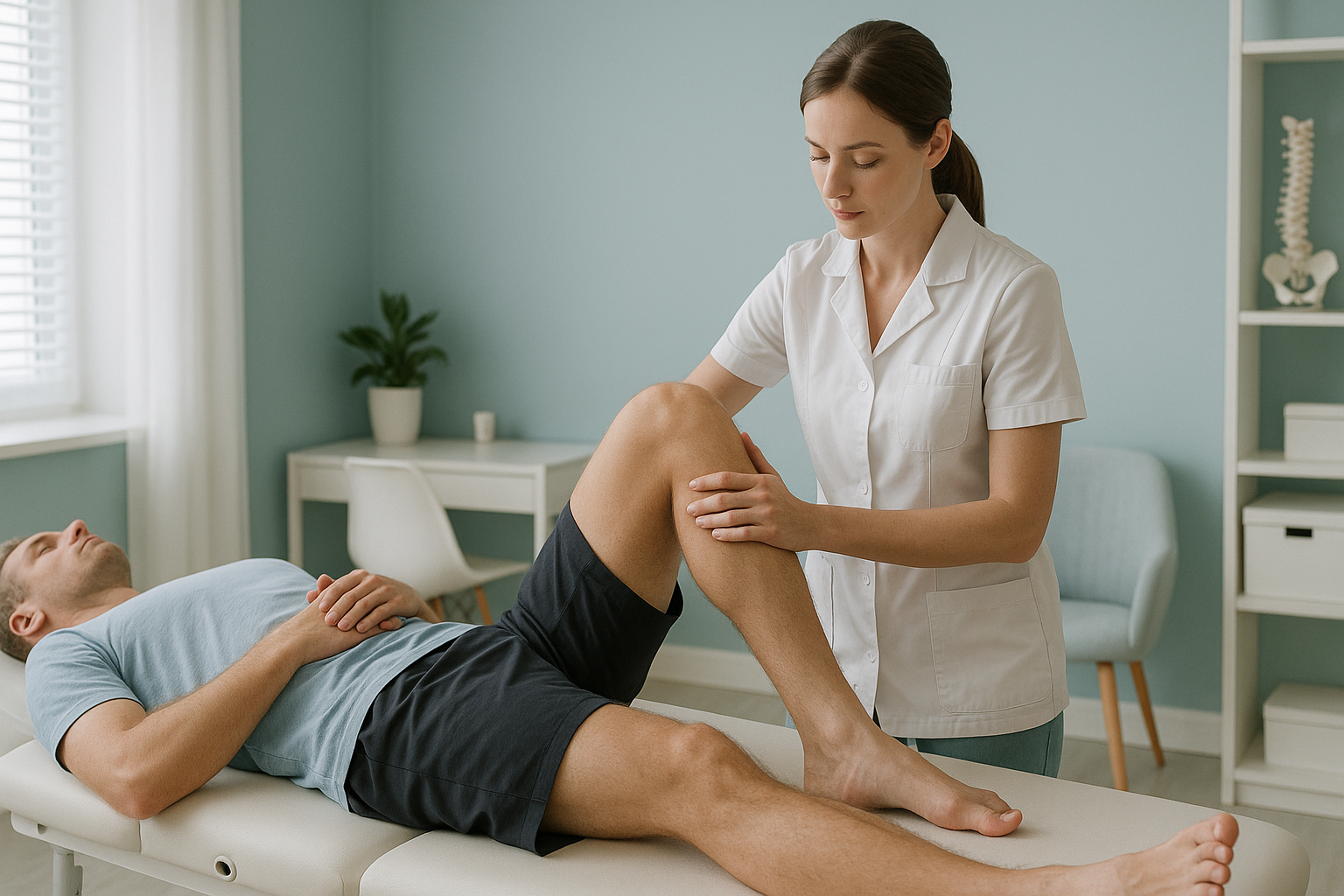
This is why IT band syndrome often keeps coming back. Foam rolling and rest address the symptoms, but if the underlying alignment or muscle imbalance is still there, the irritation returns as soon as you increase activity.
Why does alignment matter for IT band pain?
Alignment matters because the IT band does not work in isolation. It connects the hip to the knee, so it is directly affected by how the pelvis, thigh and lower leg line up under load. Even a small shift at the hip can change the angle at the knee, increasing tension on the band with every step.
Think of your body as a chain. The pelvis sits at the top of the leg. If it tilts or rotates, the thigh bone angles differently, the knee tracks differently, and the foot lands differently. The IT band, running along the outside of this chain, has to absorb the extra strain.
This is also why pain from IT band syndrome can appear at the knee even though the root cause is higher up, at the hip or pelvis. A scan that only looks at the knee may miss the bigger picture entirely.
How does a standing EOS scan help with IT band syndrome?
A standing EOS scan captures the full picture of your alignment from hip to ankle while you are upright and bearing weight. This matters because lying-down imaging, such as a standard X-ray or MRI, relaxes the muscles and lets gravity take the strain off your joints, potentially hiding the alignment issues that only show up when you stand.
An EOS scan uses about 90% less radiation than a standard X-ray, around ten times less. It produces a full-length image of both legs in a single exposure, so your clinician can see whether your leg alignment, pelvic position or knee angle could be contributing to the IT band problem.
Want to find out if your alignment could be behind your IT band pain? A free video consultation lets you discuss your situation with our team before deciding on a scan.
Book a free video consultationWhen MRI is the better choice: EOS shows bones, joints and alignment under load. If your clinician suspects soft-tissue damage, a tendon tear or bursitis around the IT band, MRI is usually the better tool for that. The two types of imaging work well together, each revealing different information.
How long does IT band syndrome take to heal?
Recovery varies from person to person and depends on the underlying cause. Mild cases may settle within a few weeks of reducing the aggravating activity. More stubborn cases, especially those driven by alignment or biomechanical issues, can take several months and often need a more targeted approach.
Common strategies a physiotherapist or specialist may recommend include:
- Strengthening the hip and glute muscles to stabilise the pelvis and knee.
- Gradual return to activity rather than rest alone.
- Gait analysis or footwear review to address how your foot strikes the ground.
- Addressing any leg alignment issues identified on imaging.
ScanAlign does not provide treatment. It provides the detailed standing imaging that helps your physiotherapist, surgeon or sports medicine specialist understand what is driving the problem, so they can tailor your recovery plan to the cause, not just the symptoms.
To learn more about how standing imaging works, visit the EOS scan overview.
Frequently asked questions about IT band syndrome
IT band syndrome, also called iliotibial band syndrome, is irritation of the thick connective tissue that runs along the outside of the thigh from the hip to just below the knee. It causes pain on the outer knee or hip, most often during repetitive activities like running or cycling.
Most runners describe a sharp or burning pain on the outside of the knee. It typically appears at a predictable point during a run, often getting worse if you push through it, and easing once you stop.
Yes. The IT band attaches at the hip, so tightness or irritation can cause pain along the outer thigh and around the hip bone, not just at the knee.
Recurring IT band pain often points to an underlying alignment or biomechanical issue that has not been addressed. Weak hip muscles, a pelvic tilt or a leg alignment problem can keep overloading the band even after rest.
Foam rolling may provide temporary relief but it does not address the root cause. The IT band is very stiff connective tissue and does not stretch much. Strengthening the muscles around the hip and addressing any alignment issues is generally more effective long term.
An EOS scan is taken while you stand, capturing the full length of both legs in one image under real weight-bearing conditions. A standard X-ray typically shows a smaller area and may be taken lying down, which relaxes the muscles and can mask alignment problems. EOS also uses about 90% less radiation than a standard X-ray, around ten times less.
No. ScanAlign is a private, self-pay clinic. You can refer yourself. The process starts with a free video consultation so we can make sure the scan is appropriate for your situation.
Yes. EOS uses about 90% less radiation than a standard X-ray, around ten times less. You can find more details about safety on the FAQs and safety page.
Pricing information is available on the FAQs and cost page. ScanAlign is a private, self-pay service with no hidden fees.
No. ScanAlign is a diagnostic imaging clinic. It provides detailed standing imaging and a specialist report. This information helps your physiotherapist, surgeon or sports medicine doctor plan the right treatment for you.
Find out what is driving your IT band pain
A free video consultation lets you discuss your symptoms and find out whether a standing alignment scan could help identify the cause.
Book a free video consultationRelated pages
Sources
- Fredericson, M. & Wolf, C. (2005). Iliotibial band syndrome in runners: innovations in treatment. Sports Medicine, 35(5), 451-459.
- NHS. Knee pain overview. nhs.uk. Available at: https://www.nhs.uk/conditions/knee-pain/
- Deschamps, K. et al. (2010). Body measurements and alignment using the EOS system. European Journal of Radiology, 73(3), 604-611.
Written by Abbas Dhami (Specialist Diagnostic Radiographer)
This page is general information and not a diagnosis.
ScanAlign is the trading name of CoreMed Solutions Ltd and operates under The Harley Street Hospital's CQC licence.