
What Is Prepatellar Bursitis (Housemaid's Knee)?
Prepatellar bursitis is swelling of the small fluid-filled sac (bursa) that sits directly over the front of your kneecap. It is often called housemaid's knee because it is common in people who kneel for long periods. The swelling can range from mild puffiness to a noticeable, tender lump that makes kneeling painful.
Key takeaways
- The prepatellar bursa cushions the kneecap. Repeated pressure or a direct blow can irritate it and cause fluid to build up.
- A hot, red, swollen knee may be infected (septic bursitis) and needs urgent medical attention.
- Lying-down scans can miss alignment issues that increase pressure on the front of the knee when you stand and walk.
- Prepatellar bursitis is one of several types of bursitis that can affect the knee.
- ScanAlign uses EOS standing imaging to show how your whole leg loads under your own body weight.
Your prepatellar bursa is a thin, fluid-filled cushion that sits between the skin and the kneecap (patella). Normally you would not know it is there. Its job is to reduce friction so the skin can glide smoothly when you bend and straighten your knee.
When this bursa becomes irritated, it fills with extra fluid and swells up. That is prepatellar bursitis. It is one of the most common forms of knee bursitis, alongside infrapatellar bursitis (just below the kneecap) and pes anserine bursitis (on the inner side of the shin).
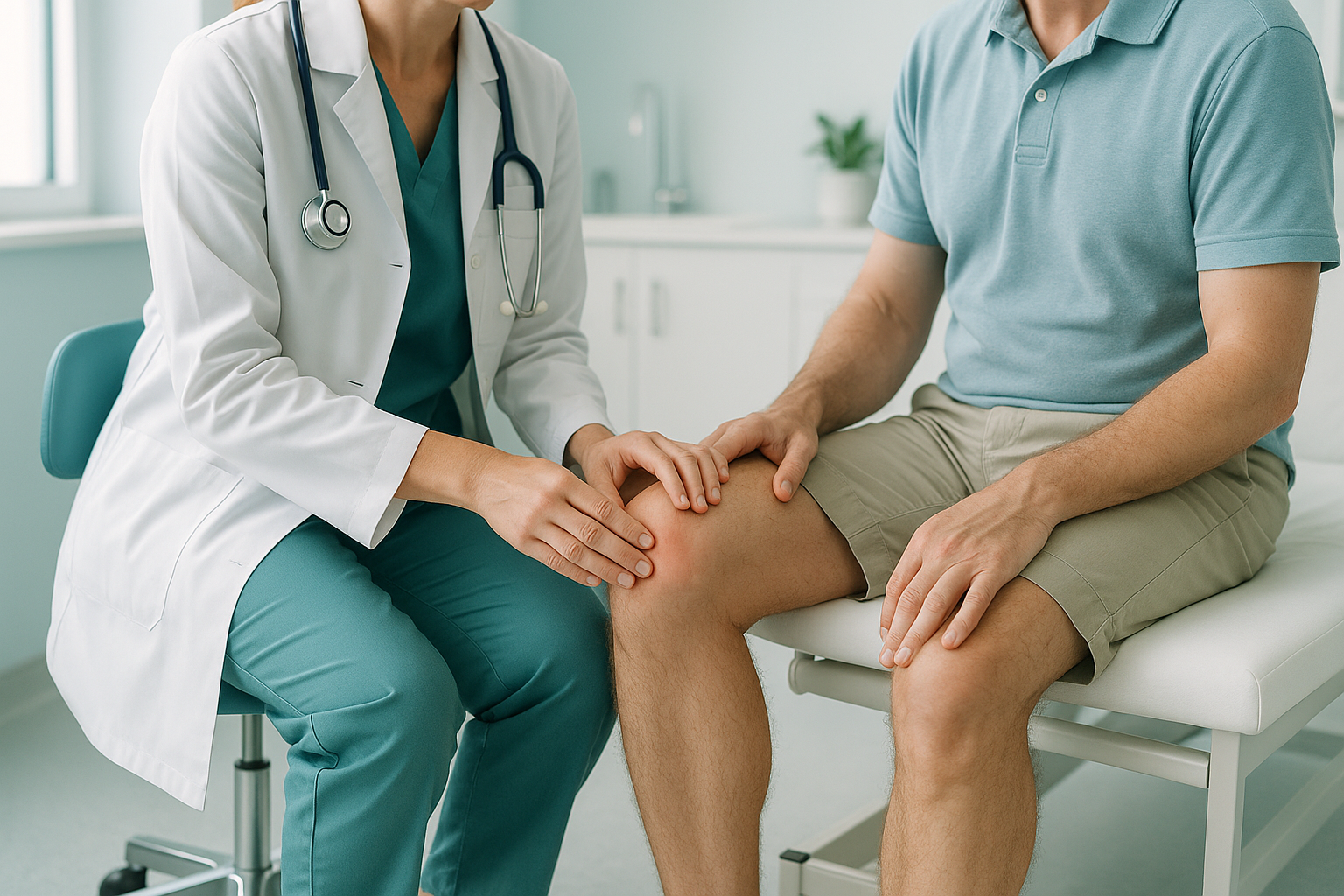
What does prepatellar bursitis feel like?
The main sign is a soft, sometimes warm swelling directly over the front of your kneecap. It can appear gradually after weeks of kneeling, or quickly after a knock or fall.
A puffy or egg-shaped lump sitting right on top of the kneecap. It may feel spongy when pressed.
Kneeling or pressing directly on the knee is uncomfortable or painful. Walking on a flat surface may feel normal.
A feeling of tightness at the front of the knee, especially when bending fully.
The skin over the swelling may feel warmer than the surrounding area.
What causes swelling in front of the kneecap?
Repeated pressure on the prepatellar bursa is the most common cause. The bursa becomes irritated, inflamed, and fills with extra fluid. Several things can trigger this.
Carpet layers, plumbers, gardeners, cleaners. Any job or hobby that keeps you on your knees for hours.
A fall onto the knee or a blow during sport can cause sudden swelling.
A cut or graze near the knee can let bacteria into the bursa, causing septic bursitis. This is a medical emergency.
Gout or rheumatoid arthritis can sometimes inflame the bursa without direct pressure.
When is knee swelling a sign of something serious?
Most prepatellar bursitis is not dangerous, but an infected bursa (septic bursitis) needs urgent treatment. You should look out for the combination of symptoms below.
Seek urgent medical attention (GP, 111, or A&E) if you notice:
- The knee is very red, hot and swollen, and spreading redness beyond the kneecap
- You develop a fever, chills, or feel generally unwell
- There is an open wound near the swelling
- The pain is severe and getting worse quickly
These can be signs of septic bursitis or another infection. Do not wait for an imaging appointment. Get medical help straight away.
How is prepatellar bursitis diagnosed?
A doctor can usually diagnose prepatellar bursitis by examining your knee and asking about your activities. In some cases, further imaging helps rule out other problems, such as a fracture or a deeper joint issue. If infection is suspected, fluid may be drawn from the bursa (aspiration) and tested.
When is MRI the better choice? EOS standing imaging is excellent for showing bones, joints and overall leg alignment. For soft-tissue detail, such as the bursa itself, surrounding tendons, or ligament damage, MRI is usually the better tool. Your clinician can advise which you need.
Why does standing alignment matter for knee bursitis?
Alignment problems in the leg can change the way forces pass through your knee. If your leg is slightly rotated, or if you have a knock-knee or bow-leg pattern, extra pressure may focus on the front of the kneecap every time you kneel or bend.
Standard imaging is usually taken lying down. When you lie flat, your muscles relax and your joints settle into a position that does not reflect how they work during daily life. Problems that only appear under load, when you are standing and bearing weight, can be missed entirely.
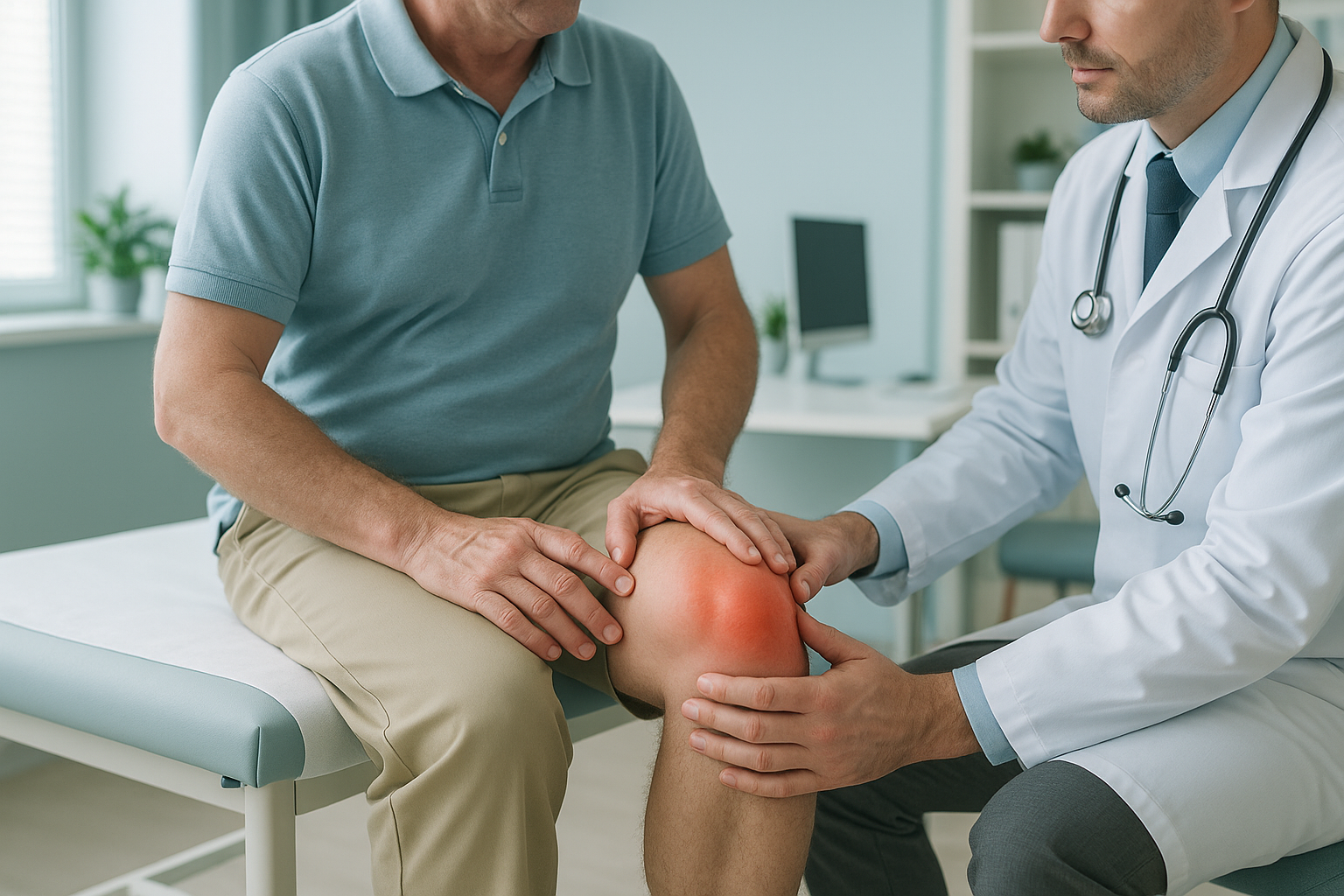
Your body is a connected chain, from your feet through your knees, hips and spine. A subtle tilt in the pelvis or a rotation in the shin can shift load onto the front of the kneecap. You feel the problem at the knee, but the cause may be above or below it. Standing whole-body imaging captures the full picture, so your clinician can see exactly where the imbalance starts.
EOS imaging uses about 90% less radiation than a standard X-ray, around ten times less. You simply stand still inside the scanner for a few seconds while it captures your full lower limb alignment in one pass.
If your knee bursitis keeps returning, alignment may be part of the picture. A standing assessment can help your clinician understand why.
Book a free video consultationWhat helps with prepatellar bursitis?
Treatment depends on the cause and severity. As a diagnostic imaging clinic, ScanAlign does not provide treatment, but we can share what is generally recommended.
- Avoid the trigger. If kneeling caused the problem, reducing or stopping kneeling gives the bursa time to settle. Knee pads or a cushioned mat can help if you must kneel.
- Activity modification. Rest, ice, and keeping the knee elevated can reduce swelling in mild cases.
- Medical review. A GP or specialist may recommend anti-inflammatory medication, aspiration (draining the fluid), or further investigation if the swelling keeps coming back.
- Alignment assessment. For recurrent bursitis, understanding how your leg loads under body weight can help identify contributing factors that simple rest does not address.
You can book a knee assessment to see whether standing alignment is contributing to ongoing or recurrent symptoms.
Frequently asked questions about prepatellar bursitis
Yes. Housemaid's knee is the common name for prepatellar bursitis. It was originally associated with domestic workers who spent hours kneeling to scrub floors.
Mild cases often improve within a few weeks once the aggravating activity is stopped. Chronic or recurrent cases can take longer and may need medical intervention such as aspiration or further investigation.
It depends on the severity. Activities that do not involve direct pressure on the kneecap, such as swimming or cycling, are usually better tolerated. Avoid kneeling, squatting, or any exercise that puts the front of the knee under load until your symptoms settle.
Signs of infection include marked redness and warmth spreading beyond the kneecap, fever, chills, and rapidly worsening pain. If you notice these, seek urgent medical attention from your GP, 111, or A&E.
They involve different bursae. The prepatellar bursa sits over the top of the kneecap, while the infrapatellar bursa sits just below it. Both can be irritated by kneeling, but the exact location of swelling and tenderness differs slightly.
No. ScanAlign is a private, self-pay clinic. You do not need a GP referral. You can book a free video consultation directly to discuss whether imaging is appropriate for your situation.
Yes. EOS uses about 90% less radiation than a standard X-ray, around ten times less. It is a very low-dose imaging system designed for standing, weight-bearing assessments.
For up-to-date pricing, please visit the ScanAlign FAQs and cost page.
Possibly. If your leg alignment places extra stress on the front of the knee, the bursa may become irritated repeatedly even after treatment. Standing imaging can reveal these patterns so your clinician can address the underlying cause.
You stand naturally inside the EOS scanner while it captures images of your full lower limbs. The scan takes only a few seconds and is painless. You receive a detailed report that your treating clinician can use to plan next steps.
Knee swelling that keeps coming back?
A free video consultation can help you understand whether standing alignment imaging is the right next step for you.
Book a free video consultationAuthor: Abbas Dhami (Specialist Diagnostic Radiographer)
Sources
- NHS. "Bursitis." nhs.uk. Accessed 2024.
- Rishor-Olney CR, Pozun A. "Prepatellar Bursitis." StatPearls, National Library of Medicine, 2023.
- American Academy of Orthopaedic Surgeons (AAOS). "Prepatellar (Kneecap) Bursitis." OrthoInfo. Accessed 2024.
This page is general information and not a diagnosis.
ScanAlign is the trading name of CoreMed Solutions Ltd and operates under The Harley Street Hospital's CQC licence.