

Pes Anserine Bursitis: What Causes Inner Knee Pain and Why Does It Keep Coming Back?
Pes anserine bursitis is inflammation of a small fluid-filled sac on the inner side of your knee, just below the joint. It causes localised tenderness, swelling and pain that often worsens with stairs. Because the knee sits in a chain between your hip and foot, alignment problems elsewhere can overload this area and keep the pain returning.
Key takeaways
- The pes anserine bursa sits where three hamstring tendons meet the inner shinbone.
- Pain is typically felt just below the inner knee, especially climbing stairs or getting up from a chair.
- Poor leg alignment, hip position, or foot mechanics can quietly overload this spot.
- A standing, weight-bearing scan shows alignment under real-world conditions that lying-down imaging can miss.
- EOS imaging uses about 90% less radiation than a standard X-ray, around ten times less.
If you have a nagging ache on the inner side of your knee that flares up with activity, you may have been told it is pes anserine bursitis. The name sounds complicated, but the idea is simple. A small cushioning sac, called a bursa, has become irritated and inflamed. Understanding why it happened in the first place is the key to stopping it from returning.
What are the symptoms of pes anserine bursitis?
The main symptom is a focused, tender pain on the inner side of your knee, roughly two to three finger widths below the kneecap. It often builds gradually rather than starting with a single event.
Some people also notice pain at night if they sleep with their knees together, because the inner surfaces press against each other.
What causes pes anserine bursitis?
Pes anserine bursitis happens when the bursa is compressed or rubbed repeatedly. This can result from local overuse, but often the root cause is further up or down the leg.
Excess body weight, sudden increases in walking or running, and poor footwear can also contribute. In many cases, several of these factors combine.
Why does alignment matter for inner knee pain?
Your body works as a connected chain from your feet to your head. When one link is out of position, the areas above and below compensate. The inner knee often pays the price.
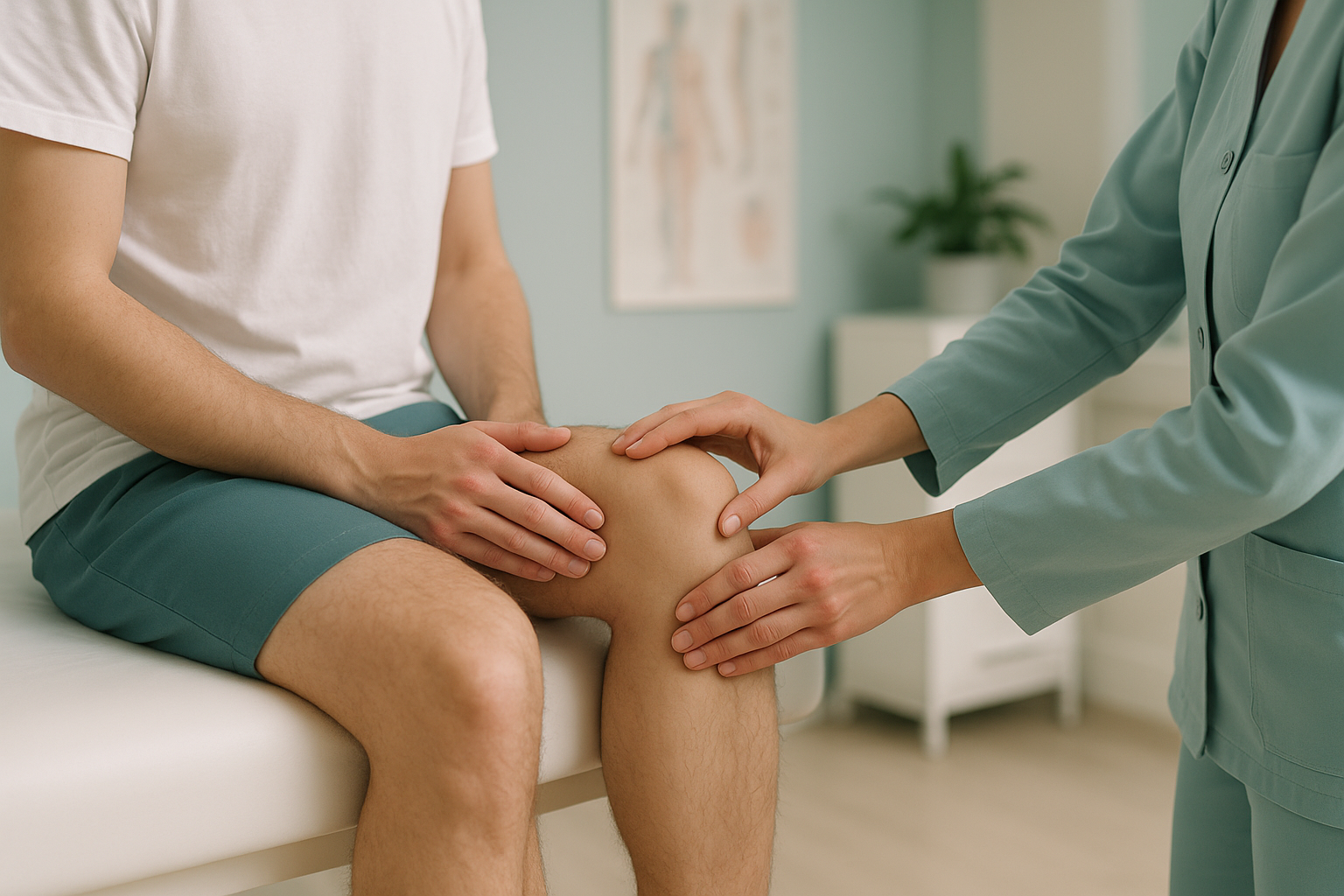
A hip that tilts or rotates slightly can angle the thigh bone inward, pushing the knee into a knock-knee position. At the same time, a foot that rolls inward twists the shin outward. Both forces concentrate load on the inner knee, right where the pes anserine bursa sits.
This is why treating only the painful knee may bring short-term relief but not a lasting solution. If the alignment problem that caused the overload is still there, the irritation returns.
How does a standing scan help with pes anserine bursitis?
A standing, weight-bearing scan shows your bones and joints under real load, the way they actually work when you walk, climb stairs, or stand. This reveals alignment issues that lying-down imaging can hide.
When you lie down for a standard X-ray, CT, or MRI, gravity is removed. Your muscles relax and your joints settle into a neutral position. Any subtle rotation at the hip, tilt of the pelvis, or inward drift of the knee may straighten out and disappear from the image. The scan looks normal, but the problem is still there every time you stand up.
EOS imaging captures your full leg alignment in a single standing image, from the hips through both knees to the ankles. This lets a clinician see the entire chain at once and identify exactly where the imbalance begins. The scan uses about 90% less radiation than a standard X-ray, around ten times less, so it is a safe option for investigating alignment.
Want to find out whether a standing alignment scan could explain your inner knee pain?
Book a free video consultationWhen MRI is the better choice: EOS shows bones, joints and alignment clearly. For soft-tissue problems like inflamed bursae, torn menisci, or damaged ligaments, MRI is usually the better tool. Your clinician may recommend both, depending on your situation.
What helps manage pes anserine bursitis?
Management usually focuses on reducing the irritation and then addressing whatever caused the overload. ScanAlign does not provide treatment, but the alignment information from a standing scan can guide the professionals who do.
- Rest and activity modification. Reducing or adjusting the activities that trigger pain gives the bursa time to settle.
- Ice. Applying ice to the inner knee for short periods can help reduce swelling.
- Physiotherapy. Strengthening the muscles around the hip and knee, and stretching tight hamstrings, can improve how load passes through the joint.
- Footwear and orthotics. If overpronation is part of the problem, supportive shoes or insoles can help correct the twist at the shin.
- Alignment assessment. Understanding the full picture, from hip to ankle, helps a physiotherapist or surgeon target the real source rather than just the painful spot.
If you experience sudden locking of the knee, inability to bear weight, or severe swelling with redness and heat, seek urgent medical attention through your GP, 111, or A&E. These signs may point to something other than bursitis.
Frequently asked questions about pes anserine bursitis
It sits on the inner side of your shinbone, a few centimetres below the knee joint line. Three tendons from the hamstring muscles attach here, and the bursa cushions the area where they meet the bone.
Climbing stairs requires your hamstrings and inner thigh muscles to work hard against gravity. This increases tension on the pes anserine tendons and compresses the inflamed bursa, producing a sharp or burning pain.
A standard X-ray does not show the bursa itself, because it is soft tissue. However, a standing X-ray such as an EOS scan can reveal the alignment problems that may be overloading the area, which is valuable information for treatment planning.
No. Both can cause inner knee pain, but they affect different structures. Bursitis involves the fluid sac below the joint, while a meniscus tear is cartilage damage inside the joint. An MRI can usually distinguish between the two.
With proper rest and management, many people see improvement within a few weeks. However, if the underlying cause, such as poor alignment, is not addressed, the bursitis often returns.
No. ScanAlign is a private, self-pay clinic. You can refer yourself directly without a GP letter. The process starts with a free video consultation to make sure imaging is appropriate for you.
Yes. EOS uses about 90% less radiation than a standard X-ray, around ten times less. You can find more details on safety and what to expect on our FAQs page.
Pricing details are available on our FAQs and cost page. The free video consultation will confirm exactly what is included for your situation.
Yes. Flat feet or overpronation cause the foot to roll inward, which twists the shin and redirects force to the inner knee. Over time, this repetitive stress can irritate the pes anserine bursa.
A normal X-ray is often taken lying down and captures only one area. A standing EOS scan images both legs from hip to ankle in a single upright exposure, showing how your joints align under your full body weight. Learn more about how EOS imaging works.
Find out what is really behind your inner knee pain
A short, free video consultation will help you understand whether a standing alignment scan is the right next step.
Book a free video consultationWritten by Abbas Dhami (Specialist Diagnostic Radiographer)
Sources
- Helfenstein M Jr, Kuromoto J. Anserine syndrome. Revista Brasileira de Reumatologia, 2010;50(3):313-327.
- Defined by the American Academy of Orthopaedic Surgeons (AAOS), "Pes Anserine (Knee Tendon) Bursitis," OrthoInfo patient resource.
- Illés T, Somoskeöy S. The EOS imaging system and its uses in daily orthopaedic practice. International Orthopaedics, 2012;36(7):1405-1411.
This page is general information and not a diagnosis.
ScanAlign is the trading name of CoreMed Solutions Ltd and operates under The Harley Street Hospital's CQC licence.