
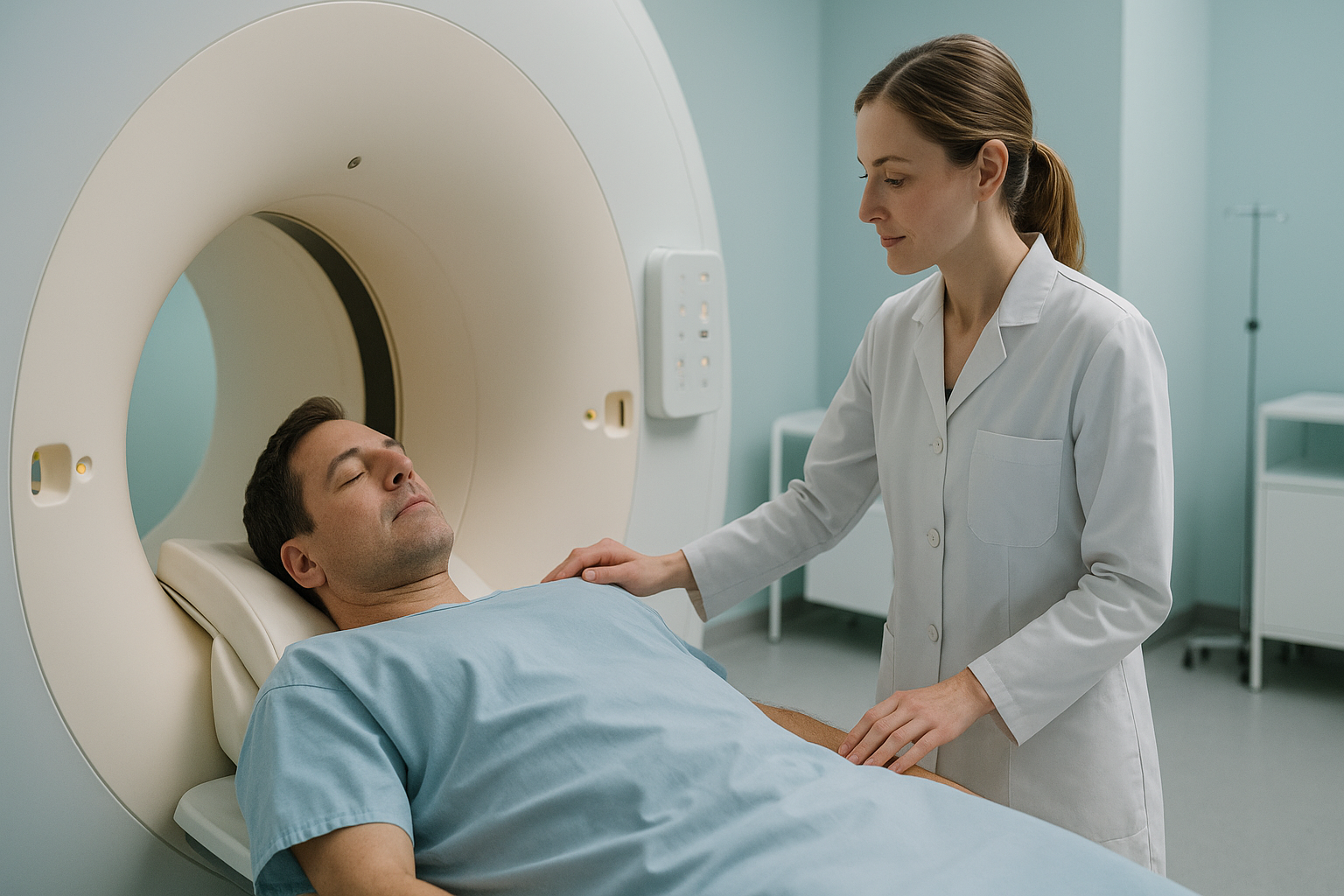
Can You Be Scanned With Metal Implants or a Pacemaker?
If you have metal implants, such as a joint replacement or spinal rods, you can usually have an EOS scan without any problem. EOS uses a very low-dose X-ray and involves no magnet, so metal in the body is not the safety concern it can be with MRI. A pacemaker or other electronic device is not a barrier to an EOS scan either.
Key takeaways
- EOS imaging uses X-rays, not a magnetic field, so metal implants do not pose the risks associated with MRI.
- Joint replacements, spinal instrumentation, plates, screws and wires are all compatible with EOS scanning.
- Pacemakers, cochlear implants and other electronic devices do not need to be checked for EOS compatibility the way they do for MRI.
- EOS delivers about 90% less radiation than a standard X-ray, around ten times less.
- If you are unsure whether our scan suits your situation, you can check who our scan is suitable for.
Why is metal in the body a concern for some scans?
The concern comes mainly from MRI. An MRI scanner creates a powerful magnetic field. Any ferromagnetic metal, meaning metal that is attracted to a magnet, can move, heat up, or distort the image. That is why MRI units ask detailed questions about implants, surgical clips, shrapnel and electronic devices before every scan.
Pacemakers and cochlear implants contain electronics that a strong magnetic field can interfere with. Some newer devices are labelled "MR conditional", but checking compatibility is complex and must be done by the implanting team, not by an imaging clinic.
Standard X-ray and CT also use radiation rather than magnetism, so metal itself is not dangerous during those scans. However, dense metal can create bright streaks on the image, sometimes called metal artefact, which can hide the detail a surgeon or specialist needs to see.
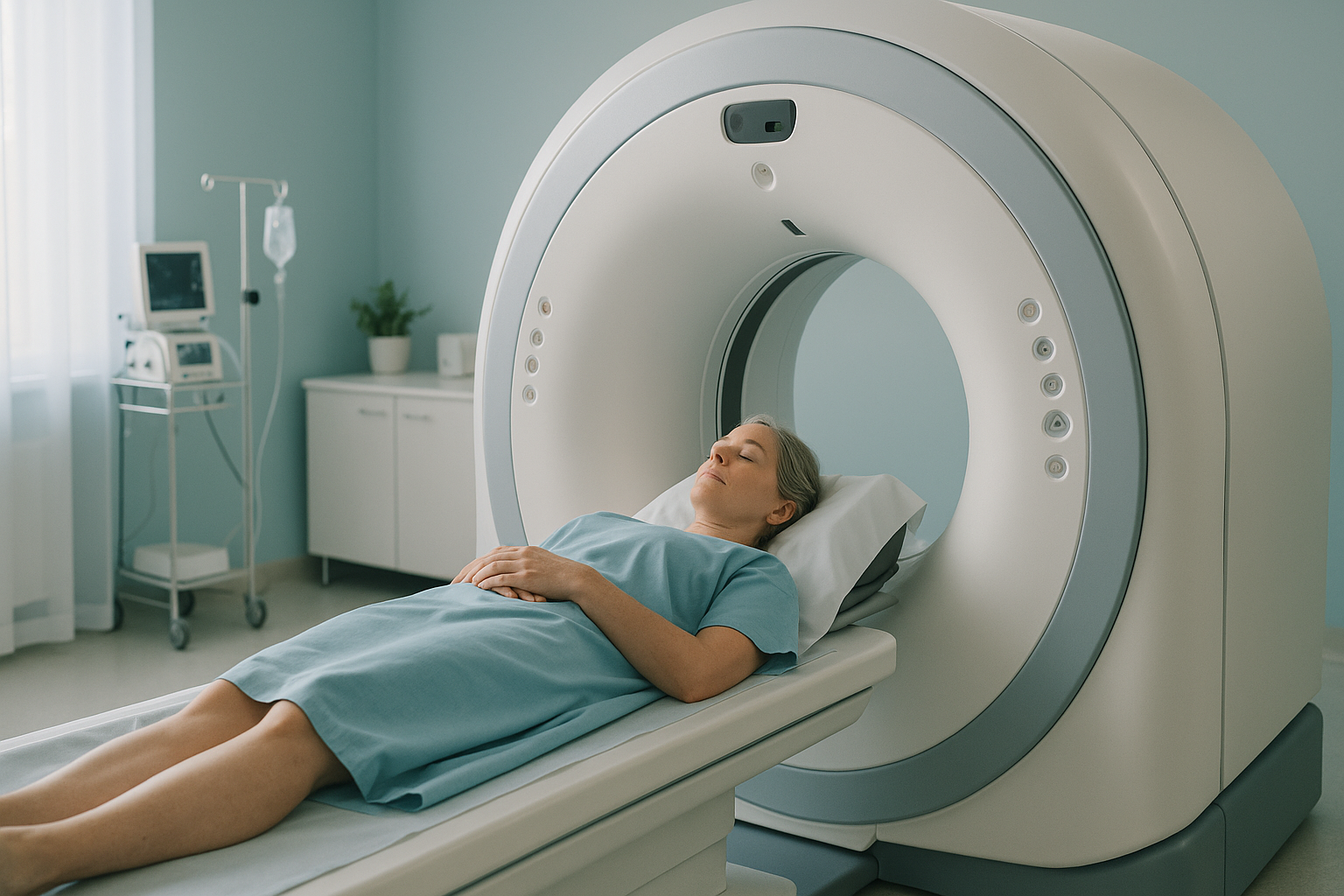
How does an EOS scan work if you have metal in your body?
An EOS scan uses a narrow, sweeping X-ray beam to capture the whole body from head to foot in a single standing image. Because it is an X-ray technique, there is no magnetic field at any point. Metal implants stay exactly where they are. There is no pulling, no heating and no interference with electronic devices.
The image quality around metal is also better than you might expect. EOS technology was designed partly to image people after surgery, including those with hip replacement or knee replacement hardware and spinal instrumentation. The system reduces much of the scatter that causes bright artefact lines on conventional X-rays.
Because the scan is done standing, your specialist sees how your implant is performing under real weight-bearing load. That is information a lying-down scan cannot provide. Learn more about EOS compared with X-ray, CT and MRI.
How do different scans compare for people with implants?
Each imaging method interacts with metal differently. The table below gives a general overview. For specific guidance about your own device, always check with the team who fitted it.
| Factor | EOS | Standard X-ray | CT | MRI |
|---|---|---|---|---|
| Uses a magnetic field | No | No | No | Yes (very strong) |
| Metal implants generally tolerated | Yes | Yes | Yes | Case by case |
| Pacemaker / electronic device concern | None | None | None | Significant |
| Metal artefact on image | Reduced | Moderate | Can be significant | Can be significant |
| Standing, weight-bearing image | Yes | Sometimes (limited area) | No (lying down) | No (lying down) |
| Radiation dose | Very low | Standard | Higher | None (no radiation) |
What happens when you book a scan with metal implants?
You do not need to do anything special. The process at ScanAlign, standing EOS imaging is straightforward.
Free video consultation
A specialist radiographer reviews your history, confirms EOS is appropriate and answers any questions about your implants.
Safety questionnaire
Before your appointment, you complete a short form listing any implants, devices or previous surgeries. This helps us plan the best scan for you.
Your scan
You stand in the EOS unit for under a minute. No gown change is needed in most cases. Jewellery over the scan area may need to be removed briefly.
Your report
A consultant radiologist reviews the images and prepares a detailed report, which you can share with your specialist or surgeon.
If you have an implant card (the small card or document you were given after surgery), it is helpful to have it to hand at your consultation, but it is not essential.
When MRI is the better choice. EOS excels at showing bones, joints and whole-body alignment under load. For soft tissue detail, such as discs, nerves, ligaments or cartilage, MRI is usually the more appropriate tool. If your clinician needs soft-tissue imaging and you have metal implants, the decision about MRI suitability rests with the implanting team and the MRI unit, not with us. We are happy to discuss which type of imaging best answers your clinical question during a free consultation.
Not sure if an EOS scan is right for you? You can check who our scan is suitable for or speak with our radiographer at no cost.
Book a free video consultationFrequently asked questions
Yes. Joint replacements are routinely imaged with EOS. In fact, standing EOS imaging is one of the best ways to assess how a replacement is performing under real weight because it captures the whole limb and pelvis in one upright image.
Yes. EOS uses X-rays, not a magnetic field. Pacemakers, implantable defibrillators and other cardiac devices are not affected by the scan in any way.
Metal can create some bright areas on any X-ray-based image. However, EOS technology significantly reduces the scatter that causes these artefacts, so the surrounding bone and alignment detail usually remains clear.
It is helpful if you have one, but not essential for an EOS scan. Unlike MRI, there is no need to verify whether your implant is compatible with a magnetic field.
All types of spinal instrumentation are compatible with EOS. Assessing alignment alongside hardware is one of the most common reasons people have a standing EOS scan after spinal surgery.
Whether MRI is suitable depends on the type of implant you have. That decision must be made by the implanting team and the MRI scanning unit, not by us. If you need soft-tissue detail, MRI may be the right choice, but the safety assessment is separate from anything we do at ScanAlign.
EOS delivers about 90% less radiation than a standard X-ray, around ten times less. This makes it one of the lowest-dose skeletal imaging methods available.
No. You can self-refer. The process starts with a free video consultation with our specialist radiographer, who will confirm the scan is clinically appropriate for you.
You can check your suitability and book through our website, where up-to-date pricing and package information are available.
Electronic implants such as cochlear devices, nerve stimulators and insulin pumps are not affected by an EOS scan. The scanner does not produce a magnetic field, so there is no interference risk.
Have metal implants? No problem.
Speak with our radiographer for free. We will confirm an EOS scan is right for you and answer any questions about your implant.
Book a free video consultationWritten by Abbas Dhami (Specialist Diagnostic Radiographer)
Sources
- Deschênes S, et al. "EOS low-dose radiography: a reliable alternative for the follow-up of patients with metal implants." European Radiology, 2012.
- Medicines and Healthcare products Regulatory Agency (MHRA). "Safety Guidelines for Magnetic Resonance Imaging Equipment in Clinical Use." MHRA, 2021.
- American College of Radiology. "ACR Guidance Document on MR Safe Practices." Journal of Magnetic Resonance Imaging, 2020.
This page is general information and not a diagnosis.
ScanAlign is the trading name of CoreMed Solutions Ltd and operates under The Harley Street Hospital's CQC licence.