
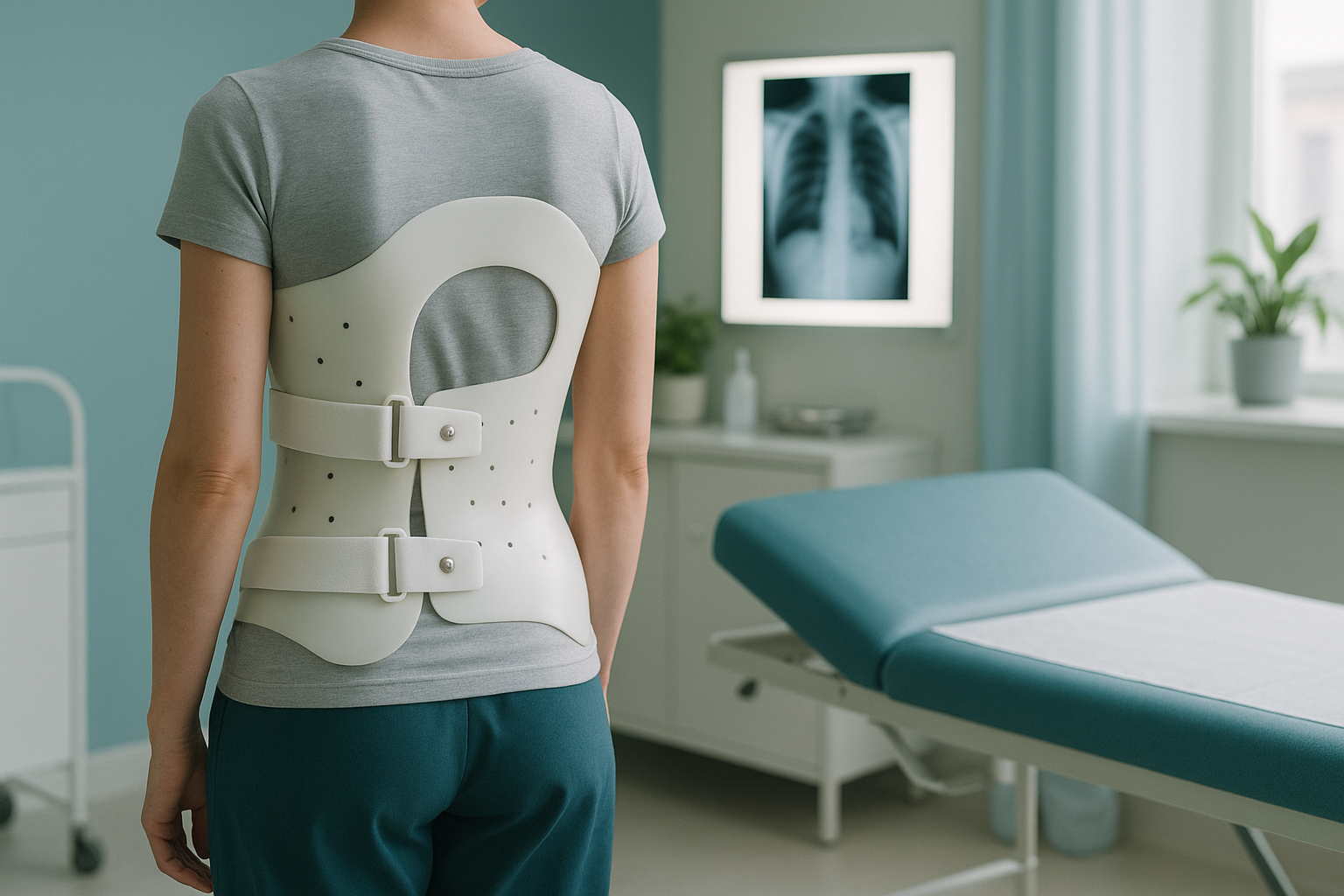
Does a Scoliosis Brace Work, and How Long Must It Be Worn?
A scoliosis brace can be effective at slowing or preventing curve progression, particularly during growth. Research shows bracing is most successful when worn for the prescribed number of hours each day. It does not straighten the spine, but it can stop a curve from getting worse. Regular monitoring with standing imaging is essential to check that the brace is doing its job.
Key takeaways
- Bracing aims to prevent curve progression, not to correct or cure scoliosis.
- Most prescriptions call for the brace to be worn between 16 and 23 hours per day.
- Success depends heavily on compliance, meaning actually wearing the brace for the hours prescribed.
- Standing, weight-bearing imaging is the most accurate way to monitor how the curve is responding.
- Adults may use bracing for pain management, but the goal is different from bracing during growth.
How does a scoliosis brace work?
A scoliosis brace works by applying gentle, sustained pressure to the outside of the torso to guide the spine into a straighter position while it is being worn. It does not permanently reshape bone. Instead, it holds the curve in check so that natural growth does not push it further out of line.
Think of it like a splint for a growing tree. The brace provides an external frame that encourages the spine to grow as straight as possible. Once removed, the spine returns to roughly its natural position, which is why consistent wear over months or years is required.
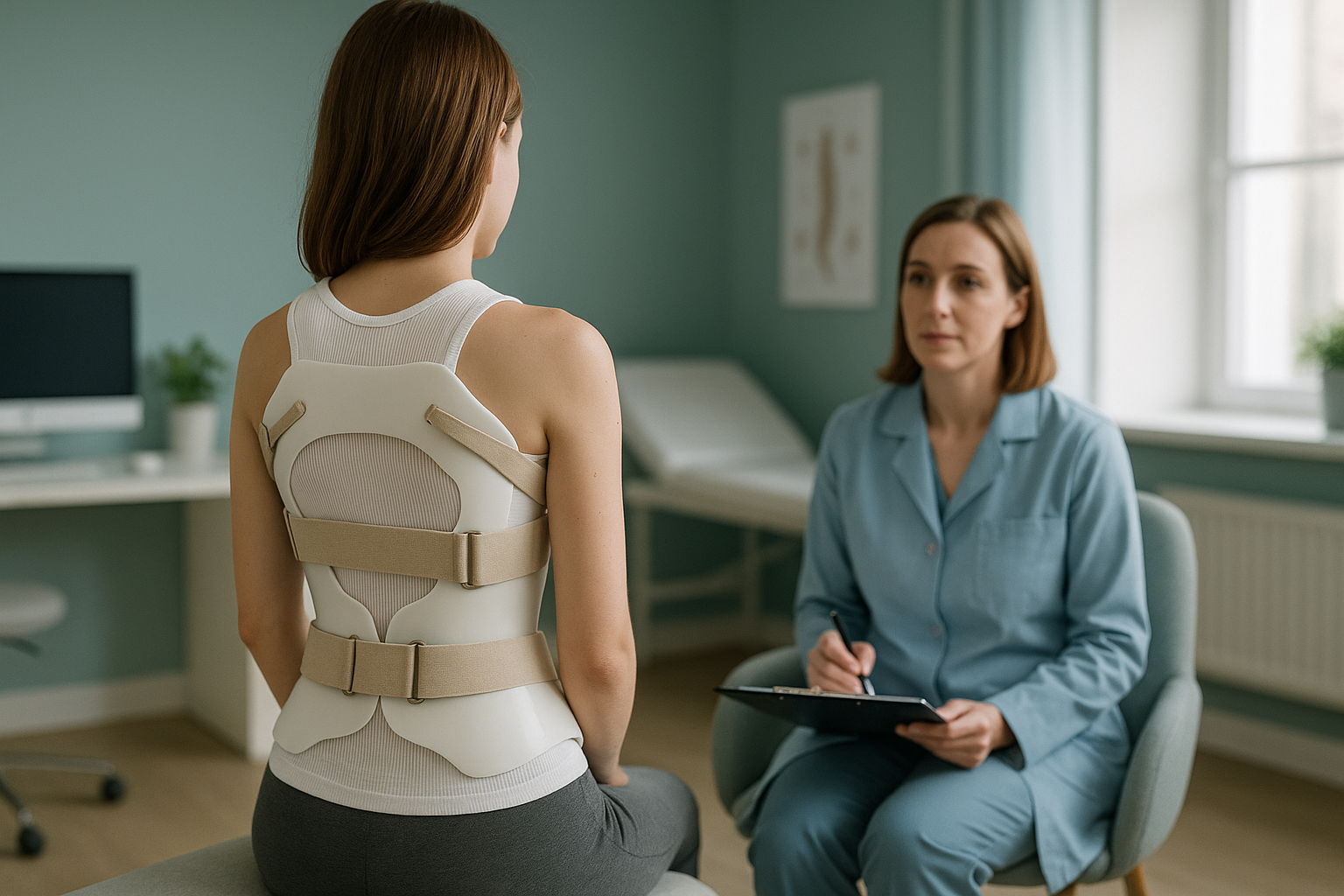
The brace is custom moulded to the individual. A specialist takes measurements or a scan of the torso, then a rigid or semi-rigid shell is built to fit. Pads inside the shell press against specific points on the ribcage and trunk to apply corrective force where it is needed most.
Does bracing actually work for scoliosis?
Yes, bracing can be effective. The landmark BrAIST study (2013) found that bracing significantly reduced the risk of curve progression to the point of needing surgery, particularly when worn for the prescribed hours. The more hours worn, the better the outcome.
It is important to understand what "works" means here. Bracing does not cure scoliosis. It does not reverse an existing curve. Its purpose is to hold the curve steady and prevent it from worsening, especially during the rapid growth phases. Once skeletal maturity is reached and growth stops, the brace is typically no longer needed.
Success depends on three things: how much growth remains, the size and flexibility of the curve, and how consistently the brace is worn. A well-fitting brace worn for most of the day gives the best chance of preventing progression.
How many hours a day should a scoliosis brace be worn?
Most full-time scoliosis braces are prescribed for between 16 and 23 hours per day. The exact number depends on the type of brace, the severity of the curve, and the clinical judgement of the treating team. Some night-time braces are designed to be worn only during sleep, typically for around 8 hours.
Wearing a brace for fewer hours than prescribed reduces its effectiveness significantly. This is one of the biggest challenges, especially for teenagers and young adults. A brace only works while it is on.
What types of scoliosis brace are available?
Several types of scoliosis brace exist, and the right choice depends on curve location, curve size, and the patient's daily routine. Here are the most common.
All braces should be prescribed and fitted by a specialist orthotist. The fit is checked and adjusted as the body changes over time.
How is a scoliosis curve monitored during bracing?
Regular imaging is essential to check whether the brace is holding the curve steady. Without serial imaging at consistent intervals, it is impossible to know if the brace is working, if the curve is stable, or if the treatment plan needs to change.
The standard approach is to measure the curve on a standing X-ray, typically using a Cobb angle measurement. This gives a comparable number from one visit to the next. The key word is "standing." A lying-down scan relaxes the muscles and lets gravity flatten the curve slightly, which can make a curve look smaller than it really is under everyday conditions.
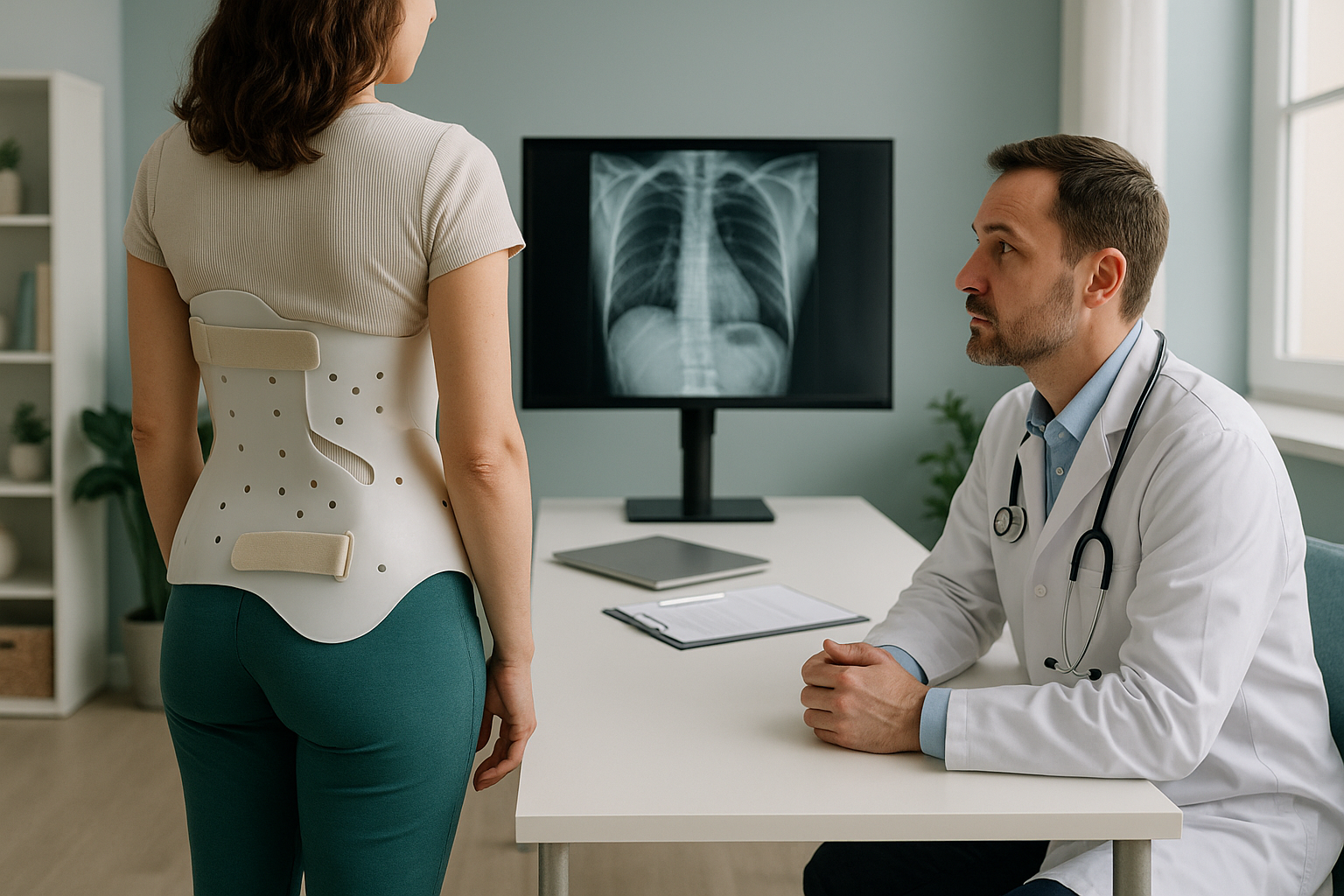
This is where standing EOS imaging is particularly useful. EOS captures a full-length, weight-bearing image of the spine from head to pelvis in a single exposure, using about 90% less radiation than a standard X-ray, around ten times less. For someone who needs imaging every few months over several years, that reduced dose adds up. Learn more about EOS scan safety and radiation.
Tracking your curve? Book a monitoring scan with ScanAlign standing EOS imaging to get a clear, comparable measurement every time.
A typical monitoring interval is every four to six months during active growth, though your treating clinician will set the schedule. Each scan is compared to previous images to spot any change early. EOS imaging for growing spines explains why lower radiation matters when repeat scans are part of the plan. Paediatric imaging at ScanAlign follows the same low-dose approach.
Can adults use a scoliosis brace?
Adults can wear a scoliosis brace, but the goal is different. Because adult bones are no longer growing, bracing will not prevent curve progression in the same way it does in younger people. In adults, a brace is typically used for pain relief and support, not for curve management.
An adult scoliosis brace is usually a softer, more flexible support than the rigid shells used during growth. It may reduce discomfort during long periods of standing or walking. However, it is a symptom-management tool rather than a long-term correction strategy.
If you are an adult with scoliosis and wondering whether your curve is changing, a standing full-length image can provide a clear baseline and track any progression over time.
When is MRI better? EOS shows bones, joints and overall alignment beautifully. If your clinician suspects nerve compression, disc problems or soft-tissue changes around the spine, MRI is usually the better tool. The two types of imaging often complement each other.
Frequently asked questions about scoliosis bracing
No. A scoliosis brace holds the curve in check and aims to prevent it from getting worse. It does not permanently straighten the spine. When the brace is removed, the spine returns to roughly its natural position.
Most full-time braces are prescribed for 16 to 23 hours per day. Night-time braces are worn for around 8 hours during sleep. The exact prescription comes from the treating specialist.
In adults, bracing is mainly used for pain management and support rather than preventing curve progression. Because adult bones are no longer growing, the brace cannot influence growth in the same way it does for younger wearers.
The Boston brace is one of the most commonly prescribed rigid scoliosis braces. It is a custom-moulded plastic shell that wraps around the torso from below the arms to the hips, applying pressure to guide the spine during growth.
A typical monitoring schedule is every four to six months during active growth, but your clinician will set the exact intervals. Regular imaging tracks whether the curve is stable, improving or progressing.
Lying down relaxes the muscles and reduces the effect of gravity, which can make a curve look smaller than it really is. Standing, weight-bearing imaging shows the spine as it functions day to day, giving a more accurate and comparable measurement over time.
EOS uses about 90% less radiation than a standard X-ray, around ten times less. This lower dose is especially relevant when someone needs multiple scans over months or years to track a curve.
No. ScanAlign accepts self-referrals. You can book directly without a letter from your GP or consultant. If you already have previous images, bringing them along helps with comparison.
Brace costs vary widely depending on the type, the provider and whether it is supplied through the NHS or privately. ScanAlign does not supply braces, so we cannot quote a price. For information about scan pricing, please see our FAQs page.
Many people remove the brace for sport and physical activity, with their clinician's agreement. Exercise is generally encouraged alongside bracing. Your orthotist or physiotherapist can advise on what activities suit your situation.
Need a clear picture of your curve?
A standing EOS scan shows your full spinal alignment under real weight-bearing conditions, with about 90% less radiation than a standard X-ray.
Book a free video consultationWritten by Abbas Dhami (Specialist Diagnostic Radiographer)
Sources
- Weinstein SL, Dolan LA, Wright JG, Dobbs MB. Effects of bracing in adolescents with idiopathic scoliosis (BrAIST). New England Journal of Medicine. 2013;369(16):1512-1521.
- Negrini S, et al. 2016 SOSORT guidelines: orthopaedic and rehabilitation treatment of idiopathic scoliosis during growth. Scoliosis and Spinal Disorders. 2018;13:3.
- NHS. Scoliosis: Treatment. nhs.uk. Available at: https://www.nhs.uk/conditions/scoliosis/treatment/
This page is general information and not a diagnosis.
ScanAlign is the trading name of CoreMed Solutions Ltd and operates under The Harley Street Hospital's CQC licence.