

Abbas Dhami
Specialist Diagnostic Radiographer
Parents usually notice posture changes little by little. It is rarely something dramatic in the beginning. A shoulder may suddenly look uneven in a photo, or a child may seem slightly tilted while standing in the kitchen or getting ready for school. Sometimes clothes stop fitting evenly, or a backpack keeps sliding from one side. Most parents do not immediately think about scoliosis because children are constantly growing and changing anyway. But when those small things keep showing up again and again, doctors may suggest taking a closer look at the spine.
That is usually the point where families start worrying about scans and radiation exposure. Hearing that a child may need repeated imaging over the next few years can feel stressful, even when doctors explain why monitoring matters. EOS imaging at ScanAlign has become a popular option for this reason. It gives specialists a detailed look at posture and spine alignment while using lower radiation than many traditional scoliosis X-ray methods. For parents, that often brings some peace of mind because they know the spine can still be monitored properly without relying on higher-dose imaging every time.
What Is a 3D Spine Scan?
A 3D spine scan is a way for doctors to study the spine and posture in more detail. EOS imaging works differently from some older systems because the child stands naturally during the scan instead of lying flat. That part is actually more important than many people realise.
When someone lies down, the spine is not carrying weight normally. Standing scans help doctors see how posture really looks during everyday life. They can study how the spine, hips, shoulders, and knees balance together while the body is upright. ScanAlign’s guide on weight-bearing vs traditional imaging explains why standing scans can reveal alignment details that may not appear clearly when the body is lying flat.
The scan can help doctors check:
- Spine curves
- Shoulder imbalance
- Pelvic positioning
- Leg length differences
- Joint alignment
- Overall posture
The process itself is normally quick. Most children simply stand still while front and side images are taken. Parents often expect something much more difficult before arriving for the appointment.
Some children feel nervous at first because they hear the word “scan” and imagine a large complicated machine. But EOS imaging is usually far less intimidating than families expect. The system is open, and the appointment often feels calm once everything begins.
Why Scoliosis in Children Needs Monitoring
Scoliosis in children does not always cause obvious pain or symptoms early on. Many children continue normal daily activities without feeling anything unusual.
That is why parents often notice posture changes first.
You might see:
- Uneven shoulders
- One hip looking slightly higher
- Leaning while standing
- Uneven clothing fit
- One side of the back appearing more raised
During growth spurts, these changes sometimes become more noticeable. This is especially common with adolescent scoliosis because the spine may change faster during puberty. Doctors use imaging to track whether the curve is staying stable or slowly progressing over time.
Some curves remain mild and barely change for years. Others behave differently during rapid growth stages. Regular scoliosis monitoring helps doctors understand what direction things are moving in instead of making assumptions too early.
That does not automatically mean treatment is needed right away. In many cases, monitoring is simply about keeping a close eye on growth and posture changes. Parents often feel anxious after hearing the word scoliosis for the first time, but doctors usually focus first on understanding the curve properly before discussing anything else.
EOS Scan vs Traditional Scoliosis X Ray
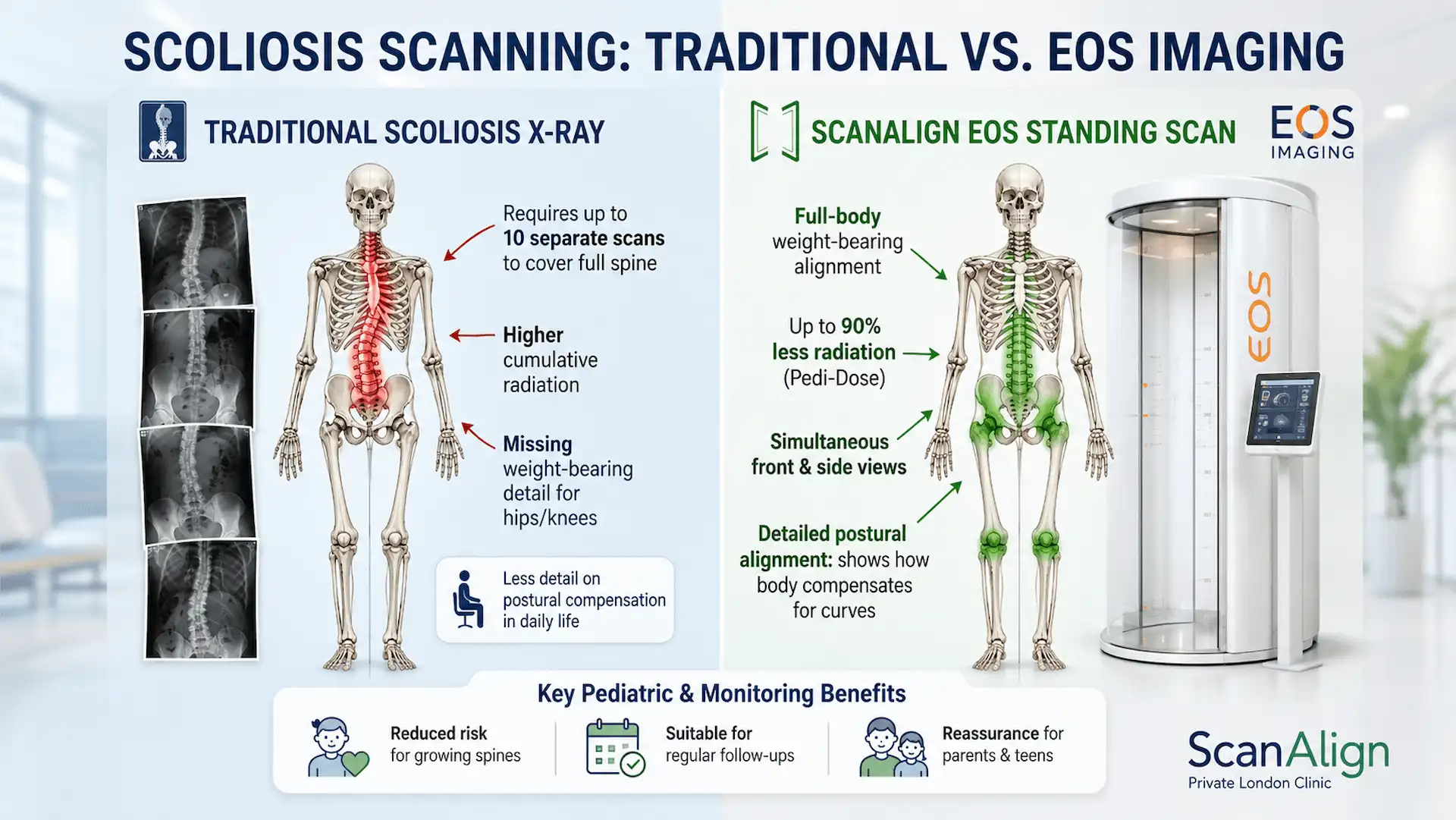
Traditional scoliosis X-ray imaging has been used for many years and still plays an important role. EOS imaging is simply another option that can be especially useful for children needing repeated monitoring.
The main difference most parents hear about first is lower radiation exposure. That matters because some children need scans over several years while they are still growing. ScanAlign’s guide on EOS scan safety and radiation levels explains this topic in more detail for patients and parents.
| Feature | Traditional X-Ray | EOS Imaging |
|---|---|---|
| Radiation exposure | Higher | Lower |
| Standing full-body imaging | Limited | Yes |
| 3D imaging support | Usually no | Yes |
| Better for repeat monitoring | Less ideal | More suitable |
| Posture evaluation | Basic | More detailed |
Another thing specialists like about EOS imaging is the standing full-body view. Instead of looking only at one section of the spine, doctors can study posture and alignment together. That wider picture sometimes explains things that a basic scan may not show clearly.
Parents also tend to feel more comfortable knowing the technology was designed with long-term monitoring in mind for growing patients.
Why Lower Radiation Matters for Kids
Parents naturally become cautious when repeated scans are mentioned. Even when imaging is important, families still want the safest approach possible for children.
That concern makes sense.
Children are still developing physically, and scoliosis monitoring may continue through important growth years. EOS imaging was developed to provide detailed images while lowering radiation exposure compared to many standard imaging systems.
Benefits of EOS Imaging
- Lower radiation exposure
- Helpful for repeat monitoring
- Standing posture assessment
- Quick imaging process
- Comfortable for children
- Full-body alignment evaluation
Many parents say they feel more relaxed once they understand why doctors recommend EOS imaging for long-term monitoring. The emotional side matters too. Families often feel less nervous about follow-up appointments when they know the imaging approach was designed with growing children in mind.
Important Note: Even low-dose imaging is only recommended when specialists believe it is medically necessary. Doctors decide scan timing based on posture changes, growth, and curve progression.
Looking Beyond the Spine Alone
Scoliosis does not only affect the spine itself. The body sometimes adjusts in other ways too. One shoulder may compensate differently. The hips may tilt unevenly. Weight distribution may slowly shift while standing or walking.
That is why doctors often prefer a postural alignment scan that looks at the body more completely instead of focusing only on one small section.
EOS imaging can help assess:
- Pelvic balance
- Weight distribution
- Shoulder positioning
- Spine alignment
- Joint balance
- Standing posture
This helps specialists understand how the body is responding overall.
Some children naturally compensate for posture changes without even realising it. EOS imaging helps doctors notice those patterns more clearly because the child is scanned in a natural standing position instead of lying flat.
That often gives a more realistic view of posture.
What Happens During an EOS Scan?
Parents sometimes expect the appointment to feel much more complicated than it actually is. The EOS machine is open and designed for standing scans. Children stand naturally while front and side images are captured. The process is usually fairly quick. ScanAlign’s full guide on what happens during an EOS scan also explains the appointment steps in more detail.
1 — Before the Scan
Children are normally asked to wear comfortable clothing. Jewellery or metal items may need to be removed first. The technician explains how the child should stand during imaging.
2 — During the Scan
The child stands upright while the machine captures images. Most scans only take a short amount of time. For younger children, standing still briefly is usually the hardest part.
3 — After the Scan
Children can continue normal activities immediately afterward. There is no recovery period needed. Specialists then review the images to study posture, spine curves, and alignment. ScanAlign’s guide on what an EOS scan report shows can help parents understand the kind of alignment details that may appear after imaging.
Many parents leave feeling relieved because the appointment ends up being much easier than they expected beforehand.
EOS Scan for Teenagers and Growing Children
Teenagers can become very aware of posture changes, especially during school years. Some avoid talking about scoliosis completely because they feel embarrassed or worried. Others spend hours searching online and end up frightening themselves with information that may not even apply to their situation. Proper imaging helps families move away from guessing and toward clearer understanding.
EOS scan for children allows doctors to compare changes over time by monitoring:
- Curve progression
- Spine rotation
- Pelvic balance
- Shoulder alignment
- Growth-related posture changes
This helps specialists decide whether monitoring alone is enough or whether treatment may eventually be needed later.
For teenagers involved in sports, dance, or physical activities, posture changes sometimes become easier to notice during movement. Standing EOS imaging helps doctors study alignment in a more realistic everyday position.
That small detail can matter quite a bit during scoliosis monitoring.
Why Standing Imaging Gives Better Information
Standing posture changes how the spine behaves. When children lie down during imaging, gravity no longer affects the body the same way. That can sometimes make posture patterns harder to evaluate properly.
A spine alignment scan taken while standing gives specialists a more realistic picture of how the body balances naturally during daily life.
Doctors can study:
- Posture balance
- Pelvic tilt
- Weight distribution
- Shoulder positioning
- Natural spine alignment
This is one reason EOS scan London clinics continue becoming more popular for posture and scoliosis assessment. Parents usually understand the value once they see the standing images because the scan reflects how the child actually stands every day.
Important Note: Growth spurts during puberty can sometimes change spinal curves more quickly than parents expect. Even when children feel completely normal, regular follow-up visits are still important.
Why Families Choose Private EOS Scan London Clinics
Waiting for answers can feel frustrating when posture changes become noticeable.
Many families choose private EOS scan London services because appointments are often available sooner and the imaging is focused specifically on posture and spine assessment.
Parents usually appreciate:
- Faster appointment scheduling
- Specialist-focused imaging
- Modern EOS technology
- Detailed posture evaluation
- Private appointments
- Alignment-focused assessment
Families also often feel more comfortable asking questions in a quieter specialist setting where appointments may feel less rushed. That extra time sometimes helps parents understand results more clearly instead of leaving confused afterward.
Conditions EOS Imaging Can Help Assess
Although scoliosis is one of the most common reasons for EOS imaging, specialists also use it for other posture and alignment concerns.
EOS Imaging May Help Evaluate
- Scoliosis in children
- Scoliosis in teenagers
- Adolescent scoliosis
- Kyphosis
- Poor posture
- Pelvic imbalance
- Leg length differences
- Spine alignment concerns
Because the scan captures the body while standing naturally, doctors can study how posture affects movement and balance together.
Some children are referred for imaging before scoliosis is even confirmed. Doctors may simply want a clearer understanding of posture changes before deciding the next step.
Why ScanAlign Is a Popular Choice
Families looking for scoliosis scan London services usually want more than general imaging. Many prefer clinics that specifically focus on posture, spine alignment, and growing children.
ScanAlign focuses on weight-bearing EOS imaging designed for posture and musculoskeletal assessment.
ScanAlign Highlights
- Advanced EOS imaging technology
- Low-dose pediatric spine imaging
- Standing posture scans
- Scoliosis monitoring support
- Private London appointments
- Alignment-focused assessment
For many families, having specialist imaging in one place helps the process feel more organised and less stressful overall.
Conclusion
Posture changes during childhood can feel worrying for parents, especially when repeated monitoring becomes part of the conversation. Families want clear answers, but they also want reassurance that their child is being monitored carefully during important growing years.
A 3D spine scan using EOS imaging gives doctors a clearer understanding of posture, scoliosis progression, and spine alignment while using lower radiation than many traditional imaging methods. For children and teenagers needing regular scoliosis monitoring, it offers a more reassuring and modern approach to long-term spine care.
Book a Safer Spine Check for Your Child
If your child has posture concerns, scoliosis symptoms, or needs ongoing monitoring, ScanAlign offers low-dose EOS imaging designed for growing children and teenagers. A private EOS scan London appointment can help provide clearer answers through detailed standing posture and spine assessment.
FAQs
- 1. What is a 3D spine scan? A 3D spine scan helps doctors study the spine, posture, and body alignment in more detail. EOS imaging captures the body while standing naturally, which helps specialists understand how posture behaves during everyday life.
- 2. Is EOS imaging safer than a regular scoliosis X-ray? EOS imaging uses lower radiation compared to many traditional scoliosis X-ray methods. This can be especially helpful for children who may need repeated scans while still growing.
- 3. How long does an EOS scan usually take? Most EOS scans are fairly quick. Children normally only need to stand still briefly while the images are captured. The appointment itself is usually straightforward and comfortable.
- 4. Why do children with scoliosis need regular monitoring? Spinal curves sometimes change during growth spurts, especially in teenage years. Regular monitoring helps doctors track progression properly and decide whether treatment may eventually be needed.
- 5. Can EOS imaging help evaluate posture too? Yes. EOS imaging can help specialists assess posture, pelvic balance, shoulder positioning, and overall body alignment while standing naturally.
- 6. Where can I get a private spine scan London appointment? Clinics like ScanAlign provide private EOS imaging focused on scoliosis monitoring, posture assessment, and pediatric spine imaging for children and teenagers.
Continue reading
More articles
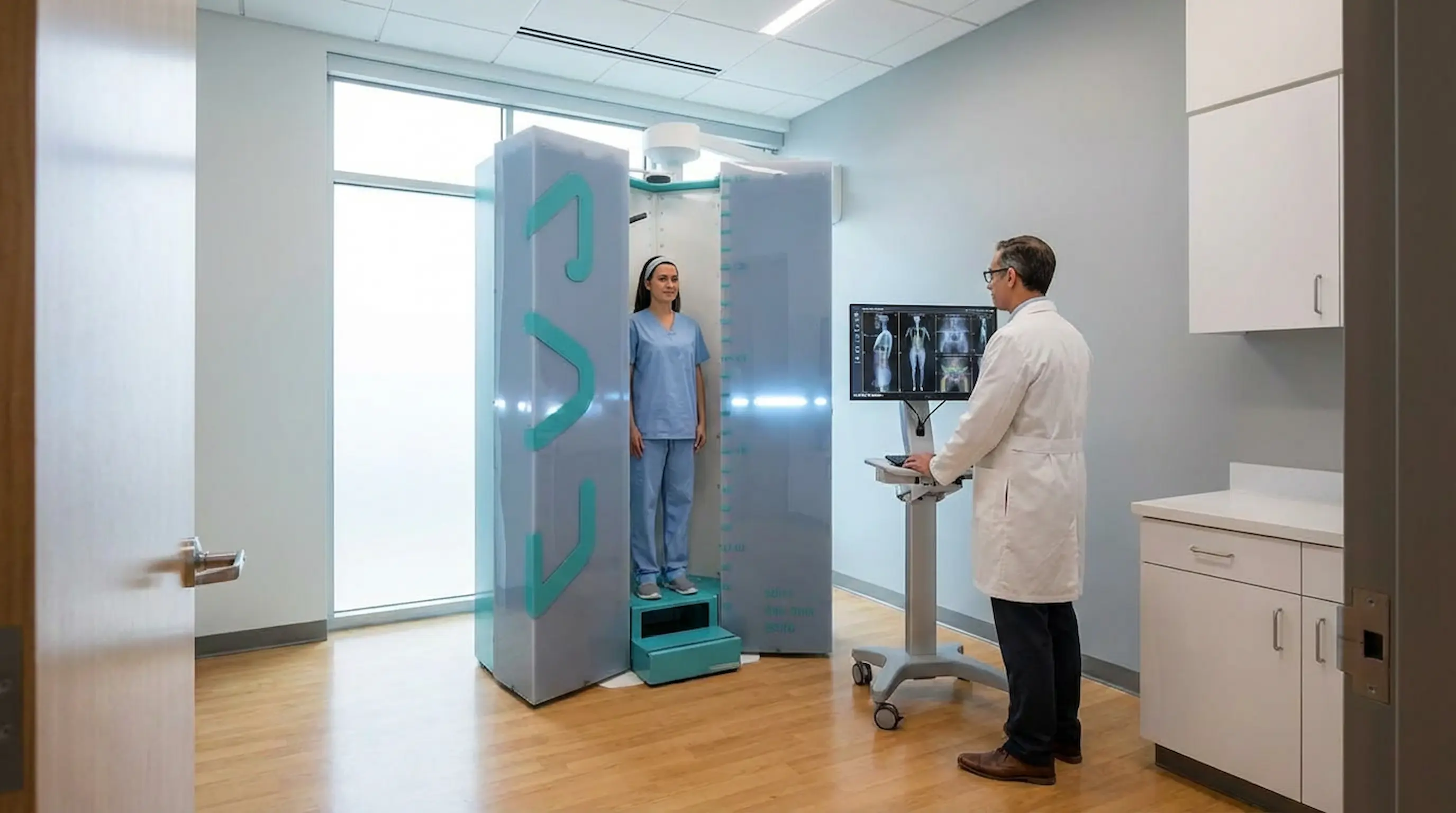
Is EOS Scan Safe? Radiation Levels, Risks, and FAQs
Discover if EOS imaging is safe, its radiation levels, risks, and benefits. Learn why it’s preferred for accurate, low-dose skeletal scans.
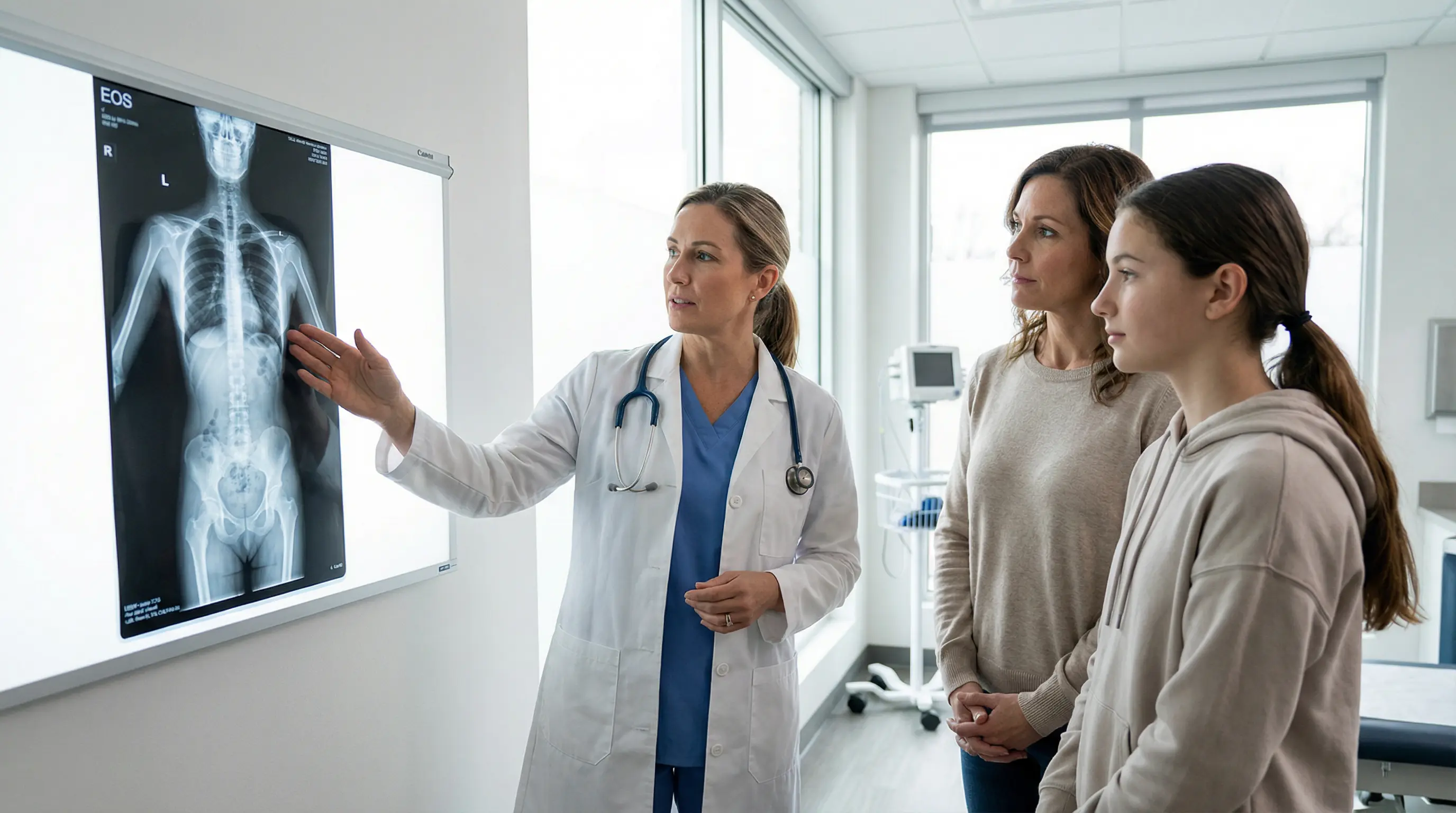
EOS Scan for Scoliosis: Why Standing Imaging Matters
Discover how EOS for scoliosis provides low-radiation imaging for accurate spinal alignment and better scoliosis diagnosis and monitoring.
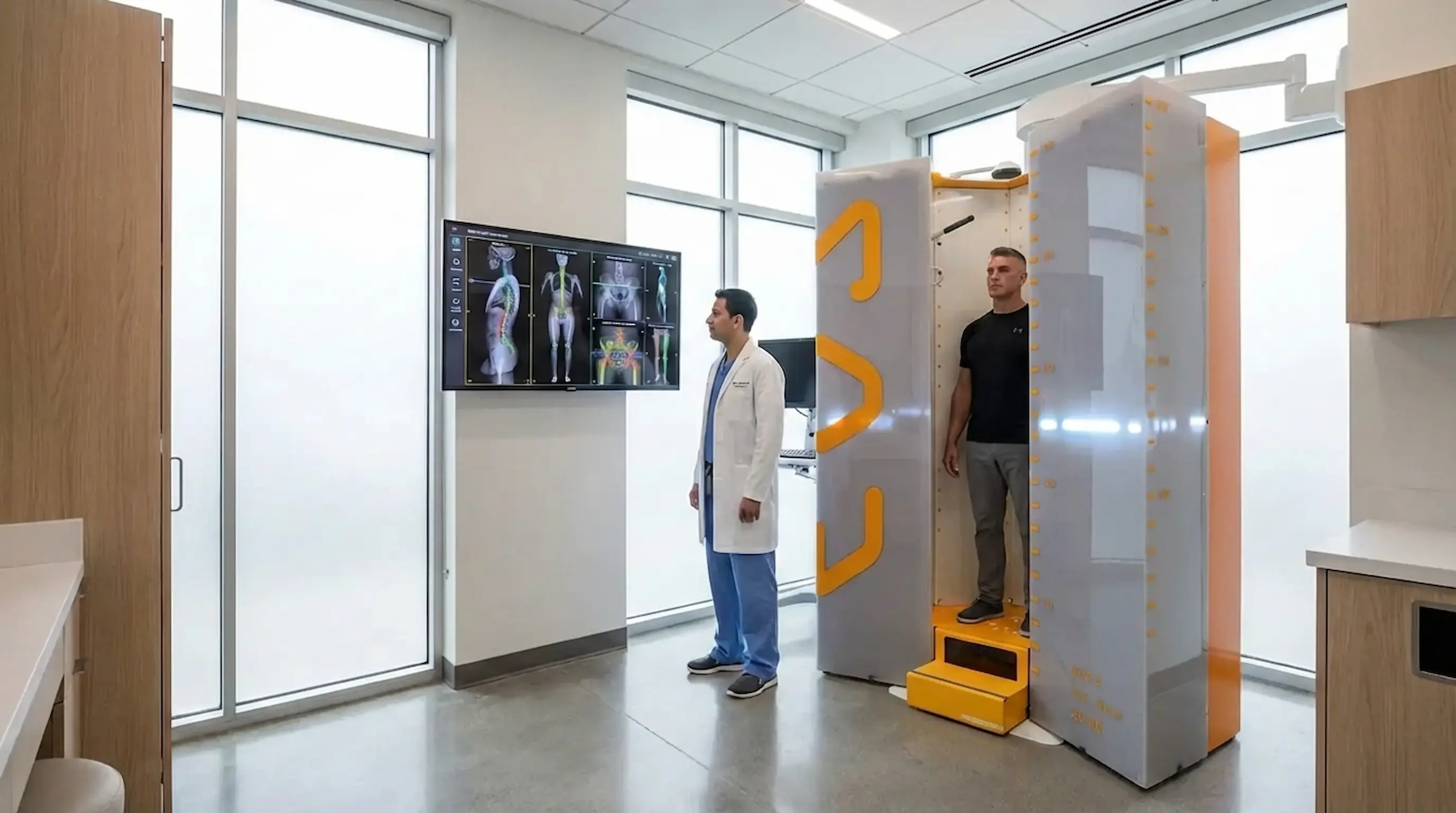
Hip Pain & Alignment: EOS Imaging for Better Diagnosis
EOS imaging for hip pain reveals pelvic tilt, leg length discrepancy & spinopelvic alignment that routine scans miss. Book Appointment now.