
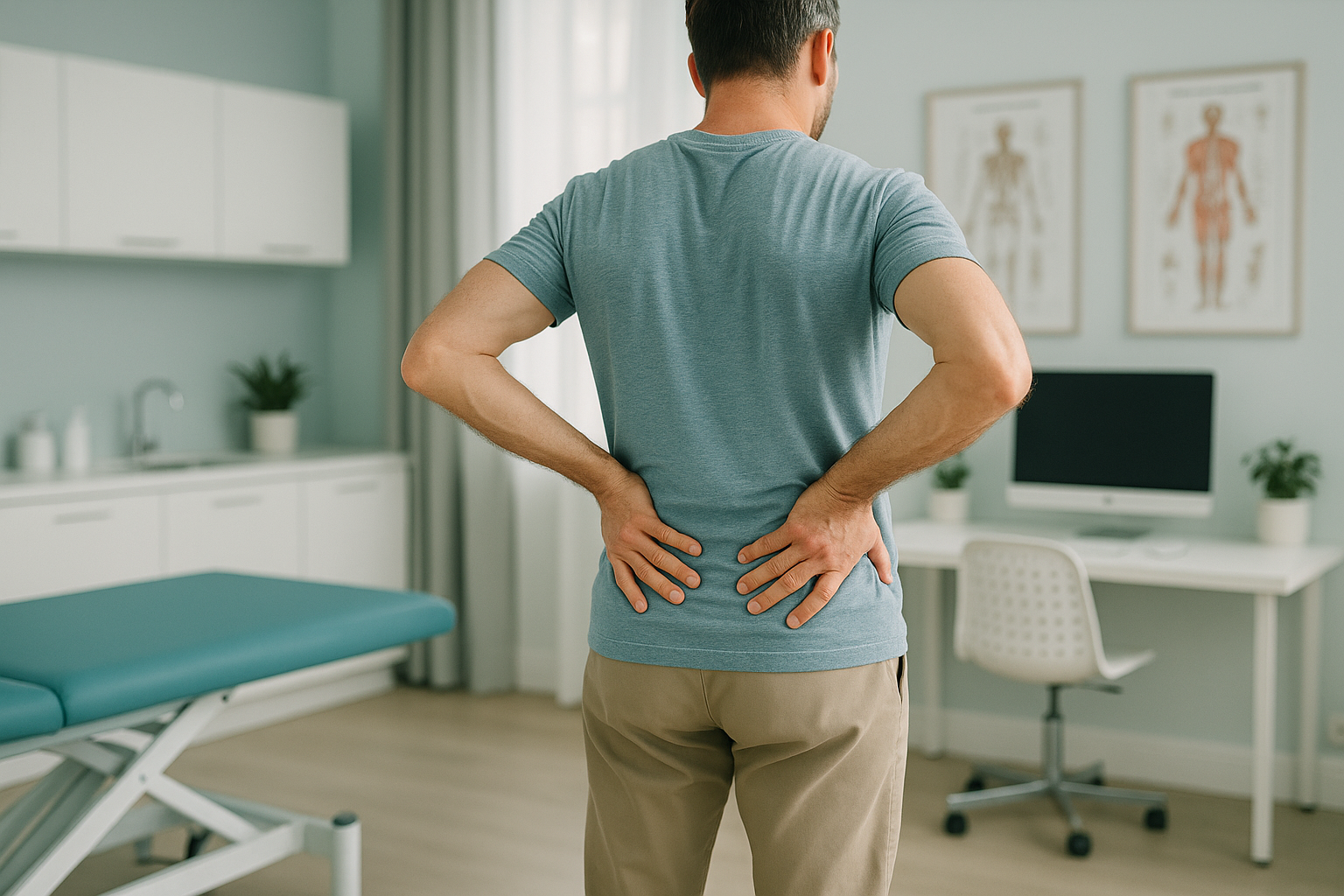
Why Does Standing Still All Day Hurt More Than Walking?
Standing still loads the same small set of muscles, joints and discs continuously, without the rhythmic weight shifting that walking provides. This "static loading" increases pressure on the lower spine, reduces blood flow in the legs and tires the muscles that hold you upright. Over a long shift, the result is aching feet, stiff hips and lower back pain.
Key takeaways
- Walking alternates load between legs. Standing still does not, so fatigue builds faster.
- Static loading compresses your lower spine and pools blood in your legs and feet.
- Subtle alignment issues, such as a leg-length difference or pelvic tilt, become more painful the longer you stand.
- Lying-down scans relax the body and can miss the alignment faults that cause standing pain.
- A weight-bearing standing image captures your skeleton under real load, the way you actually work.
What does standing still all day do to your body?
Standing still forces the same muscles to contract without a break. When you walk, your weight shifts from one foot to the other and your calf muscles act as a pump, squeezing blood back up towards the heart. Stand still and that pump stops. Blood pools in the veins of your lower legs, your feet swell, and your lower back stiffens as the small muscles around the spine fatigue.
Researchers call this "static loading." Unlike the dynamic loading of walking, it offers no recovery phase. The intervertebral discs in your lumbar spine stay compressed in one position. The facet joints at the back of each vertebra bear a constant load, especially if your pelvis tilts forward into excessive lumbar extension. Over hours, even a perfectly healthy spine starts to ache. Add a subtle alignment issue, such as one leg slightly longer than the other or mild orthotics and overpronation, and the discomfort arrives sooner and lasts longer.
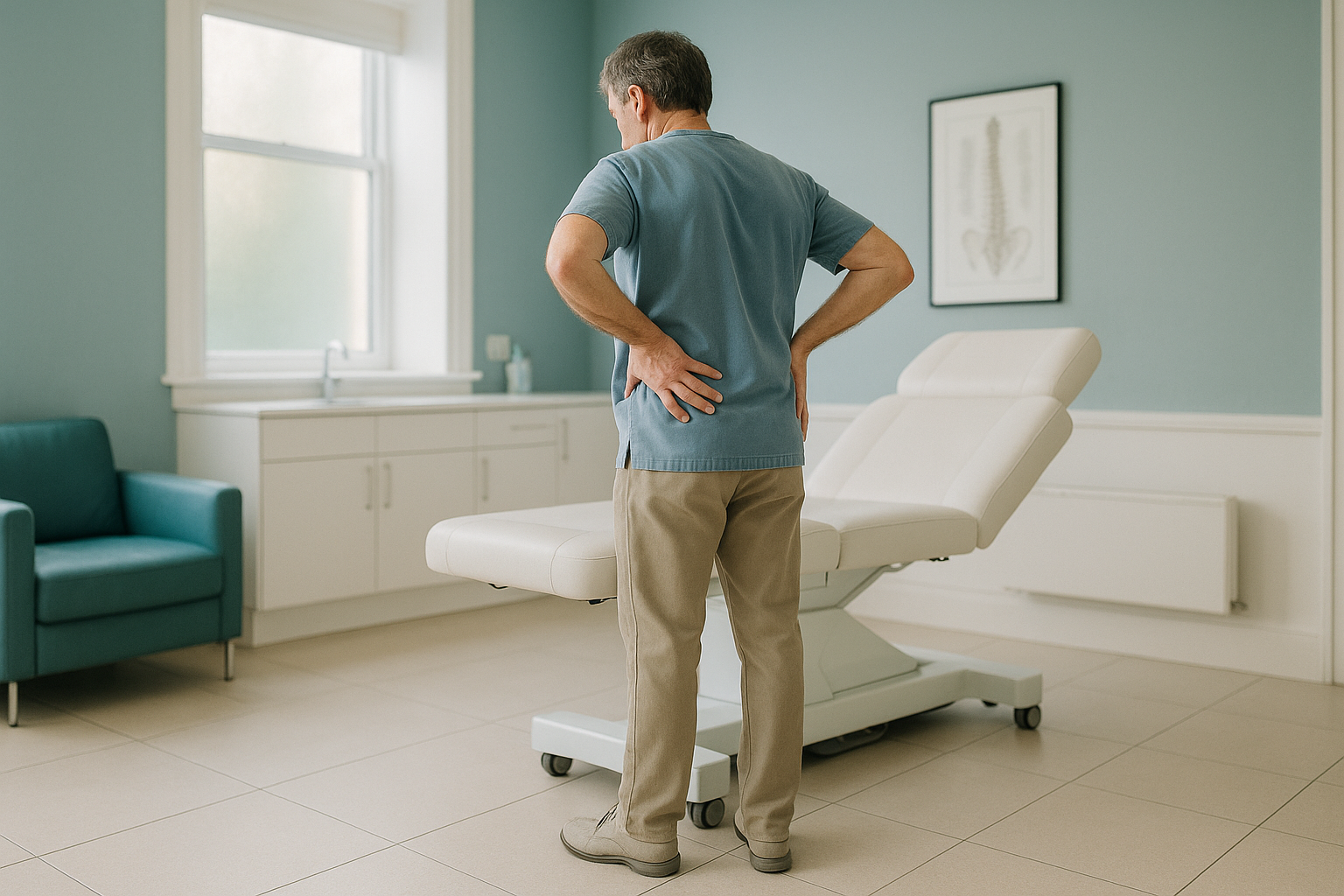
What are the signs that standing all day is affecting your body?
The signs usually build gradually over a shift and ease when you sit or walk. If they start appearing earlier each day, or last into the evening, your body may be telling you something about your alignment or the way you distribute load.
A dull ache across the belt line that worsens as the shift goes on.
Burning soles and tight shoes by mid-afternoon from venous pooling and fluid build-up.
One-sided hip or knee pain that flares when you stand but eases when you walk.
Constantly rocking from foot to foot. This is your body's attempt to restart the muscle pump, a form of postural sway.
A note on nerve symptoms. If you notice numbness, tingling running down a leg, weakness in a foot, or any loss of bladder or bowel control, these are red-flag symptoms. Please seek urgent medical attention from your GP, call 111, or attend A&E rather than booking a scan.
What causes standing job back pain to get worse over time?
The pain is rarely caused by standing alone. Several factors stack on top of each other, and the longer your shifts, the more they compound.
Concrete and tile have no give, so shock travels straight up through ankles, knees and hips into the spine.
A mild leg-length difference or pelvic tilt may feel fine for short periods but creates uneven loading over hours.
Flat, unsupportive shoes let your arches collapse, changing the angle of every joint above.
Muscle fatigue is cumulative. An eight-hour shift with few breaks gives the spine almost no recovery time.
Your body is a connected chain from feet to head. If your feet roll inward, your knees follow, your pelvis tilts, and your lower back compensates. Pain often appears away from the original problem, which is why focusing on the sore spot alone can miss the real cause.
What helps with standing all day back pain at work?
Small changes to how you stand and what you stand on can reduce load on your spine significantly. None of these replace a proper assessment of your alignment, but they are a sensible starting point.
- Micro-breaks. Even 30 seconds of walking or gentle stretching every 20 to 30 minutes restarts the calf muscle pump and shifts load off fatigued joints.
- One foot forward. Place one foot on a low step or rail. This unlocks the pelvis from the fully extended position and reduces pressure on the lumbar facet joints. Alternate feet regularly.
- Anti-fatigue matting. A cushioned mat encourages subtle weight shifting and absorbs some of the shock from hard floors.
- Supportive footwear. Shoes with a structured sole and arch support reduce the chain of compensation that travels up from the feet. If you overpronate, orthotics and overpronation guidance may help.
- Strengthening. Building endurance in your core and glutes helps share the load so your lower back does not carry everything.
If you have tried all of these and the pain keeps coming back, the problem may not be the standing itself. It may be how your skeleton lines up under load.
Wondering whether your alignment is contributing to your standing pain? A free video consultation can help you decide if imaging is the right next step.
Book a free video consultationHow does a standing scan show what lying-down imaging misses?
Most imaging, including standard X-rays, CT and MRI, is done while you lie flat. Lying down relaxes your muscles, unloads your joints and lets your spine spread out. That is the opposite of what happens during your working day. A pelvic tilt, a subtle leg-length difference or an uneven hip load that causes real problems at hour six of a shift may look completely normal on a scan taken lying down.
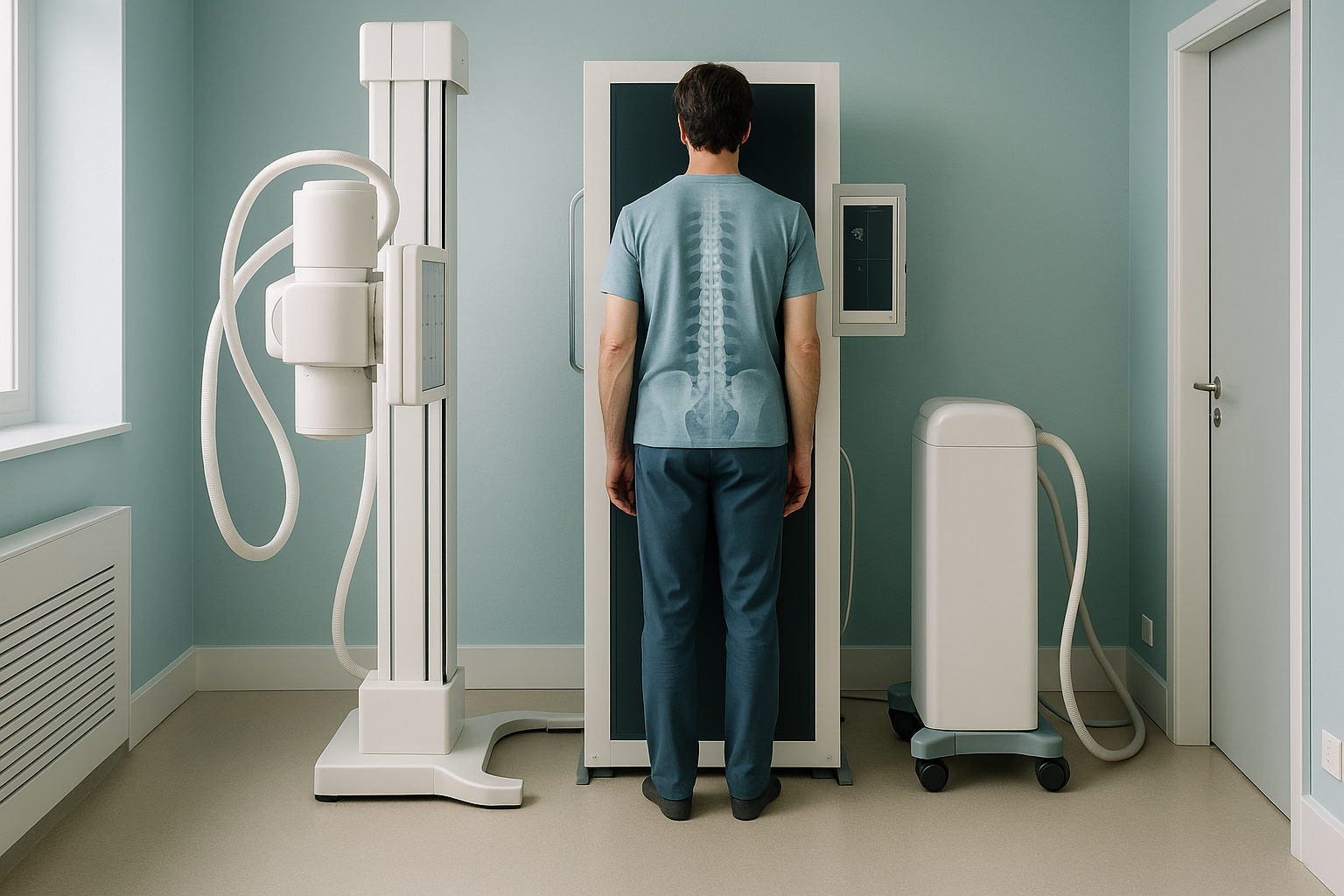
An EOS scan at ScanAlign, weight-bearing standing imaging, captures your full skeleton from head to feet while you stand, under real body weight. Because it images everything in a single exposure, your clinician can trace the chain of compensation from feet through knees, hips and pelvis to the spine. It uses about 90% less radiation than a standard X-ray, around ten times less.
When MRI is the better choice. EOS shows bones, joints and whole-body alignment. If your clinician suspects a disc bulge, nerve compression or soft-tissue injury, MRI is usually the better tool. The two complement each other well.
Frequently asked questions
Walking alternates load between your legs and activates the calf muscle pump that pushes blood back up from your feet. Standing still loads the same muscles and joints continuously with no recovery phase. This is called static loading, and it fatigues the lower back and legs much faster.
Prolonged static standing has been linked in research to increased lower back discomfort and fatigue. Whether it leads to lasting structural change depends on many factors, including your alignment, footwear and how much recovery time you get. Persistent symptoms are worth investigating.
Yes, for many people. Anti-fatigue mats encourage small, unconscious weight shifts and absorb some impact from hard floors. They do not fix an alignment problem, but they can reduce overall discomfort during a shift.
Look for shoes with a structured sole, good arch support and enough cushioning at the heel. Avoid completely flat shoes. If your feet roll inward, custom orthotics may help distribute load more evenly through the chain of joints above.
When you stand still, the calf muscle pump that normally pushes blood upward is inactive. Blood and fluid pool in the veins of the lower legs and feet, causing them to swell. Walking, even briefly, reactivates the pump and reduces swelling.
Absolutely. Your body is a connected chain. If your feet overpronate or your pelvis tilts, the load shifts and your lower back compensates. Pain often appears away from the actual cause. A full standing assessment helps trace the chain.
An EOS scan captures your full skeleton from head to feet in a single standing image, using about 90% less radiation than a standard X-ray, around ten times less. Because you are upright and weight-bearing, it shows how your joints and spine actually align under load.
No. ScanAlign accepts self-referrals. You can book a weight-bearing scan directly by starting with a free video consultation.
Yes. The EOS system uses about 90% less radiation than a standard X-ray, around ten times less. It is one of the lowest-dose skeletal imaging options available.
Pricing depends on which areas are imaged. You can find up-to-date cost information on the ScanAlign FAQs page.
Standing pain that will not go away?
A free video consultation with a specialist radiographer can help you understand whether a standing alignment scan is the right next step.
Book a free video consultationSources
- Nelson-Wong E, Callaghan JP. "Is muscle co-activation a predisposing factor for low back pain development during standing?" Journal of Electromyography and Kinesiology, 2010;20(2):256-263.
- Waters TR, Dick RB. "Evidence of health risks associated with prolonged standing at work and intervention effectiveness." Rehabilitation Nursing, 2015;40(3):148-165.
- NHS guidance: "Back pain – prevention." nhs.uk. Accessed 2024.
Written by Abbas Dhami (Specialist Diagnostic Radiographer)
This page is general information and not a diagnosis.
ScanAlign is the trading name of CoreMed Solutions Ltd and operates under The Harley Street Hospital's CQC licence.