
Does Strength Training Help or Harm Back Pain?
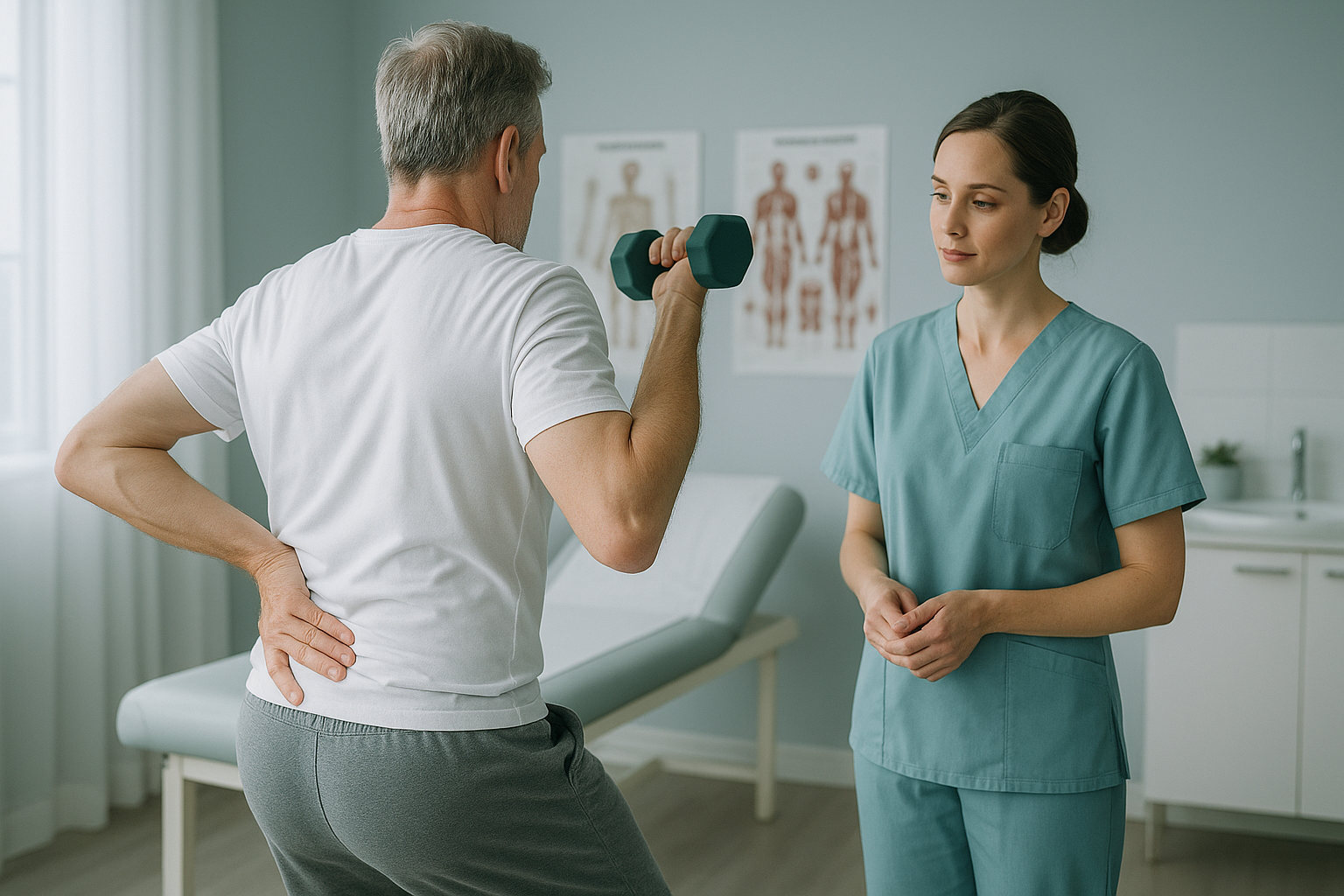
For most people, strength training helps lower back pain rather than making it worse. Research consistently shows that graded, progressive loading builds the support your spine needs. The key is technique, appropriate load, and understanding your body's alignment before you push harder.
Key takeaways
- Strength training is one of the most effective approaches for persistent lower back pain.
- Problems usually come from poor technique or loading too fast, not from lifting itself.
- A muscle imbalance or hidden alignment issue can turn a safe exercise into a painful one.
- Standing imaging shows how your spine and pelvis align under load, something lying-down scans miss.
- If you have sudden weakness, numbness, or loss of bladder or bowel control, seek urgent medical attention (GP, 111, or A&E).
What does the evidence say about strength training for lower back pain?
The evidence is clear. Multiple large reviews, including guidance from NICE and the World Health Organisation, recommend exercise, including resistance training, as a first-line approach for persistent back pain. Staying active builds what clinicians call load tolerance, your body's ability to handle physical stress without flaring up.
Deconditioning is a real risk. When pain makes you avoid movement, the muscles that support your spine weaken. This creates a cycle: less strength leads to less stability, which leads to more pain, which leads to even less activity. Strength training breaks that cycle.
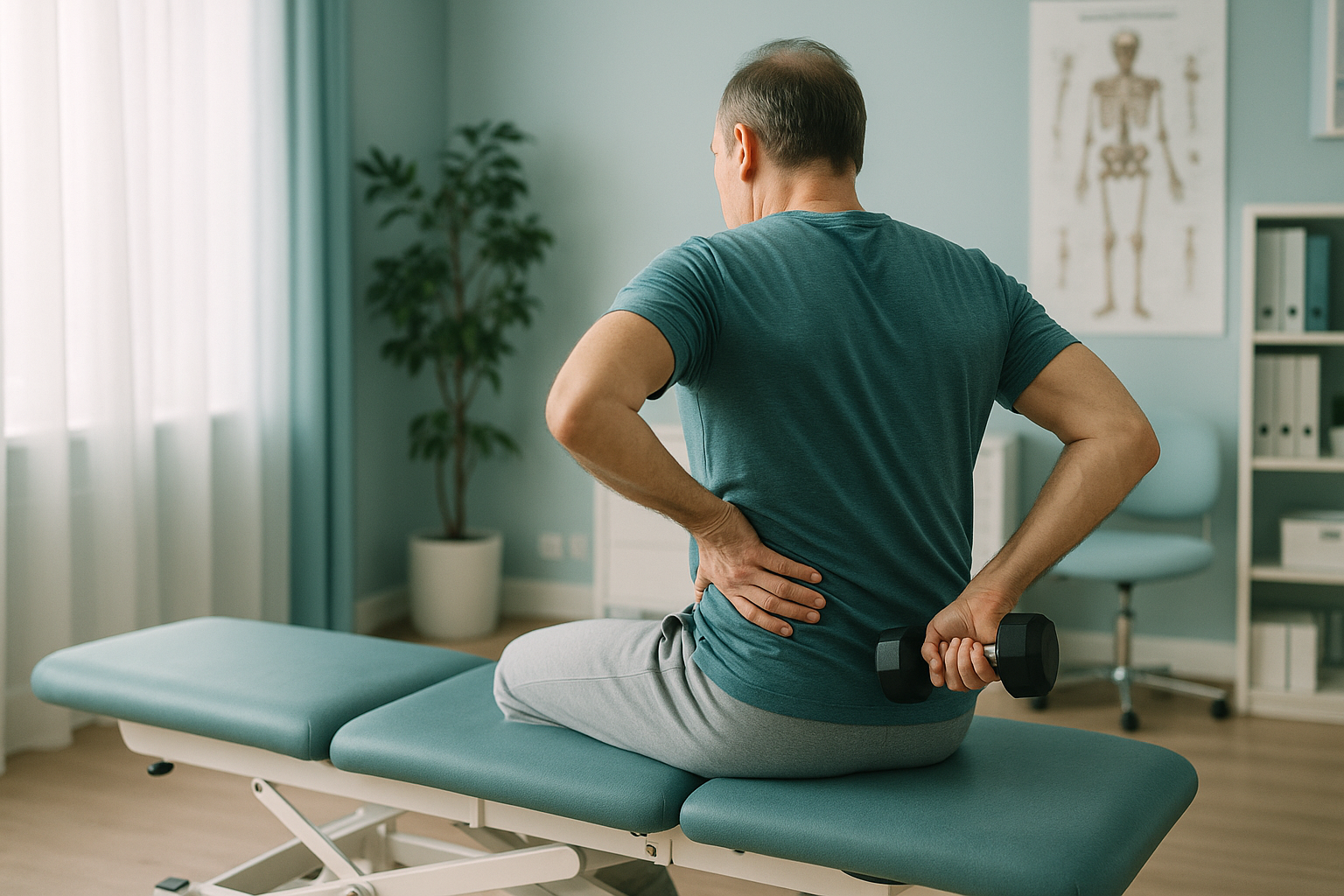
Fear avoidance, the belief that any loading will cause harm, is itself a predictor of worse outcomes. The goal is not to avoid load. It is to apply it gradually and correctly.
Is lifting bad for your back?
Lifting itself is not bad for your back. Poor technique under heavy load can be. So can pushing through pain that is signalling a real structural problem. The difference matters.
Jumping straight to heavy weights without building up gradually overwhelms tissues that are not ready.
If one side of your body is doing more work because of an alignment issue, that side wears out faster under load.
Radiating leg pain, numbness, or weakness during a lift are signals to stop and get assessed, not push through.
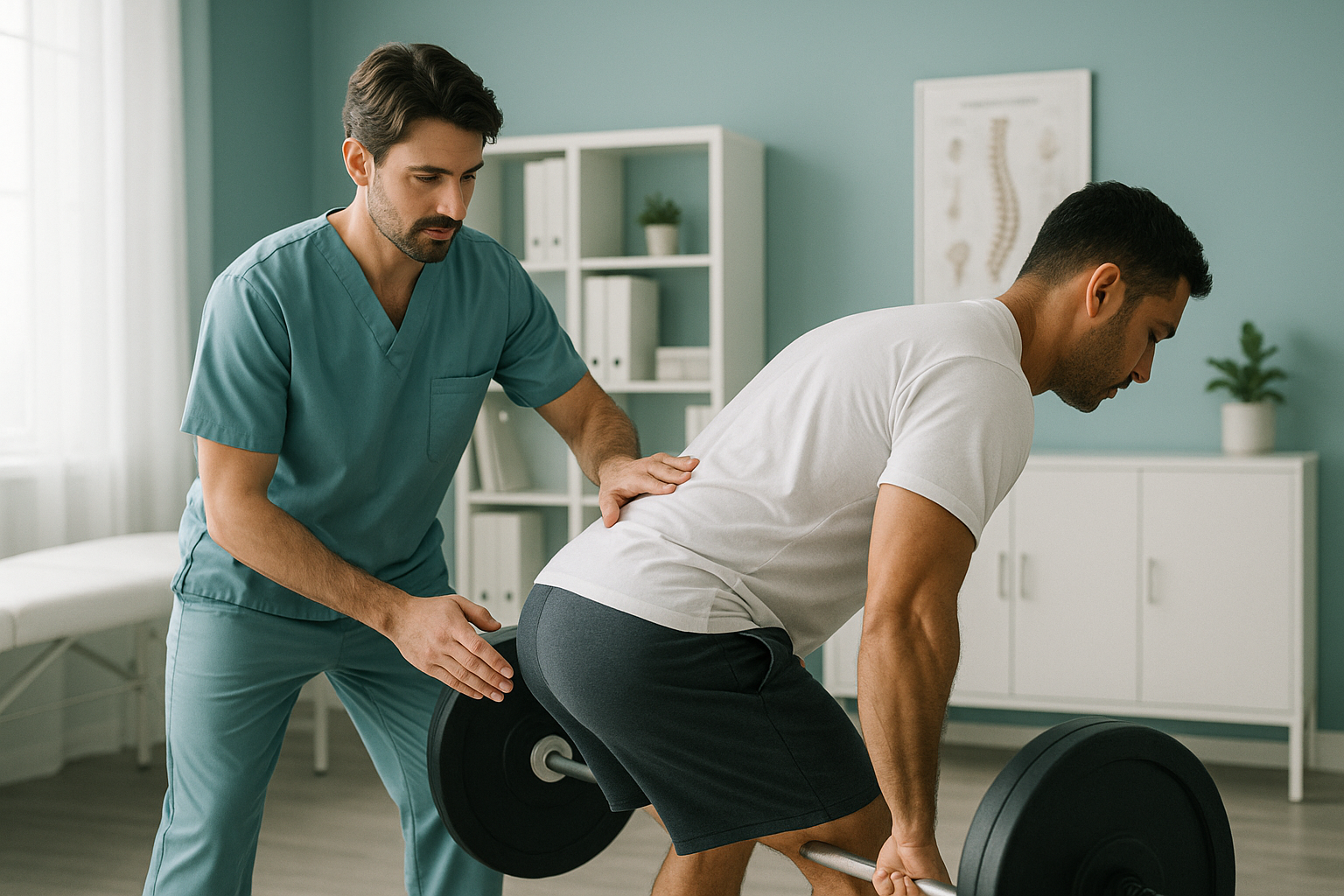
Most gym-related back pain comes from progressing too quickly, not from the exercises themselves. A deadlift with good form at an appropriate weight is a brilliant back exercise. The same deadlift with a rounded spine and a pelvis that tilts unevenly can be a problem.
What are the best lower back pain workouts for building strength?
The best exercises for lower back pain are ones that build core endurance, hip control, and spinal stability without compressing an irritated area. There is no single perfect routine, but several movement patterns have strong evidence behind them.
Deadlifts, Romanian deadlifts, kettlebell swings. Train your hips to do the heavy lifting, not your lower back.
Planks, side planks, bird-dogs, pallof presses. These build anti-rotation and stability rather than raw flexion strength.
Farmer's walks, suitcase carries. These train your trunk to stay stable while the rest of your body moves.
Hip thrusts, lunges, step-ups. Strong glutes take pressure off the lower back during every standing activity.
Combine these with stretches for lower back pain and you cover both strength and mobility. The trick is progressive overload, adding load gradually so your body adapts without being overwhelmed.
How to structure a lower back pain workout
Start lighter than you think you need to. Focus on controlled movement through a full, pain-free range. Add weight in small steps, only when the current load feels comfortable for every rep. Two to three sessions a week is enough for most people. Rest days are when your body actually gets stronger.
How should you manage a flare-up when training with back pain?
Flare-ups happen. They do not necessarily mean you have caused damage. A temporary increase in pain after training is common, especially when you are building back up. The important thing is how you respond.
- Reduce the load for a session or two, then build back up
- Keep moving gently, walks and light stretches
- Review your technique, especially the hip hinge
- Check whether one side felt different from the other
- Stopping all exercise completely for weeks
- Pushing through sharp, worsening pain
- Assuming the exercise "caused" the problem and avoiding it permanently
- Ignoring numbness, tingling, or weakness in a leg
If a flare-up includes sudden weakness, numbness in both legs, or any change in bladder or bowel control, stop training and seek urgent medical attention through your GP, 111, or A&E.
Why does alignment matter before you start loading your spine?
Alignment matters because your body is a connected chain. If your pelvis sits unevenly or your spine curves asymmetrically, every barbell squat and every deadlift loads one side more than the other. Over time, that uneven loading adds up.
Standard imaging, lying in an MRI or CT scanner, relaxes the muscles and lets gravity flatten out asymmetries that only appear when you are upright and weight-bearing. That is why a scan can come back "normal" even when something clearly feels wrong under load.
ScanAlign standing EOS imaging captures your full skeleton while you stand, using about 90% less radiation than a standard X-ray, around ten times less. It shows how your spine, pelvis, hips, and knees line up together under your own body weight. That information helps a clinician understand why one area keeps flaring up, and whether it is safe for you to load up in the gym.
When MRI is the better tool: EOS shows bones, joints, and alignment beautifully. For soft tissue problems like disc herniations, nerve compression, or ligament tears, MRI is usually the better choice. Your clinician can advise which you need, and sometimes you need both.
If your back pain keeps coming back despite doing everything right in the gym, the problem might be in your alignment, not your programme. A standing scan can show what lying-down imaging misses.
Book a free video consultationFrequently asked questions about strength training and back pain
Yes, in most cases. Staying active is better than bed rest for the majority of back pain. Start with lighter loads, focus on form, and avoid exercises that cause sharp or worsening pain. If you have numbness, weakness, or bladder changes, see a doctor before training.
No. A well-performed deadlift is one of the best exercises for building back and hip strength. Problems usually come from poor technique, too much weight, or an underlying alignment issue. If deadlifts consistently aggravate your symptoms, get assessed rather than just avoiding them.
Core endurance exercises like planks, side planks, bird-dogs, and pallof presses have strong evidence. These train your trunk to resist movement and stay stable, which is more useful for back health than sit-ups or crunches.
Both play a role. Stretching can ease stiffness and improve range of motion, while strength training builds the support your spine needs long-term. Many people benefit from combining both in a balanced programme.
Muscular pain often feels like a dull ache, worsens with certain movements, and improves with rest or gentle activity. Structural issues may cause sharper pain, radiating leg symptoms, or pain that does not settle. Imaging can help distinguish between them, especially standing imaging that shows how your body loads under gravity.
EOS captures your whole skeleton while you stand, so it reveals alignment and weight-bearing asymmetries that disappear when you lie down for an MRI. MRI is better for soft tissues like discs and nerves. They answer different questions, and sometimes both are helpful.
Yes. EOS uses about 90% less radiation than a standard X-ray, around ten times less. It is one of the lowest-dose skeletal imaging systems available.
No. ScanAlign accepts self-referrals. You can book an assessment before you load up directly through the website without needing a letter from your GP.
Pricing details are available on our FAQs and cost page.
Many people do, with the right approach. Graded exposure, rebuilding load tolerance step by step, is the evidence-based way back. If you are unsure whether your spine is structurally ready, a standing alignment assessment can give your clinician the information they need to guide your return safely.
Your alignment matters more than your programme
If your back keeps flaring up despite good training, standing imaging can show what is really going on. No referral needed.
Book a free video consultationWritten by Abbas Dhami (Specialist Diagnostic Radiographer)
Sources
- National Institute for Health and Care Excellence (NICE). Low back pain and sciatica in over 16s: assessment and management (NG59), 2016 (updated 2020).
- Hayden JA, Ellis J, Ogilvie R, et al. Exercise therapy for chronic low back pain. Cochrane Database of Systematic Reviews, 2021.
- Steffens D, Maher CG, Pereira LS, et al. Prevention of low back pain: a systematic review and meta-analysis. JAMA Internal Medicine, 2016;176(2):199-208.
This page is general information and not a diagnosis.
ScanAlign is the trading name of CoreMed Solutions Ltd and operates under The Harley Street Hospital's CQC licence.