
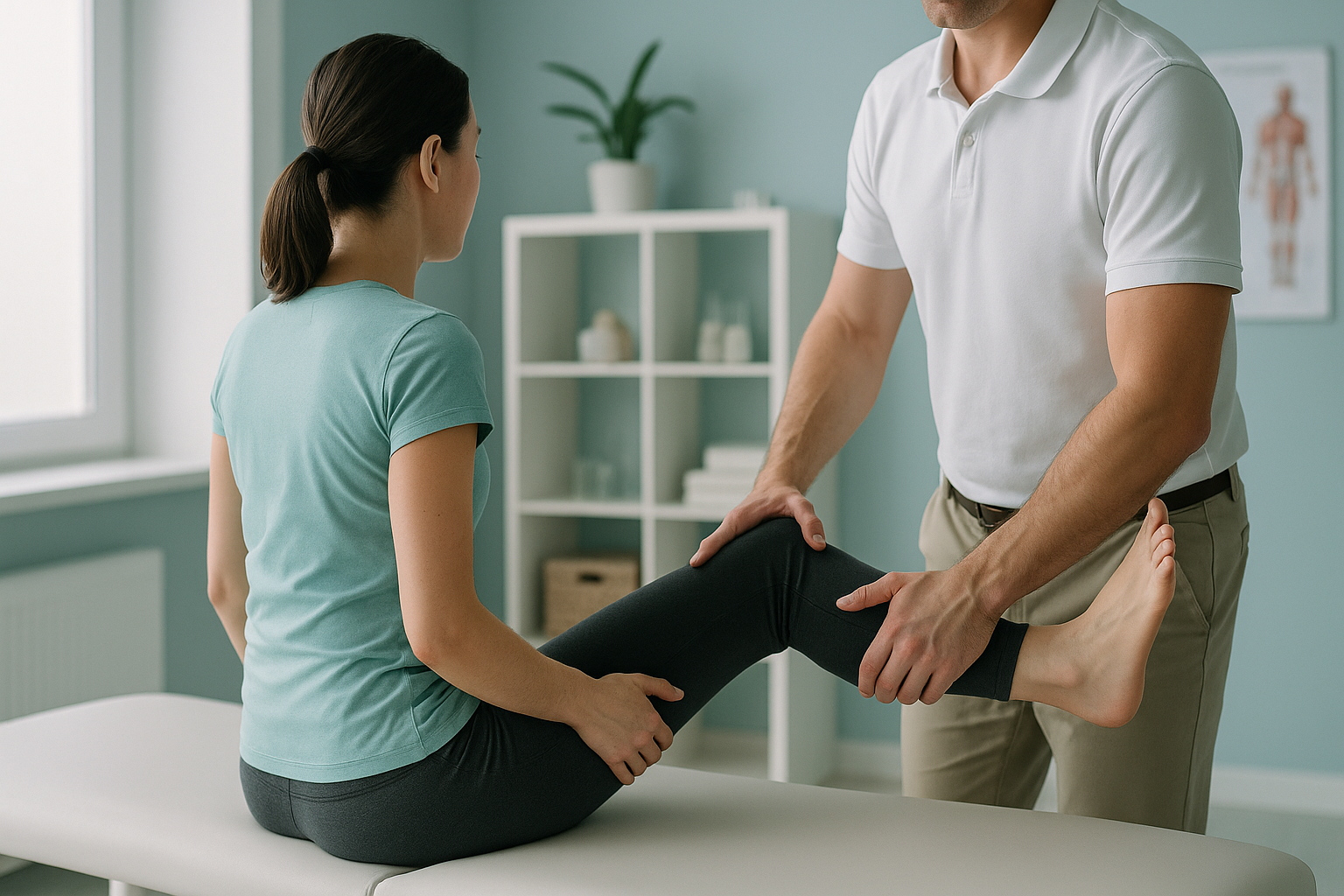
Should You Stretch or Strengthen a Tight Muscle?
It depends on why the muscle feels tight. A muscle that is genuinely short may benefit from stretching. But many muscles feel tight because they are weak or overworked, and stretching them can make the problem worse. Understanding the cause, often linked to your overall alignment, is the key to choosing the right approach.
Key takeaways
- Tightness is a sensation, not always a sign that a muscle is too short.
- Weak or overloaded muscles often feel tight because they are working too hard to compensate for poor alignment.
- Stretching a weak muscle can reduce the stability it is trying to provide.
- A standing whole-body image can reveal the alignment issues that drive protective muscle tension.
- The right answer is usually a mix of both, but only once you know what is causing the tightness.
Why are my muscles always tight?
Muscles feel tight for several different reasons, and not all of them mean the muscle is actually short. Perceived tightness is your nervous system's way of telling you something needs attention. The real question is what that something is.
A muscle without enough load capacity works at near-maximum effort even for simple tasks, creating a constant sensation of tightness.
Your nervous system tightens muscles around an unstable or misaligned joint to prevent further damage. This is protective muscle tension.
Prolonged postures, like sitting all day, can genuinely shorten certain muscles over time, reducing their resting length.
Nerve irritation can make nearby muscles feel tight even when their actual length is normal. The tightness is a nerve signal, not a muscle problem.
Knowing which category your tightness falls into changes everything about how you should respond. In many cases, a muscle imbalance means one group is short while its opposite number is long and weak, yet both can feel equally tight.
How do you tell if a tight muscle is weak or short?
You cannot always tell by feel alone. But there are some useful patterns to look for.
If the tightness appears mainly when standing, walking or exercising but eases when you lie down, the muscle may be weak and overworking to compensate.
If a joint genuinely cannot move through its full range even with gentle assistance, the muscle crossing it may be structurally shortened.
If stretching feels good in the moment but tightness returns within hours, you are probably stretching a muscle that needs strengthening instead.
When muscles on both sides of a joint feel tight, you may be dealing with instability. Your body is bracing because it does not feel stable.
People with hypermobility syndrome often experience this bracing pattern. Their joints move more than average, so muscles grip constantly to provide the stability that looser ligaments cannot.
Does stretching help tight muscles or make them worse?
Stretching helps when the muscle is genuinely short. It can make things worse when the muscle is tight because it is weak, overloaded, or guarding an unstable joint. In that case, you are removing the very support your body is trying to create.
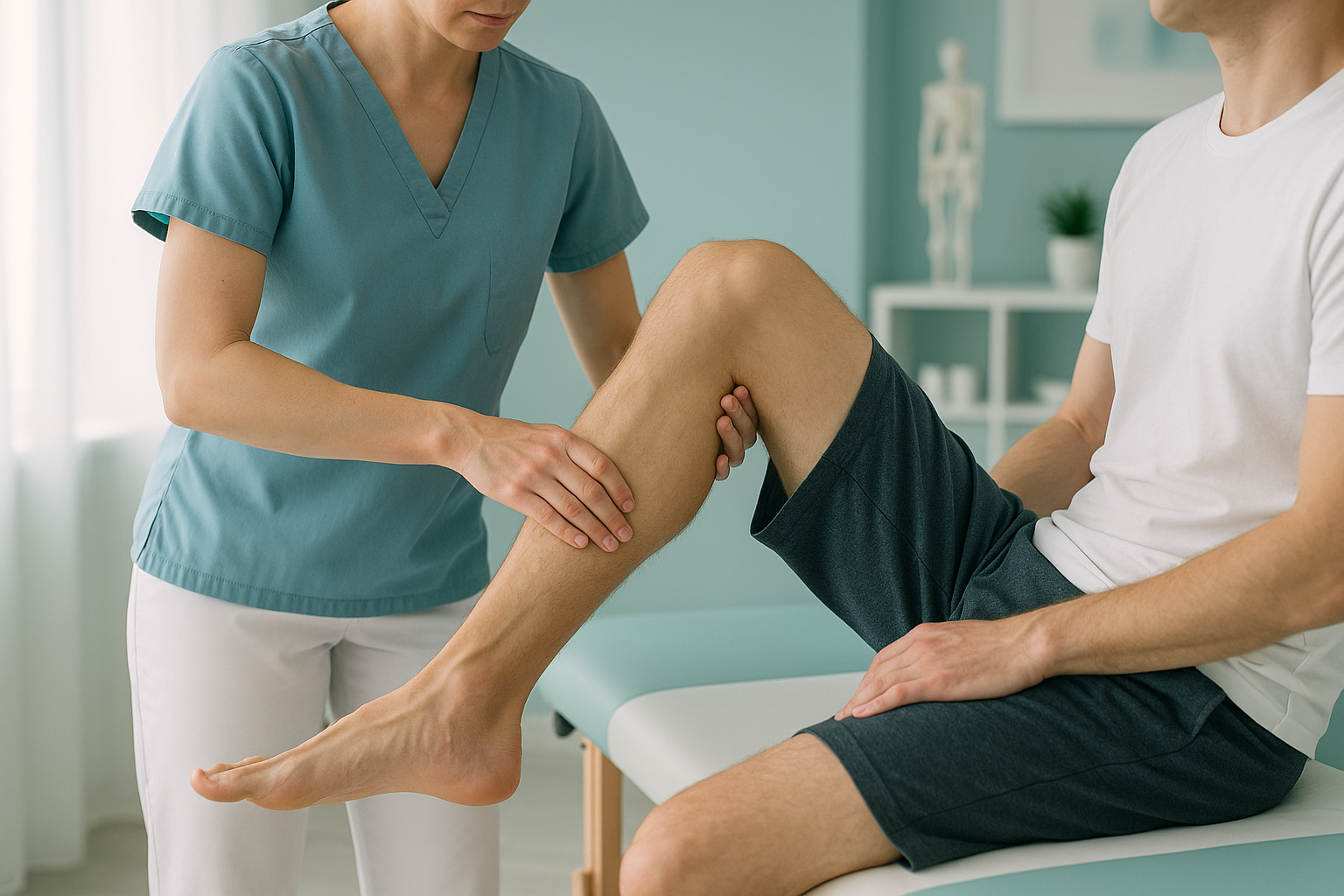
Think of it this way. If your hamstrings feel tight because your pelvis is tilted forward, the hamstrings are being pulled long and are working hard just to stop you from tilting further. They feel tight, but they are already over-stretched. Stretching them more removes a brake your body needs.
In this situation, you would typically strengthen the hamstrings and glutes so they can control pelvic position more effectively. You might also look at hyperlordosis exercises that address the underlying curve pattern.
When stretching is the right choice
- The muscle is genuinely shorter than normal and restricts your joint movement.
- You have been in a fixed position for a long time, such as sitting for hours, and the tissue has adapted to that length.
- A clinician has confirmed the muscle is structurally short, not just tight-feeling.
When strengthening is the right choice
- The tightness keeps coming back no matter how much you stretch.
- The muscle feels tight mainly when you are on your feet or exercising.
- You have been told you have good or even excessive flexibility, but things still feel stiff.
- The tightness seems linked to a joint that feels unstable or clicky.
In many real-world situations, you need both, but targeted to different muscle groups. A common pattern: strengthen the muscles that are long and weak, stretch the ones that are short and overactive. This is where understanding your alignment becomes essential.
How does alignment affect muscle tightness?
Your body is a connected chain from your feet to your head. When one part of that chain is out of position, muscles elsewhere have to compensate. This compensation is the most common reason people feel tight in areas that look perfectly healthy on a scan.
A tilted pelvis changes how your hip muscles work. That changes knee loading, which can contribute to conditions like bursitis around the hip or knee. It also shifts your spine, altering how your back muscles fire. The result is pain and tightness in places that seem unrelated to the real problem.
Standard imaging, such as an X-ray of just the knee or hip, only looks at one area. It also takes the image while you are lying down. Lying down relaxes the muscles and removes gravity, so alignment problems that only show up when you are standing and weight-bearing can be completely invisible.
If you have been stretching and strengthening without lasting relief, the issue may be structural alignment rather than muscle length. An alignment assessment can show what standing imaging reveals that single-area scans miss.
Book a free video consultationHow is muscle tightness assessed with standing imaging?
At ScanAlign, we use EOS imaging, a standing, weight-bearing scan that captures your entire skeleton from head to feet in a single image. Because you are upright and bearing your own weight, the image shows how your bones, joints and posture actually behave in the real world.
This matters for muscle tightness because it reveals the alignment patterns that drive compensation. If your pelvis is rotated, your spine curved, or one leg functionally shorter than the other, those findings explain why certain muscles are overworking. It moves the conversation from "which muscle is tight" to "why is that muscle tight," giving you and your clinician a clear starting point.
EOS uses about 90% less radiation than a standard X-ray, around ten times less. The scan itself takes seconds, and you stand naturally throughout.
A note on soft tissue. EOS shows bones, joints and alignment. For soft tissue, discs or nerves, MRI is usually the better tool. If your tightness is suspected to be nerve-related, your clinician may recommend MRI alongside or instead of alignment imaging.
Frequently asked questions
It depends on why they feel tight. If your hamstrings are being pulled long by a forward-tilting pelvis, they are already over-stretched and need strengthening. If they are genuinely short and limiting your hip movement, gentle stretching may help. A clinician or alignment assessment can clarify which applies to you.
Daily stretching targets muscle length, but if the tightness is caused by weakness, instability or alignment issues, the muscles will tighten up again because the underlying cause has not been addressed. Your body is re-tightening to protect something.
Yes. If a muscle is tight because it is providing stability that weak or loose structures cannot, stretching it removes that support. This can increase pain, instability and the risk of injury.
Protective muscle tension is your nervous system's response to instability or misalignment. It tightens muscles around a vulnerable area to limit movement and prevent further damage. It feels like tightness, but it is a protective mechanism rather than a structural shortening of the muscle.
For most people, a combination works best. Mobility work helps joints move freely, while strength training builds the load capacity muscles need so they do not have to grip and guard. The key is knowing which muscles need which approach, and that depends on your alignment and movement patterns.
Your body works as a connected chain. A tilt in the pelvis can change how the knee loads, which affects the ankle, which alters how the back muscles fire. Muscles at any point along this chain may tighten to compensate, creating tightness in areas that seem completely unrelated to the root cause.
No. ScanAlign is a private, self-pay service. You can book an alignment assessment directly without a GP or consultant referral.
EOS uses about 90% less radiation than a standard X-ray, around ten times less. You stand naturally for a few seconds. There is no contrast dye and no enclosed tunnel.
You can find current pricing and what is included on the ScanAlign FAQs page.
These are red-flag symptoms that need urgent medical attention. Contact your GP, call 111, or go to A&E. Do not wait for an imaging appointment.
Find out why your muscles are really tight
A free video consultation lets you discuss your symptoms with a specialist radiographer. If alignment imaging could help, we will explain exactly what is involved.
Book a free video consultationSources
- Weppler CH, Magnusson SP. Increasing muscle extensibility: a matter of increasing length or modifying sensation? Physical Therapy. 2010;90(3):438-449.
- Sahrmann SA. Diagnosis and Treatment of Movement Impairment Syndromes. Mosby, 2002.
- NHS. Back pain: exercise and lifestyle. nhs.uk/conditions/back-pain.
Written by Abbas Dhami (Specialist Diagnostic Radiographer)
This page is general information and not a diagnosis.
ScanAlign is the trading name of CoreMed Solutions Ltd and operates under The Harley Street Hospital's CQC licence.