
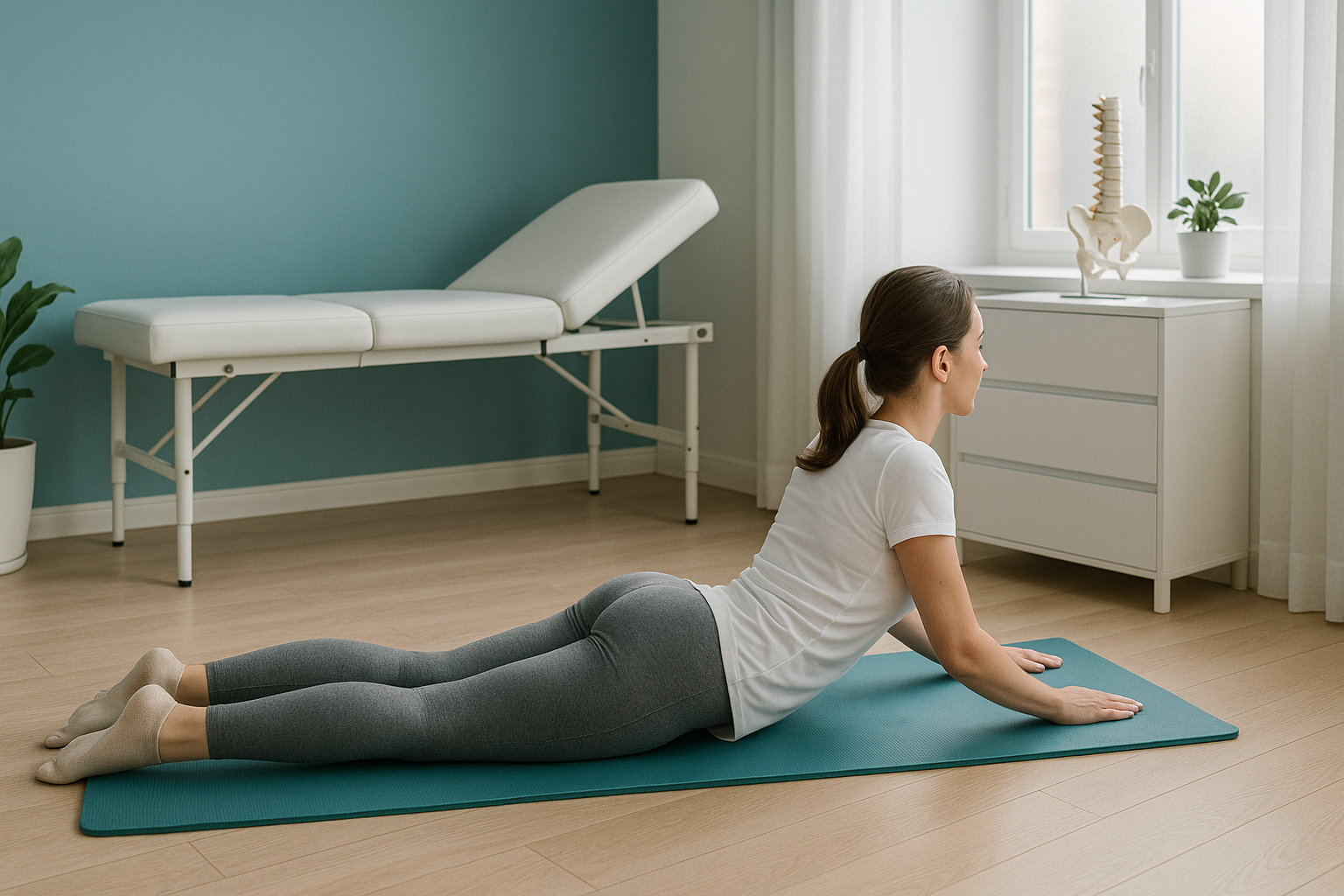
Hyperlordosis Exercises: Which Ones Actually Help Correct the Curve?
The most effective hyperlordosis exercises strengthen the glutes, deep abdominals and hamstrings while stretching the hip flexors and lower back. However, exercises alone may not be enough. An exaggerated lumbar curve often has a structural cause, such as a pelvic tilt or spinal imbalance, that only shows up on standing, weight-bearing imaging.
Key takeaways
- Hyperlordosis is an excessive inward curve of the lower back, often linked to anterior pelvic tilt.
- Targeted stretches and strengthening exercises can reduce symptoms and improve posture.
- Pain sometimes originates away from the curve itself because the body compensates along the whole chain.
- A standing alignment assessment shows the true shape of your spine under load, something lying-down scans can miss.
- ScanAlign provides diagnostic imaging only. It does not deliver treatment.
What is hyperlordosis and why does it matter?
Hyperlordosis is an exaggerated inward curve of the lumbar spine, sometimes described as swayback posture. A gentle curve in the lower back is normal. It helps absorb shock when you walk and stand. When that curve becomes too deep, the pelvis tips forward, the abdomen pushes out, and the muscles around the spine work harder than they should.
Over time this can lead to lower back pain, stiffness, and problems in the hips and knees because the rest of your body adjusts to compensate. That compensation chain is why you might feel pain far from where the actual problem lies.
How do you know if you have hyperlordosis?
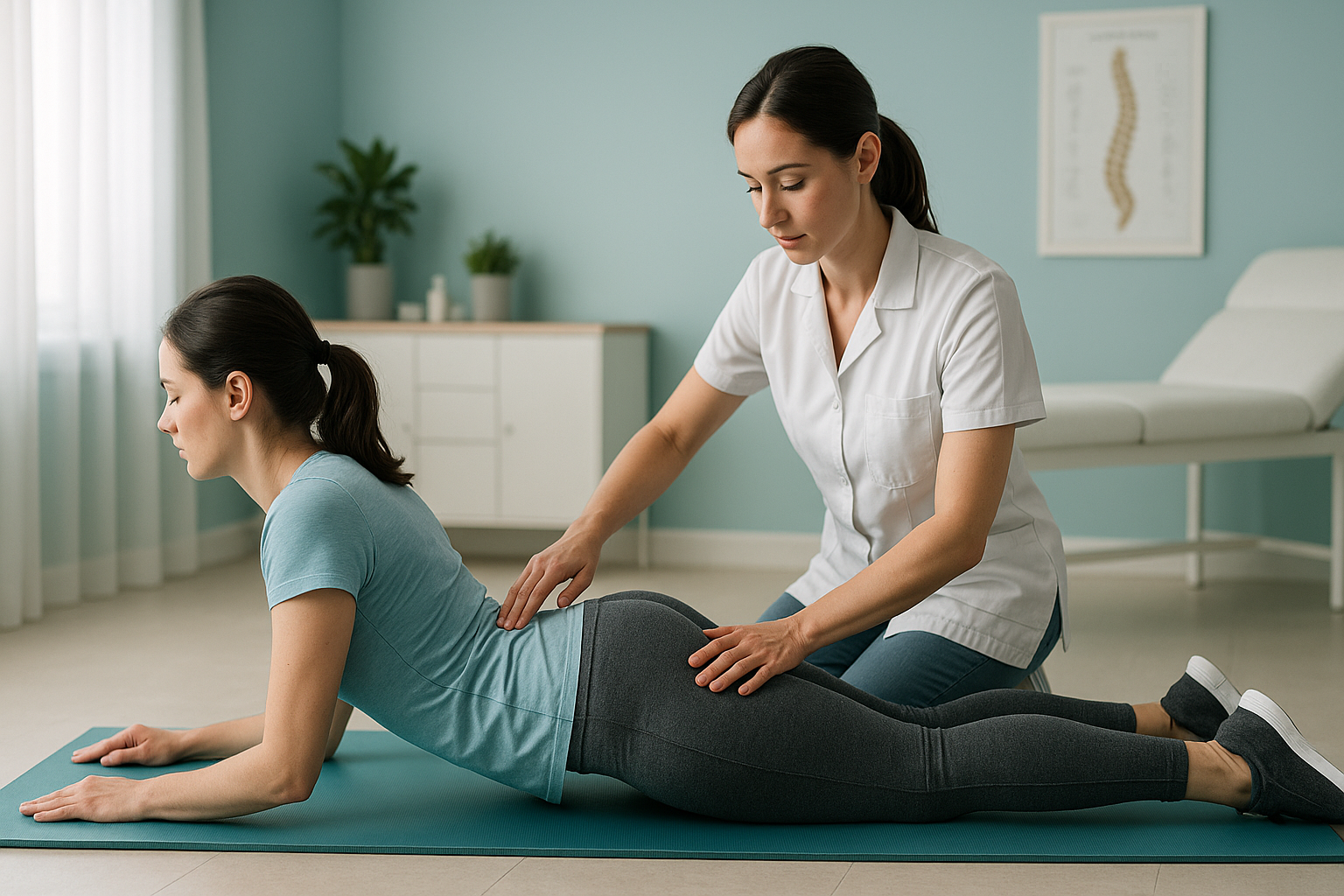
You may notice it in the mirror, or it may show up as persistent discomfort. Common signs include the following.
Your lower back appears deeply curved when you stand naturally, with a noticeable gap between your back and a flat wall.
Aching or stiffness across the lumbar area, especially after standing or walking for long periods.
Your stomach pushes forward even though your core may be reasonably strong, because the pelvis has tipped.
The muscles at the front of your hips feel constantly tense, pulling the pelvis into an anterior tilt.
A note on red-flag symptoms. If you experience sudden numbness, weakness in your legs, or any loss of bladder or bowel control, seek urgent medical attention through your GP, 111, or A&E. These symptoms require immediate assessment, not a scan booking.
What causes hyperlordosis in adults?
Several factors can pull the lumbar spine into an excessive curve. Often more than one is involved at the same time.
Desk work shortens the hip flexors and weakens the glutes, encouraging pelvic tilt.
Weak abdominals and hamstrings cannot counterbalance tight lower-back extensors.
A leg-length difference or pelvic asymmetry can force the spine to over-curve to stay balanced.
Carrying extra weight around the abdomen shifts your centre of gravity forward, deepening the curve.
Which hyperlordosis exercises help correct the curve?
A well-rounded hyperlordosis correction routine targets two groups: tight muscles that need stretching, and weak muscles that need strengthening. Below are the most commonly recommended categories. For specific guidance, work with a qualified physiotherapist or movement specialist.
Stretches for tight areas
- Hip flexor stretch (kneeling lunge). Kneel on one knee, push your hips gently forward until you feel a stretch at the front of the hip. Hold for 20 to 30 seconds each side.
- Lower back release (child's pose). Sit back onto your heels with arms stretched forward. This lengthens the lumbar extensors that are often overworked.
- Quadriceps stretch (standing or side-lying). Tight quads pull the pelvis forward. Holding each stretch for 20 to 30 seconds can help release that tension.
Strengthening for weak areas
- Glute bridges. Lie on your back with knees bent, press through your heels and lift your hips. Squeeze at the top. This activates the glutes and teaches posterior pelvic control.
- Dead bugs. Lie on your back, raise your arms and knees to 90 degrees, then slowly extend opposite arm and leg while keeping your lower back flat against the floor. This builds deep abdominal strength.
- Hamstring curls (standing or lying). Stronger hamstrings help counterbalance the pull of tight hip flexors.
- Pelvic tilts. Lie on your back, flatten your lower back into the floor by gently tilting your pelvis. This simple movement retrains the position of your pelvis.
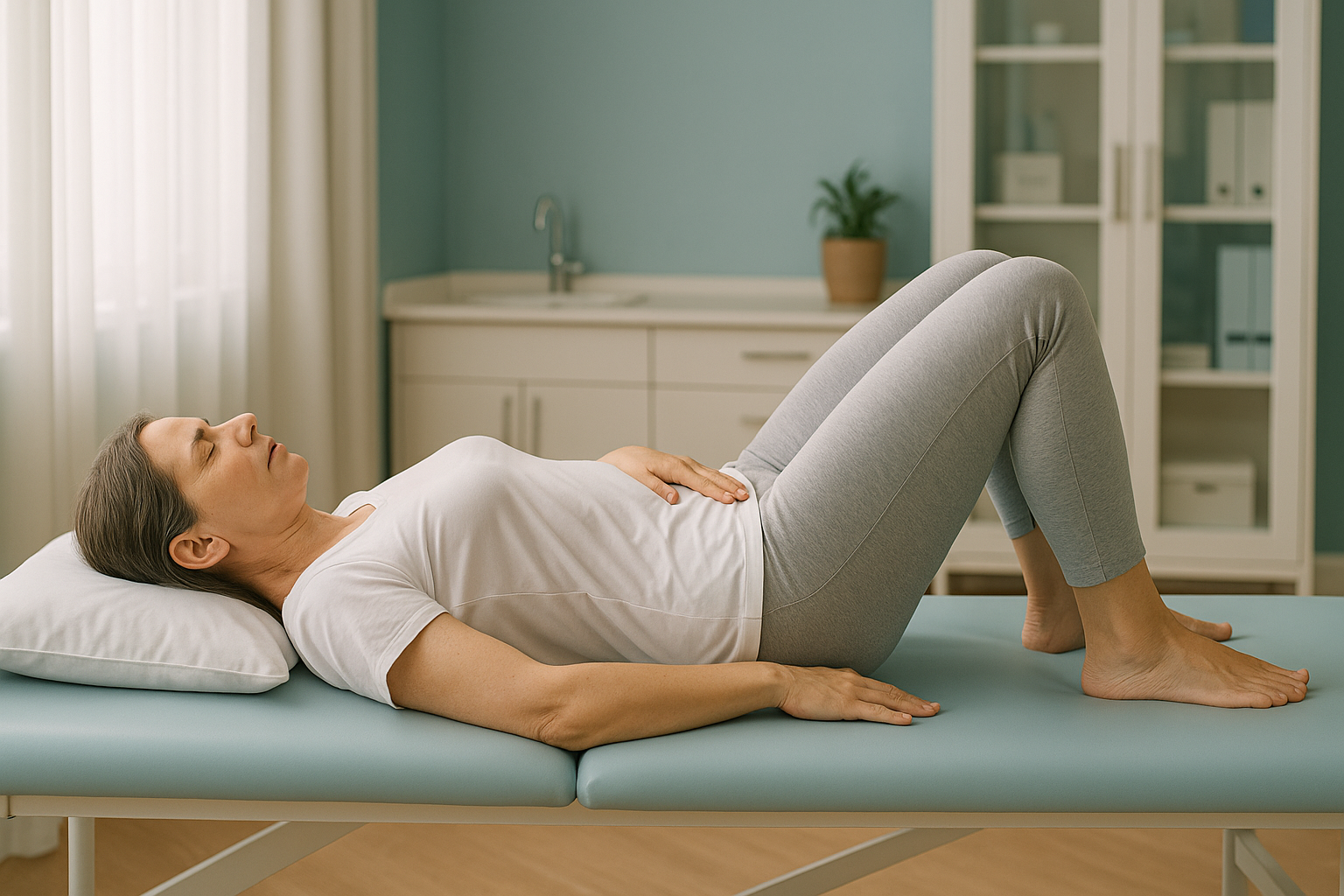
Consistency matters more than intensity. A short daily routine of anterior pelvic tilt exercises and lumbar stretches will typically do more than an occasional long session.
Not sure whether exercises are enough? A standing alignment assessment can reveal whether a structural issue is driving your curve, so you know what to focus on.
Book a free video consultationWhy does standing imaging matter before starting exercises?
Most imaging for back pain is done while you are lying down. MRI, CT and standard X-rays all capture the spine in a relaxed, unloaded position. When you lie flat, gravity no longer pulls on your body, muscles relax, and your spine may look quite different from how it behaves when you are standing and weight-bearing.
An EOS scan captures a full-length, standing image of your skeleton from head to feet. It shows how your spine, pelvis, hips and legs actually line up under your own body weight. This matters because a curve that looks mild when lying down can be significantly more pronounced when gravity is involved.
EOS uses about 90% less radiation than a standard X-ray, around ten times less. That low dose means it is comfortable and quick.
Crucially, the whole-body view reveals the compensation chain. If a slightly short leg is tilting your pelvis, that tilt deepens your lumbar curve. No amount of hip-flexor stretching will fix an issue rooted in the pelvis or legs. Knowing the cause first means you can direct your efforts where they will actually help.
When is MRI the better choice? EOS shows bones, joints and alignment. If your clinician suspects a disc problem, nerve compression or soft-tissue injury, MRI is usually the better tool for those specific questions. The two types of imaging complement each other.
Learn more about how standing whole-body EOS imaging works and the kind of information it provides to you and your clinician.
Frequently asked questions about hyperlordosis exercises
Many people see a meaningful improvement from consistent stretching and strengthening. However, if the curve is driven by a structural cause, such as a pelvic tilt or leg-length difference, exercises alone may only manage symptoms rather than address the root issue.
There is no fixed timeline. Some people notice postural improvements within a few weeks of daily exercises. Others, especially where a structural factor is involved, may need a longer, guided programme. A proper assessment helps set realistic expectations.
They are closely related but not identical. Anterior pelvic tilt is when the front of the pelvis drops forward. This tilt often causes or worsens hyperlordosis, the excessive inward curve of the lower back. Correcting one usually helps the other.
Swayback is a general term often used to describe a posture where the hips push forward and the upper body leans back. It overlaps with hyperlordosis but can involve different postural patterns. A standing alignment image can clarify which pattern applies to you.
No. ScanAlign is a self-pay clinic and you can self-refer. You start with a free video consultation to discuss whether the scan is appropriate for you.
Yes. EOS uses about 90% less radiation than a standard X-ray, around ten times less. You can find more detail on the safety and FAQs page.
Pricing details are on the FAQs and cost page. The free video consultation is a good first step to find out whether a scan suits your situation.
They can underestimate it. When you lie flat, gravity is removed and your muscles relax. The curve may flatten or reduce, making the problem look less significant than it actually is when you are upright and weight-bearing.
Either order can work. Some people try exercises first and seek imaging if progress stalls. Others prefer to understand the full picture before starting a programme. A standing scan gives you and your physiotherapist clear information to guide the approach.
ScanAlign is at 19 Harley Street, London. Booking starts with a free video consultation. You can book your consultation here.
Understand your curve before you try to correct it
A free video consultation lets you discuss your symptoms with a specialist radiographer and find out whether a standing alignment scan is the right next step.
Book a free video consultationSources
- NHS. "Back pain: causes, treatment and prevention." nhs.uk.
- Roussouly P, Pinheiro-Franco JL. "Biomechanical analysis of the spino-pelvic organisation and adaptation in pathology." European Spine Journal, 2011;20(Suppl 5):609-618.
- Kendall FP, McCreary EK, Provance PG. Muscles: Testing and Function, with Posture and Pain. 5th ed. Lippincott Williams & Wilkins, 2005.
Written by Abbas Dhami (Specialist Diagnostic Radiographer)
Related pages
Learn more about spine and posture assessment, or explore how alignment affects the hips and knees.
This page is general information and not a diagnosis.
ScanAlign is the trading name of CoreMed Solutions Ltd and operates under The Harley Street Hospital's CQC licence.