
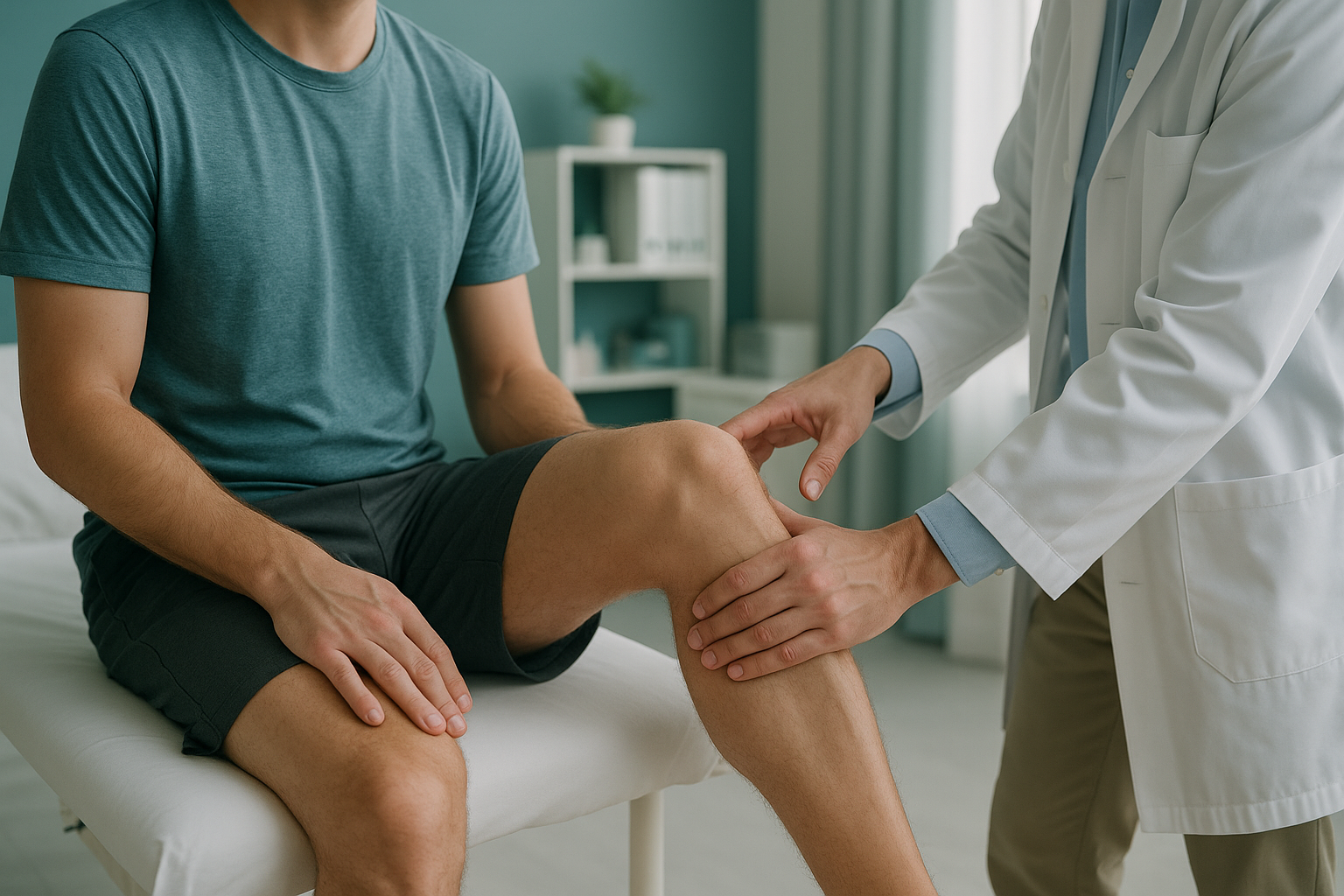
What Is Runner's Knee, and Why Does It Keep Coming Back?
Runner's knee is pain around or behind the kneecap, usually caused by how the kneecap tracks against the thigh bone during movement. It keeps coming back because the underlying cause, often poor alignment in the hip, pelvis or foot, is rarely identified by standard lying-down imaging. Exercises for runner's knee work best once that root cause is clear.
Key takeaways
- Runner's knee is a form of patellofemoral pain syndrome, where the kneecap does not sit or glide correctly.
- Weak hip abductors and glute medius muscles are among the most common contributors.
- Exercises for runner's knee focus on hip and thigh strength, not just the knee itself.
- A standing, weight-bearing scan can reveal alignment issues that lying-down imaging misses.
- Getting a clear picture of the whole chain, from foot to pelvis, helps guide the right rehabilitation.
Runner's knee is one of the most common reasons people cut short a training plan. The medical name is patellofemoral pain syndrome. It describes pain at the front of the knee, usually around or just behind the kneecap. It tends to get worse going downhill, climbing stairs, or sitting for a long time with the knee bent.
The frustrating part is the cycle. You rest, the pain fades, you start running again, and within a few weeks it returns. That cycle usually means the real trigger has not been found.
What does runner's knee feel like?
Runner's knee typically presents as a dull ache behind or around the kneecap that builds during or after a run. It may also flare up after sitting with bent knees for a prolonged period.
A note on soft tissue. EOS imaging shows bones, joints and alignment clearly. If your clinician suspects cartilage damage, ligament tears or nerve involvement, MRI is usually the better tool. The two scans complement each other well.
What causes runner's knee to keep coming back?
Runner's knee returns when the underlying biomechanical trigger is still present. The kneecap sits in a groove on the thigh bone. When it does not track centrally, known as patellar maltracking, the surrounding tissues become irritated with every stride. Several factors higher up or lower down the leg can cause this.
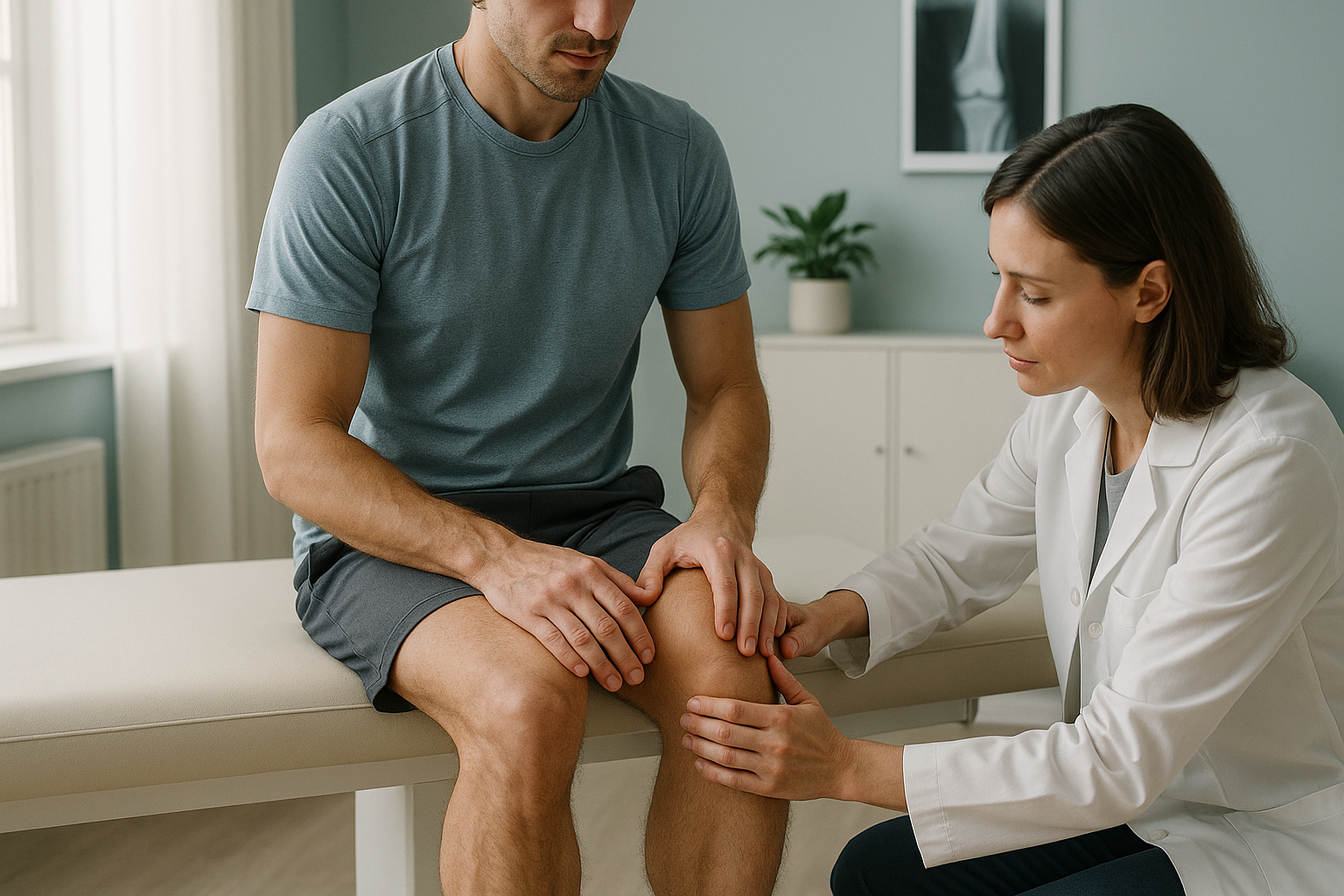
Your body is a connected chain from your feet to your pelvis. A problem at one level, for example a mild pelvic tilt or excessive foot pronation, changes the angle of force at the knee. That is why knee pain after running often has its true origin somewhere else entirely.
What exercises help with runner's knee?
Exercises for runner's knee are most effective when they target the muscles that control kneecap tracking, particularly around the hip and thigh. Strengthening these areas reduces the inward collapse of the knee during each stride.
Research consistently highlights hip abductor strength as a key factor. When the glute medius fires properly, it keeps the thigh aligned and the kneecap centred. Common exercises recommended by physiotherapists include:
- Side-lying hip abduction. Strengthens the glute medius in isolation.
- Single-leg squats or step-downs. Builds control under weight-bearing load.
- Clamshells with resistance band. Targets external rotation of the hip.
- Single-leg bridges. Works both the glutes and the hamstrings.
- Terminal knee extensions. Strengthens the inner quad (VMO) to improve kneecap tracking.
These exercises address common muscular weaknesses, but they are general guidance. If your kneecap is being pulled off track because of a structural alignment issue, such as a leg-length difference or rotational problem higher up the chain, strengthening alone may not be enough. That is where imaging comes in.
Want to understand the alignment behind your knee pain before starting rehab?
Book a free video consultationWhy does a standing scan show what lying-down imaging misses?
A standing scan captures your skeleton under your own body weight, exactly as it works when you run. Lying-down imaging, whether X-ray, CT or MRI, relaxes the muscles and removes gravity. This can hide alignment problems that only appear when you are upright and weight-bearing.
An EOS scan takes a full-length image of your legs, knees, hips and pelvis while you stand. It shows how each joint lines up under real load. The kneecap's position, the angle between your thigh and shin, and any rotational pattern from the hip or foot are all visible in a single image.
The radiation dose is about 90% less than a standard X-ray, around ten times less.
When you lie down, your muscles relax and your joints decompress. A kneecap that tracks poorly under load may sit perfectly when gravity is removed. A pelvic tilt that shifts your entire leg alignment may flatten out. The result is an image that looks normal, even though your symptoms clearly say otherwise.
ScanAlign standing EOS imaging captures the whole picture, from your feet to your pelvis, in one scan. A specialist radiographer reviews the images and prepares a detailed alignment report. This information helps your physiotherapist or surgeon understand the mechanical cause behind your runner's knee. A gait analysis can add further detail about how you move.
How do you prevent runner's knee from coming back?
Preventing runner's knee means managing load and addressing the underlying alignment or muscular imbalance. Neither rest alone nor exercises alone are enough if the root cause has not been identified.
- Load management. Avoid sudden spikes in weekly mileage. A common guideline is no more than a 10% increase per week.
- Running cadence. A slightly higher step rate can reduce the impact on the patellofemoral joint with each stride.
- Terrain variety. Repeated downhill running places heavy load on the kneecap. Mix in flat and varied surfaces.
- Footwear. Shoes that suit your foot type and running style help maintain good lower-limb alignment.
- Consistent strength work. Hip and thigh strengthening should be a year-round habit, not just a rehab phase.
If these measures have not stopped the cycle, consider whether the problem lies deeper in your alignment. A structural issue such as a rotated tibia or a subtle leg-length difference will not respond to strengthening alone. That is the gap a full standing alignment scan is designed to fill.
- Have had runner's knee more than once
- Have been told your knee looks "normal" on lying-down imaging
- Suspect a leg-length difference or hip imbalance
- Want a clear alignment picture before surgery or rehab
- Sudden severe knee swelling or inability to bear weight
- Numbness, weakness or tingling in the leg
- A knee that locks or gives way repeatedly
- Any loss of bladder or bowel control (seek urgent help via 111 or A&E)
Frequently asked questions about runner's knee
Runner's knee recovery time varies widely. Mild cases may settle in a few weeks with load management and targeted exercises. If an alignment issue is driving the problem, recovery often stalls until that root cause is addressed.
Running through significant pain usually makes things worse. Reducing your mileage, adjusting your cadence, and switching to softer surfaces can sometimes allow you to keep running at a lower level while you rehabilitate.
Runner's knee causes pain at the front of the knee, around the kneecap. IT band syndrome causes pain on the outer side of the knee. Both can be related to hip weakness and alignment, but they affect different structures.
No. ScanAlign accepts self-referrals. You can book a free video consultation directly without seeing your GP first.
Yes. An EOS scan uses about 90% less radiation than a standard X-ray, around ten times less. It is one of the lowest-dose imaging options available for full-body skeletal assessment.
For current pricing and what is included in the assessment, please visit the book a runner's alignment scan page or start with a free video consultation.
Deep squats, lunges with heavy load, and repeated stair climbing can aggravate the kneecap. Focus on controlled, partial-range exercises that do not cause pain, and build strength gradually.
Downhill running increases the compressive force on the patellofemoral joint. Your quadriceps work harder to control the descent, pressing the kneecap more firmly into its groove. If the tracking is already off, the pain intensifies.
A standing EOS scan shows how your bones and joints align under your own weight. It can reveal rotational patterns, leg-length differences, and kneecap position that are invisible on lying-down imaging. This gives your clinician the information needed to target the real cause.
Yes, runner's knee is a common name for patellofemoral pain syndrome. The clinical term describes the same condition: pain caused by how the kneecap interacts with the thigh bone during movement.
Stop guessing. See your alignment standing up.
A free video consultation takes about 15 minutes. We will discuss your symptoms, your history, and whether a standing alignment scan is the right next step for you.
Book a free video consultationSources
- Crossley KM, van Middelkoop M, Callaghan MJ, et al. 2016 Patellofemoral pain consensus statement from the 4th International Patellofemoral Pain Research Retreat. British Journal of Sports Medicine. 2016;50(14):839-843.
- Rathleff MS, Rathleff CR, Crossley KM, Barton CJ. Is hip strength a risk factor for patellofemoral pain? A systematic review and meta-analysis. British Journal of Sports Medicine. 2014;48(14):1088.
- NHS. Knee pain. nhs.uk/conditions/knee-pain. Accessed 2024.
Written by Abbas Dhami (Specialist Diagnostic Radiographer)
This page is general information and not a diagnosis.
ScanAlign is the trading name of CoreMed Solutions Ltd and operates under The Harley Street Hospital's CQC licence.