
Scheuermann's Kyphosis: What Causes It and How Is It Treated?
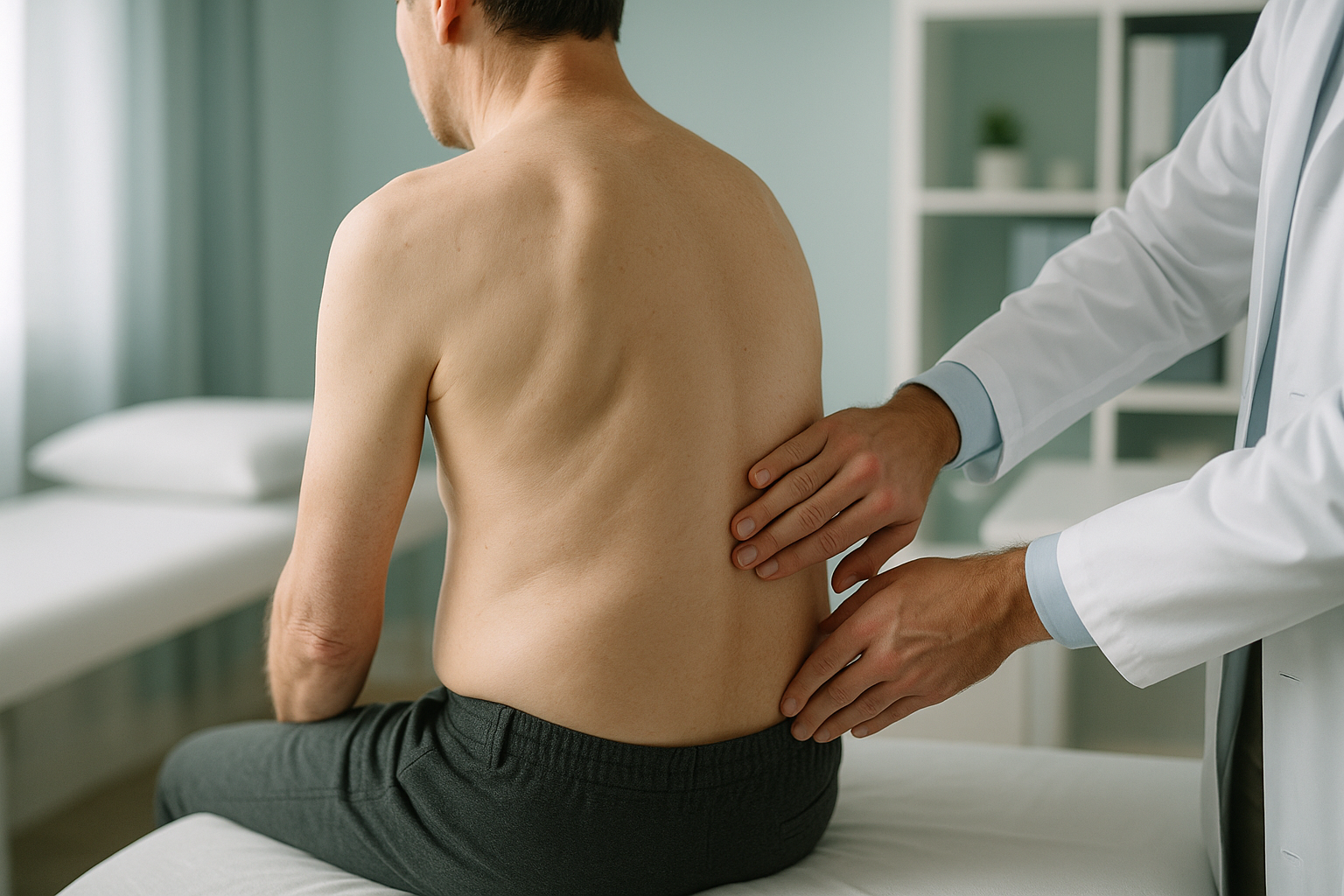
Scheuermann's kyphosis is a structural rounding of the upper back caused by vertebrae that grow into a wedge shape during adolescence. It persists into adulthood, sometimes causing stiffness and pain. Treatment ranges from targeted exercises and bracing to surgery in severe cases. A standing whole-body image can show how much the curve affects your overall alignment.
Key takeaways
- Wedge-shaped vertebrae create a fixed forward curve that does not straighten when you try to stand tall.
- Symptoms often include upper back stiffness, fatigue and aching that worsens through the day.
- Lying-down scans can understate the curve because gravity flattens it. Standing imaging shows the true picture.
- Most adults manage well with exercise and physiotherapy. Surgery is reserved for severe, painful curves.
- EOS whole-body imaging captures your spine, pelvis and legs in one low-dose standing scan.
If your upper back has always looked more rounded than other people's, and stretching or "standing up straight" does not change it, you may have Scheuermann's kyphosis. It is different from simple postural roundness because the bones themselves have changed shape. Understanding the condition is the first step towards knowing what, if anything, needs to happen next.
What are the symptoms of Scheuermann's kyphosis in adults?
The most noticeable symptom is a rounded upper back that you cannot fully correct by changing your posture. Many adults also experience aching, stiffness and muscle fatigue across the mid and upper back, especially after sitting or standing for long periods.
Not everyone with Scheuermann's kyphosis has pain. Some people only become aware of it when imaging is done for another reason. If you do experience numbness, weakness in your legs, or loss of bladder or bowel control, seek urgent medical attention through your GP, 111 or A&E. These are not typical of Scheuermann's disease and need immediate assessment.
What causes Scheuermann's kyphosis?
Scheuermann's kyphosis happens when the front edges of several vertebrae in the upper back grow more slowly than the back edges during adolescence. This creates wedge-shaped bones that stack into a forward curve. The exact reason for this uneven growth is not fully understood, but genetics play a role.
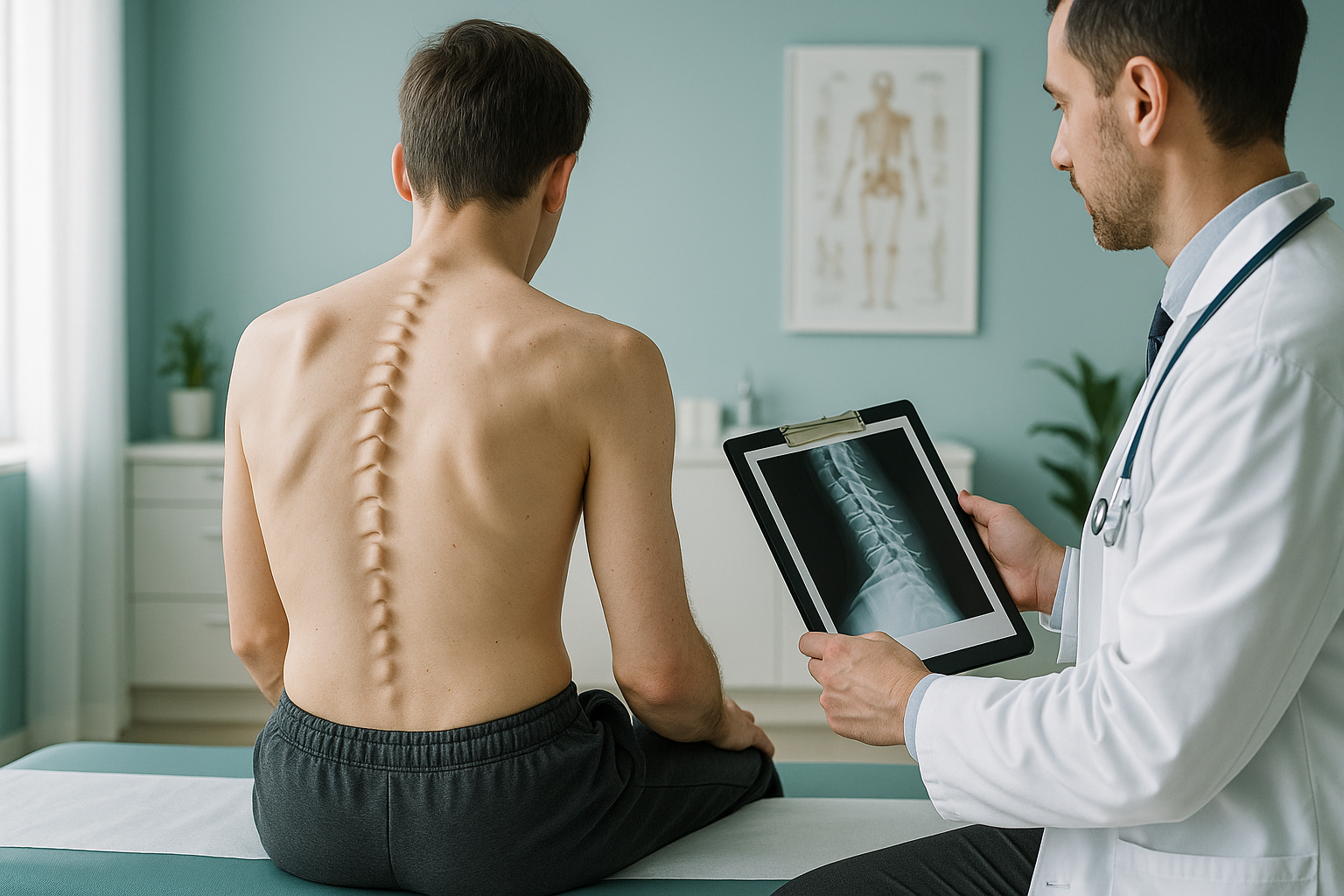
When three or more adjacent vertebrae each become wedge-shaped, the cumulative effect is a pronounced forward curve. This is a structural change in the bone itself, which is why it cannot be corrected simply by adjusting your posture.
Because the body works as a connected chain from your feet to your head, a fixed curve in the thoracic spine forces other regions to adapt. The lower back often arches more to keep your head centred over your pelvis. The pelvis itself may tilt. This means the pain or stiffness you feel might not be where the real problem lies.
How is Scheuermann's kyphosis assessed when standing up?
A standing, weight-bearing scan shows your spine exactly as it behaves in daily life. When you lie down for a standard X-ray, CT or MRI, gravity partly flattens the curve and relaxes the muscles around it. This can make the kyphosis look less significant than it really is.
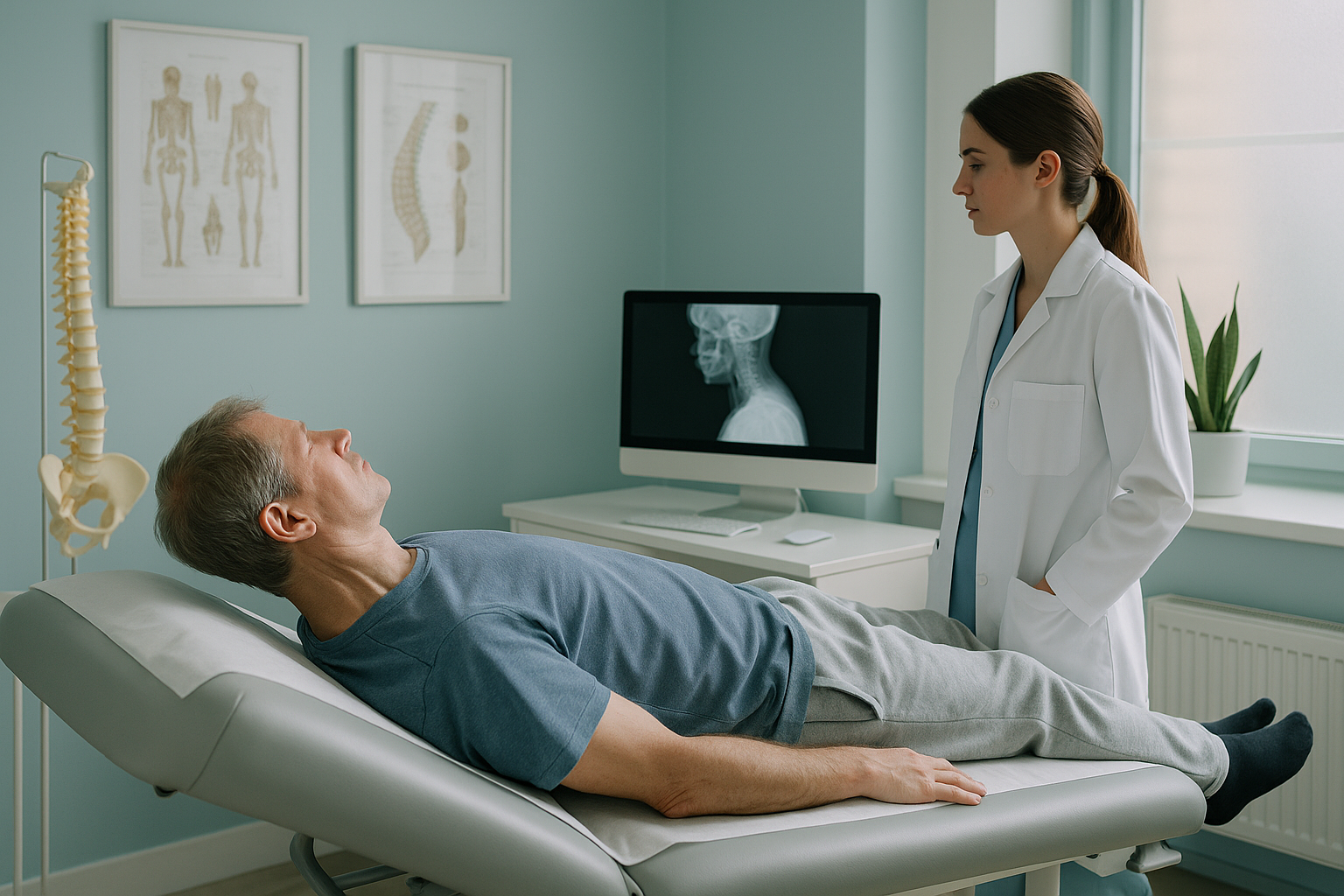
An EOS scan takes a full-length image of your skeleton while you stand naturally. It captures your spine, pelvis and legs in a single exposure, using about 90% less radiation than a standard X-ray, around ten times less. This means your clinician can see the true shape of your kyphosis and any compensation happening elsewhere in your body.
For many adults with Scheuermann's kyphosis, the real value of a standing whole-body image is the bigger picture. It shows whether your pelvis has tilted, whether your lower back is over-arching to compensate, and how your leg alignment fits into the chain. A single-area scan of the thoracic spine alone would miss all of this.
Want to understand how your kyphosis affects the rest of your body? A standing EOS scan captures your full alignment in one image.
Book a free video consultationHow is Scheuermann's kyphosis treated?
Treatment depends on the severity of the curve, how much discomfort it causes, and whether it is progressing. ScanAlign is a diagnostic imaging clinic, not a treatment provider. The information below is general guidance to help you understand what your clinician or specialist may recommend.
Physiotherapy and exercises
Targeted exercises can strengthen the muscles along your upper back and improve flexibility in your chest and hamstrings. Many adults with Scheuermann's kyphosis find that a structured exercise programme helps reduce stiffness and discomfort, even though it does not change the bone shape itself.
Bracing
Bracing is sometimes used to slow progression or provide support. In adults whose growth is complete, bracing is less common, but some people find a supportive brace helpful for managing symptoms during long periods of sitting or standing.
Pain management
If the kyphosis causes persistent aching, a clinician may suggest anti-inflammatory medication, manual therapy or other pain-management strategies. These approaches address symptoms rather than the structural curve.
Surgery
Surgery for Scheuermann's disease is uncommon and typically considered only when the curve is severe, painful and not responding to other approaches. The decision is made by a spinal surgeon after thorough imaging and clinical assessment.
When MRI is the better tool. EOS imaging excels at showing bones, joints and overall alignment. If your specialist suspects disc problems, nerve compression or spinal cord involvement, MRI is usually the better choice for seeing soft tissues in detail. The two types of imaging often complement each other.
Frequently asked questions about Scheuermann's kyphosis
No. Postural kyphosis is caused by slouching habits and can be corrected by standing up straight. Scheuermann's kyphosis is structural, meaning the vertebrae themselves are wedge-shaped. You cannot straighten the curve by simply changing how you sit or stand.
In most adults, the curve stays relatively stable once growth is complete. However, age-related changes like disc degeneration can gradually increase the rounding over many years. Regular monitoring and a good exercise routine can help manage this.
Exercises cannot change the bone shape, but they can strengthen the surrounding muscles, improve flexibility and reduce discomfort. Many people find physiotherapy-guided programmes genuinely helpful for managing day-to-day symptoms.
When you lie down, gravity partly flattens the curve. A standing scan shows the curve as it actually looks when you are upright and weight-bearing. It also reveals how the rest of your body compensates, such as changes in your lower back arch or pelvic tilt.
Yes. An EOS scan uses about 90% less radiation than a standard X-ray, around ten times less. You can find more details on our FAQs page.
No. ScanAlign is a self-pay clinic, so you can book directly without a referral. You start with a free video consultation to check the scan is appropriate for you.
Pricing information is available on our FAQs and cost page.
Yes. Because the upper back is fixed in a forward curve, the lower back often arches more than normal to keep the head balanced. This compensatory lordosis can lead to lower back pain and fatigue, even though the structural problem is higher up.
A standard X-ray usually images one area, often while lying down. An EOS scan captures your entire skeleton from head to foot while you stand, so it shows the kyphosis in the context of your full alignment. Learn more about how EOS imaging works.
There does appear to be a genetic component. If a parent or sibling has Scheuermann's disease, your chance of having it is higher. However, genetics alone does not determine how severe the curve will be or whether it will cause symptoms.
See your whole alignment, not just one area
A standing EOS scan shows your kyphosis in the context of your full spine, pelvis and legs. Start with a free video consultation to find out if it is right for you.
Book a free video consultationSources
- NHS, "Kyphosis," nhs.uk (overview of thoracic kyphosis including Scheuermann's disease).
- Scoliosis Research Society, "Scheuermann's Kyphosis," srs.org (patient information on diagnosis and management).
- Lowe TG, Line BG. "Evidence based medicine: analysis of Scheuermann kyphosis." Spine, 2007;32(19 Suppl):S115-S119.
Written by Abbas Dhami (Specialist Diagnostic Radiographer)
This page is general information and not a diagnosis.
ScanAlign is the trading name of CoreMed Solutions Ltd and operates under The Harley Street Hospital's CQC licence.