
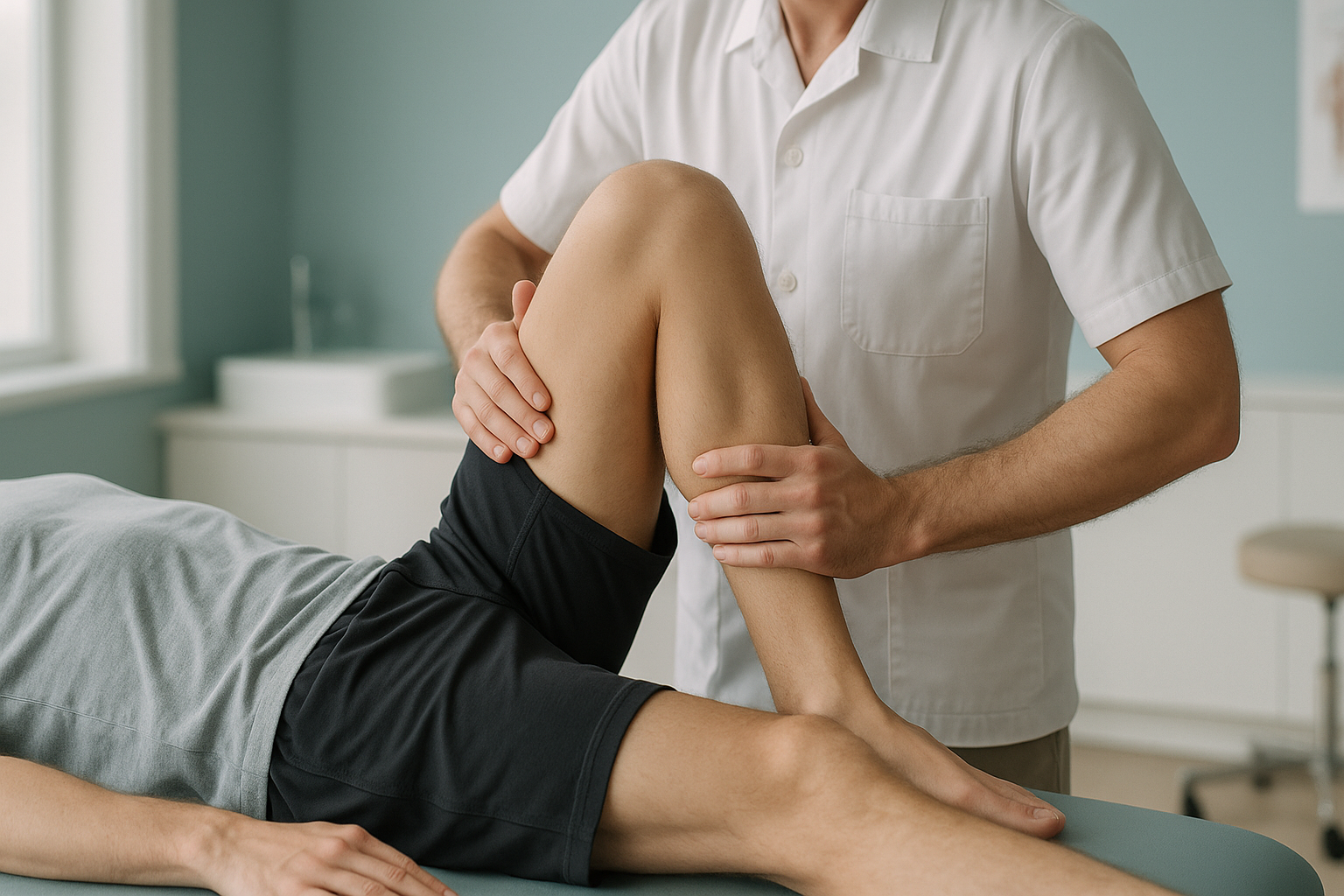
Are Tight Hip Flexors the Cause of Your Pain, or a Symptom of It?
Tight hip flexors are often blamed for lower back and hip pain, but they are frequently a symptom of a deeper alignment issue rather than the root cause. When the pelvis tilts forward, the hip flexor muscles shorten to compensate. Until you know your pelvic position under load, stretching alone may not solve the problem.
Key takeaways
- Tight hip flexors can be a compensation for anterior pelvic tilt, not just a cause of it.
- Sitting for long periods shortens the iliopsoas and rectus femoris, but stretching only helps if the underlying alignment is also addressed.
- A standing, weight-bearing scan shows your true pelvic position, which lying-down imaging can miss.
- Knowing the skeletal picture first helps you and your clinician choose the right treatment path.
What do tight hip flexors actually feel like?
Tight hip flexors typically feel like a pulling or pinching sensation at the front of the hip, especially when you stand up after sitting. You may also notice stiffness first thing in the morning, difficulty standing fully upright, or a dull ache in the lower back after walking.
These symptoms overlap with several other conditions, which is why it is important to look beyond the muscles alone. If you also notice numbness, weakness in your legs, or any loss of bladder or bowel control, seek urgent medical attention through your GP, 111, or A&E.
Why do hip flexors get tight in the first place?
Hip flexors shorten when they spend too long in a shortened position, most commonly from sitting. But that is only one part of the picture. Your body's alignment, core control and pelvic position all influence how much tension the iliopsoas and rectus femoris carry day to day.
A muscle imbalance between the hip flexors and the glutes is one of the most common patterns. When the glutes are underactive, the hip flexors compensate to stabilise the pelvis, and they tighten as a result.
How do tight hip flexors affect the rest of your body?
They pull the pelvis forward and increase the curve in your lower back. This is what clinicians call anterior pelvic tilt. From there, the effects travel both up and down the chain.
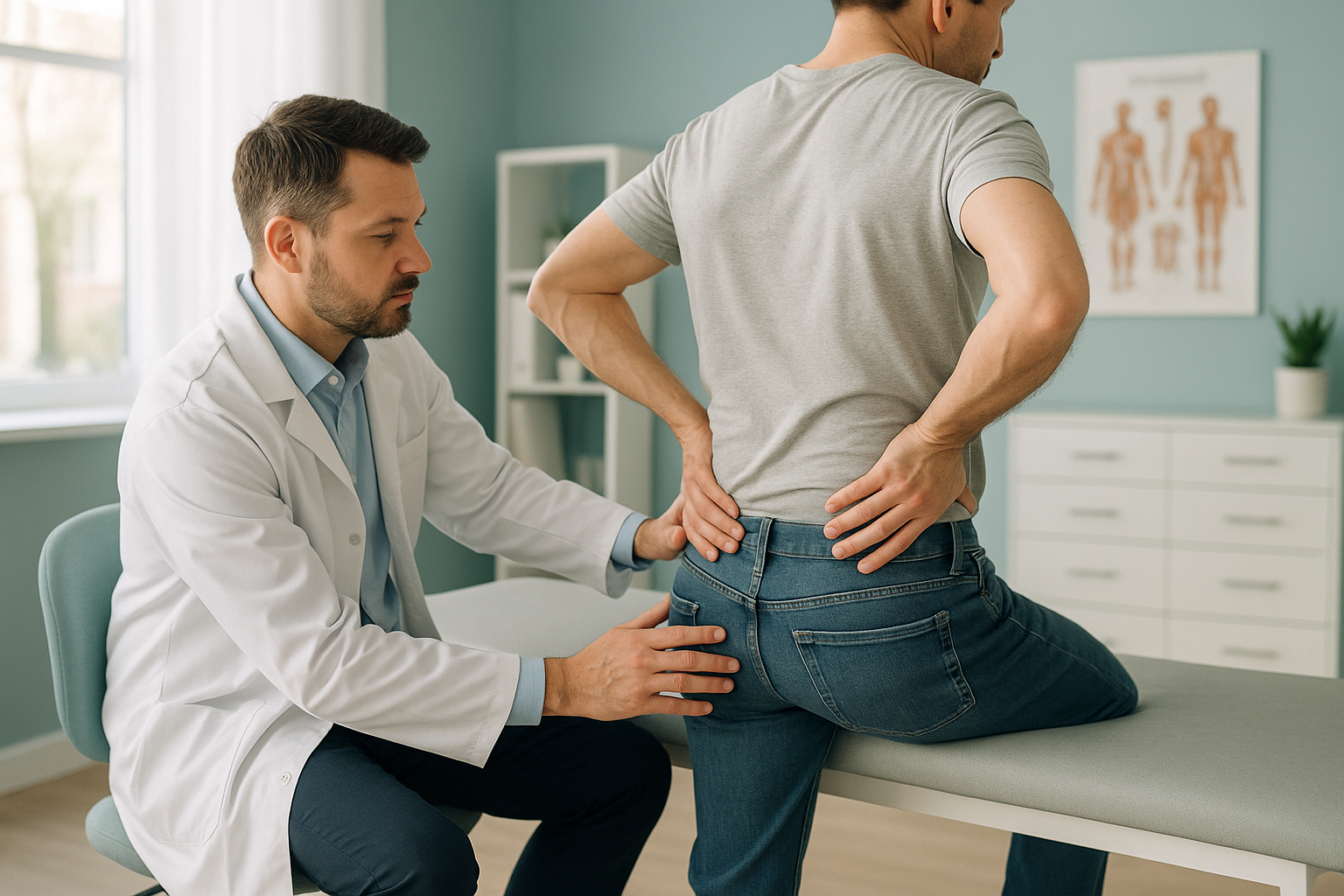
Your body is a connected chain from your feet to your head. When the pelvis tips forward, your lower back arches more to keep you upright. Your upper back rounds to compensate for the extra arch, and your shoulders and neck shift forward. Below the pelvis, your knees and feet adjust too, which is why a hip tilt can show up as knee pain or even foot discomfort.
This is why stretching the hip flexors in isolation sometimes gives only temporary relief. If the pelvis is tilted because of a structural or alignment issue, the muscles will tighten again as soon as you go back to standing and moving.
Why does a standing scan matter for tight hip flexors?
A standing, weight-bearing scan shows your pelvis, spine and legs under real load, exactly how they sit when you are upright and your hip flexors are doing their job. Lying-down imaging relaxes the muscles, which can flatten out the tilt and hide the very alignment problems driving your tightness.
You stand naturally. Gravity loads the joints and the muscles engage as they would in daily life. The image captures your true pelvic tilt, lumbar curve and leg alignment in one full-length view. This gives your clinician the information they need to understand why the hip flexors are tight.
You lie flat. Muscles relax, the pelvis settles, and the tilt may disappear from the image entirely. A standard X-ray or CT taken this way can look perfectly normal even when there is a meaningful alignment problem at play.
ScanAlign standing EOS imaging uses about 90% less radiation than a standard X-ray, around ten times less. The scan captures your entire posture in a single standing image so your clinician can see the full picture rather than guessing from one area alone.
When MRI is the better choice: EOS shows bones, joints and alignment. For soft tissue, discs or nerves, MRI is usually the better tool. If your symptoms include nerve pain radiating down your leg, your clinician may recommend MRI alongside or instead of an alignment scan.
How to loosen hip flexors when stretching is not enough?
Stretching alone can help if the tightness is purely from sitting. But if a pelvic tilt or alignment issue is driving the problem, you need a clearer picture first. Many people stretch their hip flexors for months without lasting improvement because the underlying cause has not been identified.
General approaches that clinicians and physiotherapists often consider include:
- Glute activation work to restore balance between the hip flexors and glutes.
- Core stability training to support the pelvis in a more neutral position.
- Targeted stretching of the iliopsoas and rectus femoris, guided by the alignment findings.
- Desk posture changes such as standing breaks, a higher monitor, or a sit-stand desk.
The key is knowing whether the tightness is the cause or the symptom. A posture assessment in London using standing imaging can answer that question clearly, giving you and your clinician a starting point for a plan that actually works.
Not sure whether your tight hip flexors are the root issue or a symptom of something deeper? A free video consultation can help you decide if a standing scan is the right next step.
Book a free video consultationFrequently asked questions about tight hip flexors
Yes. When the hip flexors are chronically short, they pull the pelvis into an anterior tilt. This increases the curve in the lower back and puts extra stress on the lumbar spine, which often leads to a persistent ache.
If the tightness returns quickly after stretching, the muscles may be compensating for a pelvic or spinal alignment issue. Stretching addresses the muscle length but not the skeletal position driving the problem.
Prolonged sitting keeps the hip flexors in a shortened position for hours. Over time, this can lead to adaptive shortening of the iliopsoas and rectus femoris. However, sitting is often one contributing factor rather than the sole cause.
Tightness is a chronic shortening of the muscle, often without acute injury. A strain is a tear or overstretching of the muscle fibres, usually from a sudden movement. A strain tends to cause sharp, immediate pain, while tightness builds gradually.
They can contribute to it. When tight hip flexors alter pelvic position, the change travels down the chain and can affect how the knee tracks during walking, running or squatting.
An EOS scan shows your pelvis, spine and legs in a standing position. This reveals whether a pelvic tilt or other alignment issue is the reason the hip flexors are staying tight, information that lying-down imaging can miss.
EOS uses about 90% less radiation than a standard X-ray, around ten times less. It is one of the lowest-dose imaging technologies available for full-body skeletal assessment.
No. ScanAlign accepts self-referrals. You can book a posture and pelvis scan directly through a free video consultation.
Pricing details are available on the ScanAlign website. The free video consultation will also cover costs and what is included.
Either approach can work. Many people find that having alignment imaging first gives their physiotherapist a clearer starting point, which can make treatment more targeted and efficient.
Find out what is behind your tight hip flexors
A free video consultation lets you discuss your symptoms, ask questions, and find out whether a standing alignment scan is the right next step.
Book a free video consultationSources
- Kendall, F. et al. Muscles: Testing and Function with Posture and Pain, 5th edition. Lippincott Williams & Wilkins.
- NHS. "Hip pain in adults." nhs.uk.
- Deschenes, J. et al. "The effects of prolonged sitting on sagittal pelvic tilt." Journal of Physical Therapy Science.
Written by Abbas Dhami (Specialist Diagnostic Radiographer)
This page is general information and not a diagnosis.
ScanAlign is the trading name of CoreMed Solutions Ltd and operates under The Harley Street Hospital's CQC licence.