

Abbas Dhami
Specialist Diagnostic Radiographer
Most people assume poor posture just means sitting the wrong way. But posture problems run much deeper than that. They cause chronic back pain, uneven hips, walking difficulties, and joint strain that no amount of stretching tends to fix. A proper posture analysis looks at how your whole skeleton lines up, from your head right down to your feet, and sometimes that full picture only becomes clear through the right kind of imaging.
That is where an EOS scan in London becomes genuinely useful. Unlike scans done lying flat, EOS captures your spine, pelvis, hips, and legs exactly as they are when you are standing. It shows how your skeleton actually behaves under gravity every single day. If you have been dealing with recurring pain that nobody seems to have a clear answer for, this kind of imaging often changes everything.
Why Posture Problems Should Not Be Ignored
Most people live with poor posture for years before doing anything about it. A stiff back here, a tight shoulder there, it feels manageable until it does not. Over time these problems compound, and what started as mild discomfort can turn into something much harder to treat.
Signs your posture needs proper clinical attention:
- Persistent back or neck pain that keeps coming back despite rest or physio
- Uneven shoulders or hips where one side sits noticeably higher
- Pelvic tilt causing your lower back to arch too much or flatten out
- Walking imbalances where your gait feels off or one foot turns in or out
- Scoliosis signs like a visible spinal curve or one shoulder blade sticking out more
- Leg length differences creating uneven load through your hips, knees, and lower back
- Ongoing discomfort when sitting or standing for any length of time
These do not always respond to general treatment because the real cause, a structural alignment problem, has never been properly found. A clinical postural assessment with accurate imaging is often what finally identifies it.
What Is Posture Analysis?
Posture analysis examines how your body is aligned from head to toe. It checks how your spine curves, how your pelvis sits, whether your hips are level, and how your weight moves through your feet. Think of it as a full map of how your skeleton stacks up, and whether that stack is quietly overloading certain areas.
The reason it looks at the whole body is that problems chain together:
- A tilted pelvis pulls the lower spine out of position
- Lower spine misalignment stresses the mid and upper back
- Upper back changes push the neck forward
- A forward neck causes headaches and shoulder tension
Your body compensates constantly, and those compensations eventually show up as pain somewhere else. That full-body view is what makes posture analysis so valuable, especially when supported by imaging rather than just a visual check.
Postural Assessment vs Basic Posture Check: What Is the Difference?
A basic posture check is a quick visual look at how you stand. A practitioner notes any obvious asymmetry and gives general advice. Useful as a starting point, but limited when the problem is structural.
| Aspect | Basic Posture Check | Advanced Postural Assessment |
|---|---|---|
| Method | Visual observation | Clinical imaging and evaluation |
| Accuracy | Limited, relies on the eye | High, backed by real measurements |
| What it shows | Surface alignment | Skeletal angles, curves, and rotation |
| Best for | Mild concerns | Persistent pain, scoliosis, complex issues |
| Radiation | None | Minimal — EOS is low-dose imaging |
An advanced postural assessment with EOS gives actual numbers: spinal angles, pelvic tilt in degrees, leg length down to the millimetre. That level of detail is what makes targeted treatment possible.
When Should You Consider a Posture Assessment in London?
Not every posture concern needs an advanced scan. But some situations clearly call for more than a visual check. Book a posture assessment in London if you are dealing with:
- Chronic back pain lasting more than three months with no real improvement
- Posture that does not change despite consistent physio, chiropractic, or exercise
- Uneven hips or shoulders that are noticeable and causing discomfort
- Suspected scoliosis whether newly noticed or previously diagnosed and needing monitoring
- A leg length difference affecting how you walk or distribute your weight
- Pain that worsens with standing or walking over time
If any of these sound like you, a postural assessment with EOS imaging will likely give you clearer answers than anything else available.
Important Note: You do not need a GP referral to book at ScanAlign if you are 18 or older. It starts with a free video consultation where your symptoms are reviewed before your scan is confirmed.
What Is an EOS Scan and Why Is It Different?
An EOS scan takes full-body X-ray images while you are standing upright in a natural position. A front view and side view are captured at the same time, in under 20 seconds, producing both 2D images and a 3D reconstruction of your skeleton. The whole thing happens without you moving or repositioning once.
What makes it genuinely different is one simple fact: you are standing when it happens. Here is why that matters:
- Lying-down scans remove gravity completely, so your spine behaves differently than it does in daily life
- A curve that looks mild on an MRI can be noticeably worse once you are upright and under load
- Pelvic tilt and leg length differences only reveal their true impact in a weight-bearing position
- EOS shows your skeleton as it actually functions, not as it looks when you are flat on a table
It also uses low-dose imaging, making it suitable for adults and children, including those who need scans more than once.
Why EOS May Be the Best Scan for Posture Problems
Position matters as much as image quality when it comes to posture. A crystal-clear scan of someone lying down tells you very little about how their spine behaves when they are actually on their feet going about their day. That is the core reason many specialists consider EOS the best scan for posture problems.
What EOS gives you that other scans do not:
- Full standing position imaging showing real load on the spine and joints
- Front and side views simultaneously in one scan, no repositioning needed
- 3D skeletal reconstruction for a complete picture of alignment in space
- Whole-body scope from the cervical spine to the lower legs in one image
- Ultra-low radiation safe for younger patients and those needing regular checks
Read more about how weight-bearing scans compare to traditional imaging and why standing scans are becoming the go-to choice for posture diagnosis.
EOS Scan for Back Pain: What Can It Reveal?
Back pain is one of the most common reasons people seek a posture assessment in London, and it is where EOS imaging tends to deliver the biggest clinical value.
An EOS scan for back pain can show:
- Spinal alignment and whether the spine is leaning under load
- Pelvic tilt and how it is contributing to lower back strain
- Scoliosis and any lateral curve driving one-sided pain
- Kyphosis showing excessive rounding of the upper back
- Hip imbalance forcing the spine to compensate
- Leg length differences shifting weight unevenly through the lower back
For people who have tried treatment after treatment with no lasting relief, an EOS scan often finally shows the structural reason why nothing has worked. You can also read ScanAlign’s guide on back pain and poor posture to understand how these hidden alignment issues are found.
EOS Scan for Posture and Alignment: What Areas Are Checked?
One of the real strengths of an EOS scan for posture and alignment is how much ground it covers in a single standing session.
| Body Region | What EOS Checks |
|---|---|
| Spine | Curvature, rotation, lordosis, kyphosis, sagittal balance |
| Pelvis | Tilt, rotation, pelvic incidence angle |
| Hips | Height difference, rotation, hip-to-spine relationship |
| Knees | Alignment and mechanical axis |
| Legs | Leg length discrepancy, anatomical and mechanical axis |
| Full body | Global balance, centre of gravity, postural compensation |
All of this from one scan, standing, in under 20 seconds. Piecing that together from traditional imaging would take multiple separate appointments and still not give you the standing position data.
3D Spine Scan for Scoliosis Assessment
For anyone with a known or suspected spinal curve, a 3D spine scan through EOS is one of the most useful tools for a proper scoliosis assessment:
- Cobb angle measurement done precisely from standing images, the standard way of measuring curve severity
- Spinal rotation showing how vertebrae are rotating, not just curving, which a flat image cannot show
- True 3D reconstruction giving a complete spatial picture of the curve from every angle
- Safe repeat monitoring because radiation is so low, regular scans to track progression are appropriate
- Spinopelvic balance assessing how the pelvis compensates for the curve above
For children and teenagers, low-radiation scoliosis monitoring matters a lot when scans may be needed repeatedly through the growth years. ScanAlign’s guide on EOS scan safety and radiation levels explains why low-dose imaging is important for repeat monitoring.
Important Note: For patients between 7 and 18, ScanAlign follows a dedicated paediatric pathway. Parental consent and clinical review are required before any scan is arranged for younger patients.
Can an EOS Scan Help With Posture Correction in London?
To be clear: an EOS scan does not correct posture. It is a diagnostic tool. What it does is give the specialists handling your posture correction in London the precise information they actually need to help you.
Here is how EOS results directly improve posture correction treatment:
- A physiotherapist can see exactly which segments are rotating and by how much, rather than estimating
- A chiropractor knows the precise degree of pelvic tilt they are working with, not a rough guess
- An orthotics specialist can factor in the exact millimetre difference in leg length
- A spinal consultant has real structural measurements to plan treatment from
Without that image, everyone is working from what they can see or feel. With EOS results in hand, they are working from real data. For most patients that makes a genuine difference to how targeted and effective their treatment ends up being.
Who Should Visit a Posture Clinic in London?
A posture clinic in London is not just for people in serious pain. A wide range of people benefit from a proper EOS-supported posture assessment:
- People with chronic pain including back, hip, knee, or neck pain that has not cleared up
- Athletes wanting to find alignment issues affecting performance or raising injury risk
- Scoliosis patients needing accurate baseline data or regular monitoring
- Post-surgery patients checking how the spine and pelvis have settled after orthopaedic work
- People with visible asymmetry such as one shoulder clearly higher or a noticeable lean
- Desk workers noticing gradual postural decline from long hours sitting at a screen
If any of these feel like you and you are in London, a clinical assessment with EOS imaging is worth taking seriously.
What to Expect During an EOS Scan in London
An EOS scan is one of the most straightforward imaging experiences available. Here is what the appointment looks like:
- Remove any metal objects; you may be given a gown
- Step into the open EOS unit, nothing like a closed MRI, so no sense of being shut in
- Stand in a relaxed natural position as the radiographer guides you
- The scan runs for under 20 seconds
- Total scan time including setup is around four minutes
- Results are reviewed by a consultant radiologist and returned as a detailed report
Painless, quick, and non-invasive. Most patients say it was far simpler than they expected. For a step-by-step guide, read the full article on what happens during an EOS scan.
Why Choose ScanAlign for Posture Assessment London?
ScanAlign works from 19 Harley Street, London, and their focus is entirely on standing EOS imaging for posture and alignment. Everything about the service is built around that.
- Standing EOS imaging showing how your body aligns under real conditions
- Low-dose imaging designed for adults and children
- No GP referral needed for adults, free video consultation to get started
- Expert radiology reports from UK-trained specialist radiologists
- GP referral summary to support your ongoing care
- CQC-registered under The Harley Street Hospital's licence
If you want a posture assessment in London that actually gives you useful clinical answers, ScanAlign is set up specifically for that.
Conclusion
If back pain, uneven hips, or a suspected spinal curve keeps coming back despite treatment, the missing piece is usually a clear image of your skeleton in a standing position. A postural assessment with EOS imaging provides that: not a guess, but a real clinical picture of how your spine and pelvis are actually aligned when you are on your feet. The longer a posture problem goes without a proper diagnosis, the longer it takes to treat effectively.
For anyone in London dealing with persistent alignment issues, visiting a specialist posture clinic with EOS capability is a straightforward next step. ScanAlign makes it simple, low-radiation, and clearly explained from start to finish.
Stop Guessing. Start Seeing the Full Picture.
Ready to find out what is actually driving your posture problems? Book a free video consultation with ScanAlign, talk through your symptoms with an EOS specialist, and take the first step toward a proper posture assessment at Harley Street, no GP referral required.
FAQs
- 1. What is the best scan for posture problems? For posture concerns, an EOS scan is widely considered the most useful option. It captures your full skeleton in a standing, weight-bearing position, front and side at once, showing how your body actually functions during daily life rather than how it looks lying down.
- 2. Is an EOS scan better than a normal X-ray for posture assessment? For posture specifically, yes. A standard X-ray gives a flat 2D image of one body area at a time. EOS captures the full skeleton from two angles simultaneously while you stand, builds a 3D reconstruction from that, and does it with significantly less radiation.
- 3. Can EOS imaging show the cause of back pain? Often yes. EOS reveals spinal misalignment, pelvic tilt, scoliosis, kyphosis, leg length discrepancy, and hip imbalance, all common structural causes of persistent back pain. Many patients with inconclusive results from previous scans find EOS finally shows what has been driving their pain.
- 4. Do I need an EOS scan for scoliosis assessment? EOS is one of the most effective scoliosis assessment tools available. It measures Cobb angle accurately from standing images, shows vertebral rotation in 3D, and because radiation is so low, it is appropriate for the repeat monitoring that growing patients often need.
- 5. Is EOS imaging safe for repeated posture checks? Yes. EOS uses low-dose imaging compared with many traditional scans, which makes it suitable for regular monitoring in both children tracking scoliosis and adults managing postural changes over time. Full safety detail is available in ScanAlign's guide on EOS scan safety.
- 6. Where can I get an EOS scan in London? ScanAlign at 19 Harley Street, London. The service includes a free video consultation, a standing EOS scan, radiology reporting from UK-trained specialists, and a GP referral summary. No GP referral is needed for adults.
Continue reading
More articles
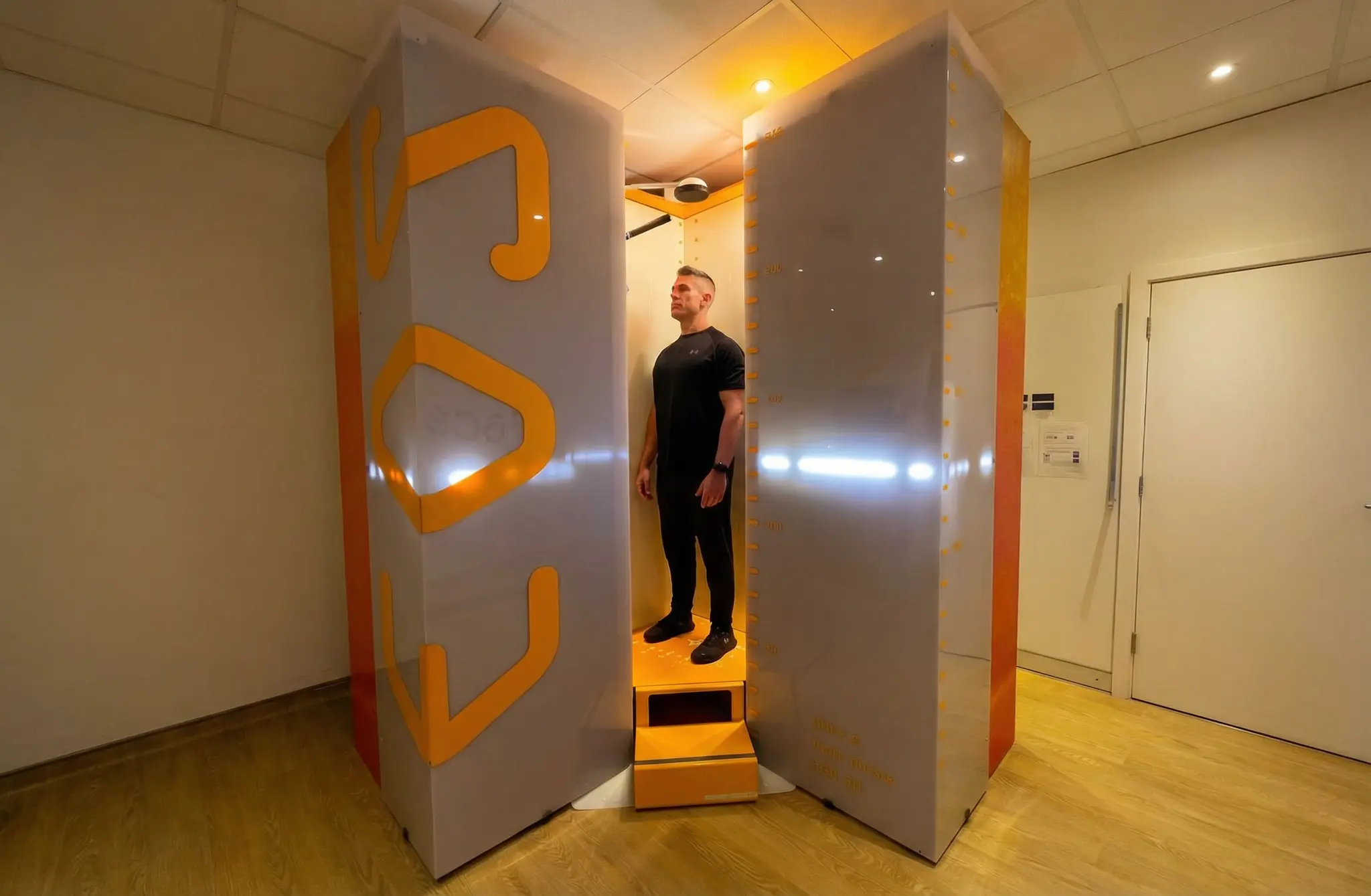
What Is an EOS Scan?
Learn what an EOS full body scan is, how it works, its benefits, safety, and how it helps detect spine, joint, and posture problems with low radiation imaging.
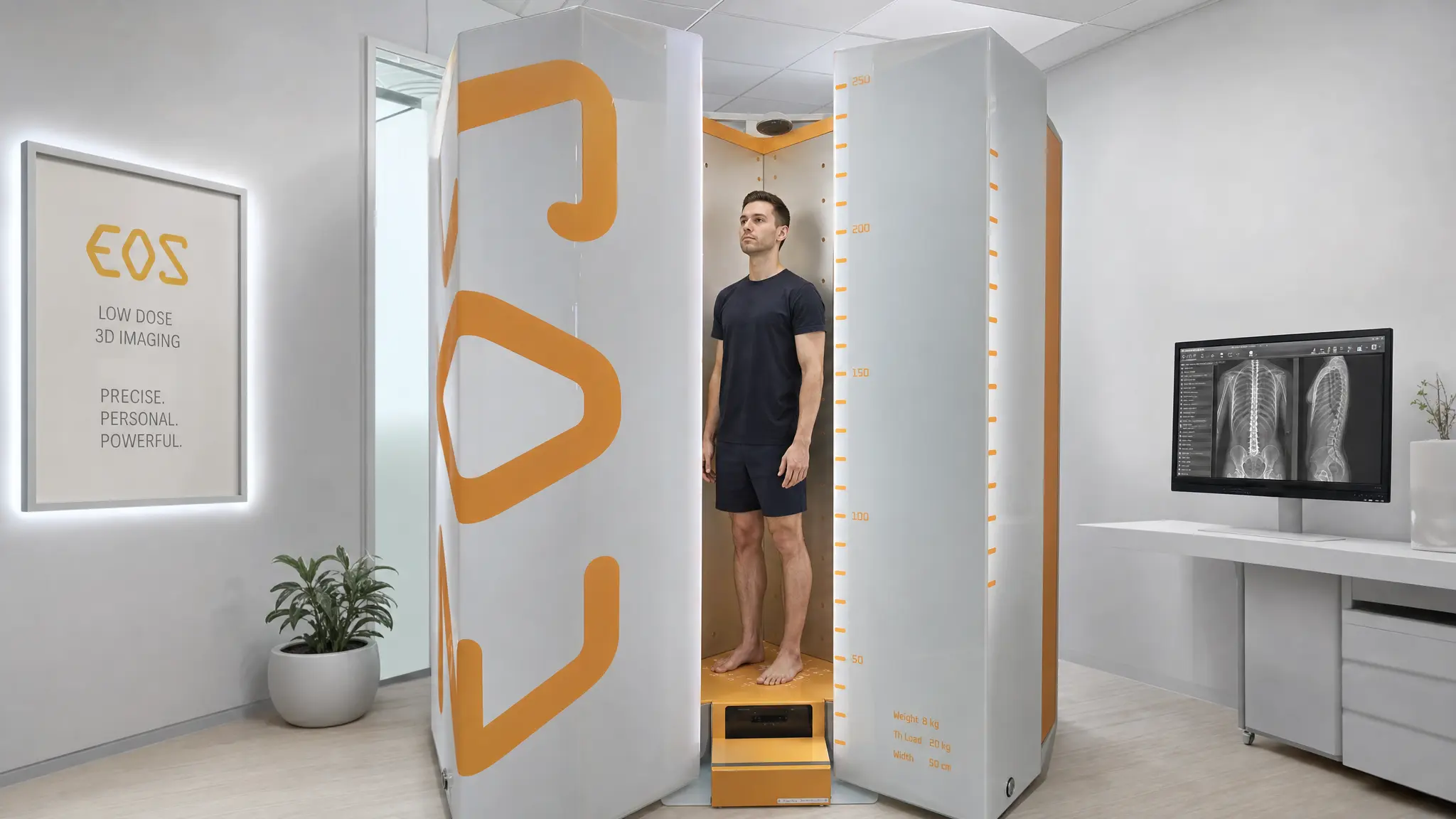
EOS Scan for Leg Length Discrepancy: Why Accurate Measurement Matters
Hip or back pain with no clear answer? Leg length could be the cause. EOS checks both legs while you stand and finds what standard lying-down scans always miss.
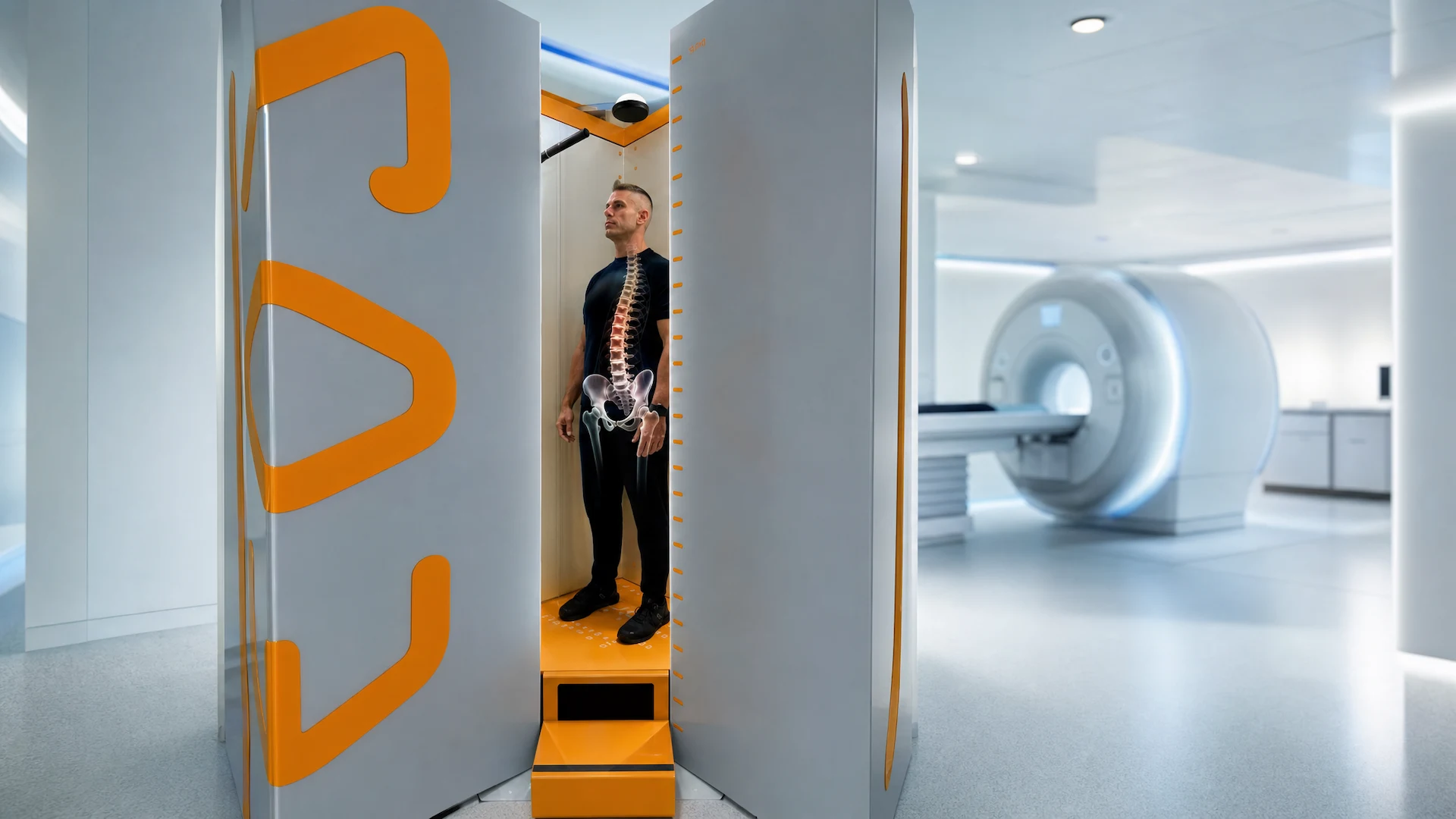
MRI Shows Nothing But Back Pain Remains: Could Alignment Be the Cause?
Your MRI showed nothing but back pain never left. Alignment problems rarely show on standard scans. See how EOS imaging finds real cause while standing.