
Anteversion vs Retroversion: What Is the Difference and Why Does It Matter?
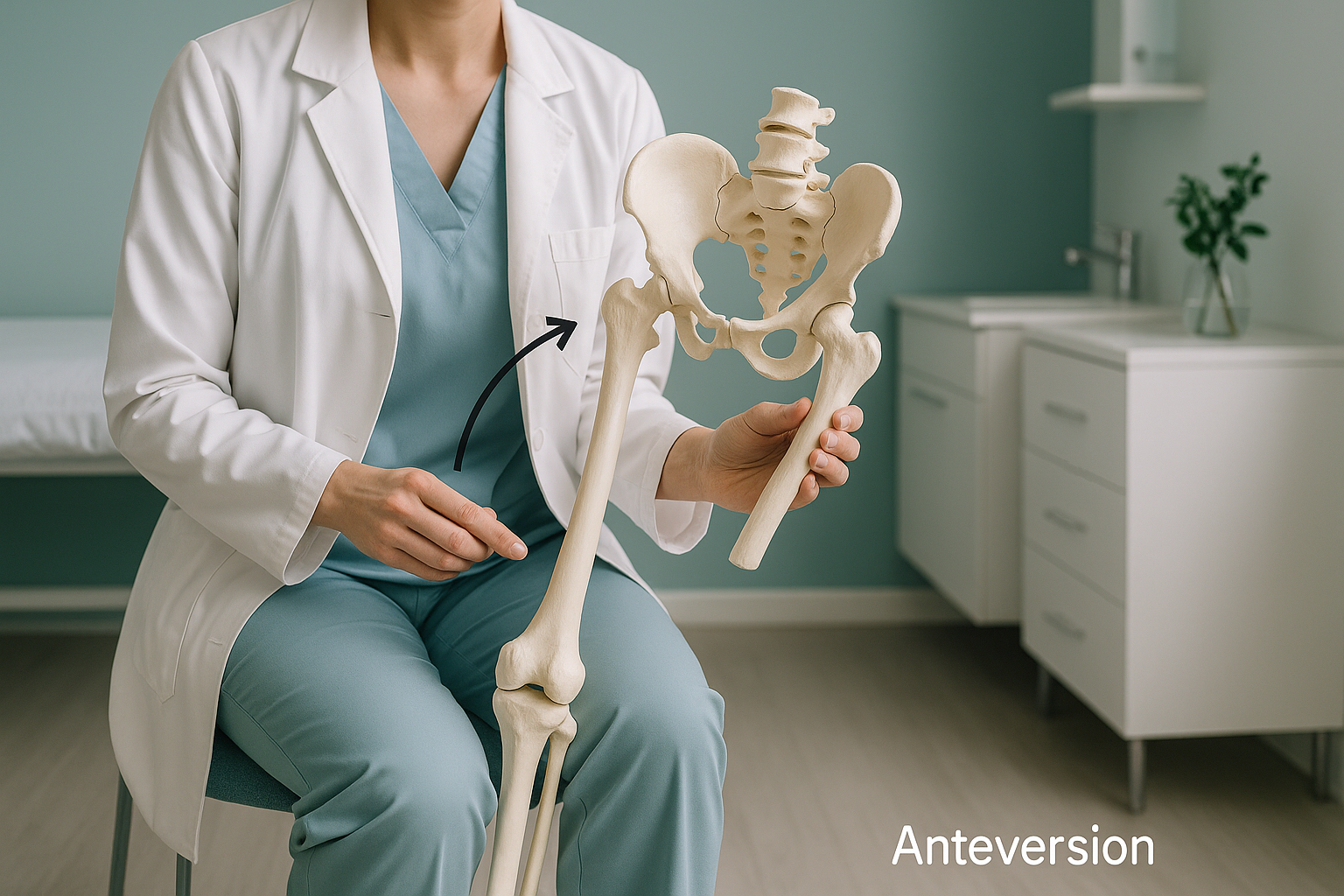
Anteversion means a bone angles forward more than normal. Retroversion means it angles backward. Both most commonly affect the femur (thigh bone) or the hip socket (acetabulum). When the rotation is outside the typical range, it changes how you stand, walk and load your joints, often causing pain well away from the hip itself.
Key takeaways
- Anteversion tilts a bone forward. Retroversion tilts it backward.
- Both alter how force travels through the hip, knee and lower back.
- Lying-down scans relax muscles and can mask the real rotational picture.
- A standing, whole-body EOS image shows bone rotation under natural weight-bearing.
- Accurate measurement helps clinicians plan the right approach, whether that is physiotherapy, orthotics or surgery.
What is anteversion and how is it different from retroversion?
Anteversion describes the natural forward twist of a bone relative to another part of the skeleton. In the hip, femoral anteversion refers to how much the top of the thigh bone (the femoral neck) angles forward compared to the knee. Acetabular anteversion refers to the same forward orientation of the hip socket.
Retroversion is the opposite. The bone or socket faces further backward than expected. Neither word describes a disease. They describe a direction and degree of rotation that may or may not cause problems, depending on the person.
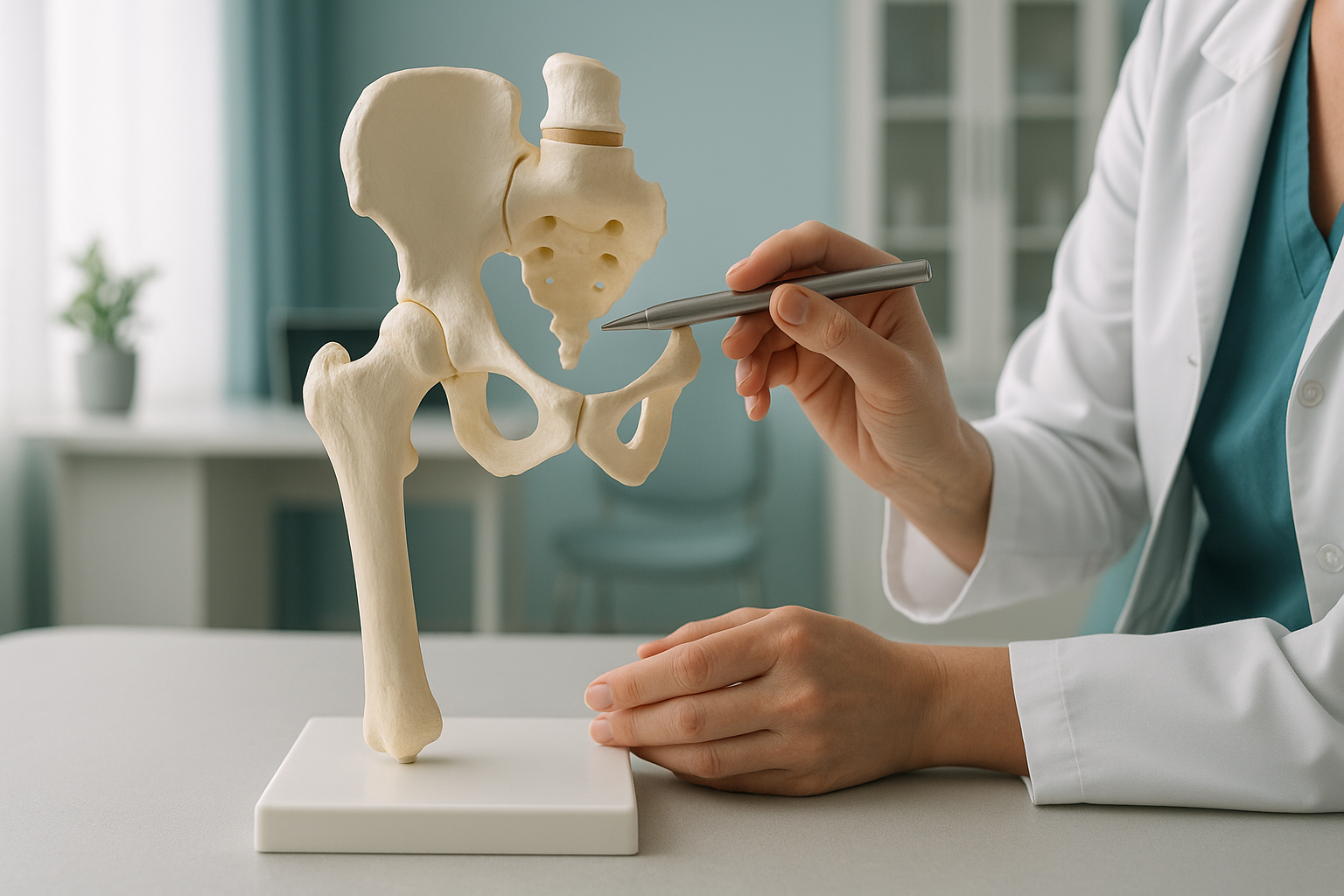
Everyone has some degree of femoral anteversion. It is part of how the hip develops. In adults, the typical range sits between roughly 10 and 25 forward. When a person falls well outside that range, the way force travels through the leg changes. This can affect gait, knee tracking and lower back mechanics.
What are the signs of abnormal anteversion or retroversion?
Many people with unusual bone rotation have no symptoms at all. Others notice problems that seem unrelated to the hip. Here are common patterns.
Excess anteversion often causes the feet to turn inward. Retroversion can cause the opposite.
The joint may sit at an angle that increases wear, causing a gradual ache during activity.
Rotational mismatch higher up changes how the kneecap tracks, often producing anterior knee pain.
The pelvis may compensate for rotational differences, putting uneven load on the lumbar spine.
Because the body is a connected chain from your feet to your head, a rotational issue at the hip can produce pain in the knee, the lower back, or even the opposite side. This is why single-area imaging sometimes finds nothing wrong, while the true driver sits elsewhere in the chain.
What causes excessive anteversion or retroversion in adults?
In most adults, the amount of rotation is set during growth and does not change. Some people simply develop at the higher or lower end of the range. Other factors can play a role.
The most common reason. The femur or socket simply grew with more or less twist than average.
A healed femoral fracture may alter the rotational profile, particularly if it was not fully corrected.
Degenerative changes can shift how the joint sits, changing its functional version over time.
Acetabular anteversion and retroversion matter just as much as femoral version. The combination of the two, sometimes called "combined version", determines how well the ball fits into the socket across a full range of movement. A mismatch between the two can cause impingement or instability, even when each measurement alone looks acceptable.
How is anteversion assessed with standing imaging?
A standing, whole-body EOS image captures both legs and the pelvis in one calibrated view while you bear your own weight. This is important because lying-down scans relax the muscles around the hip, allowing the leg to fall into a resting position that may hide the true rotational picture.
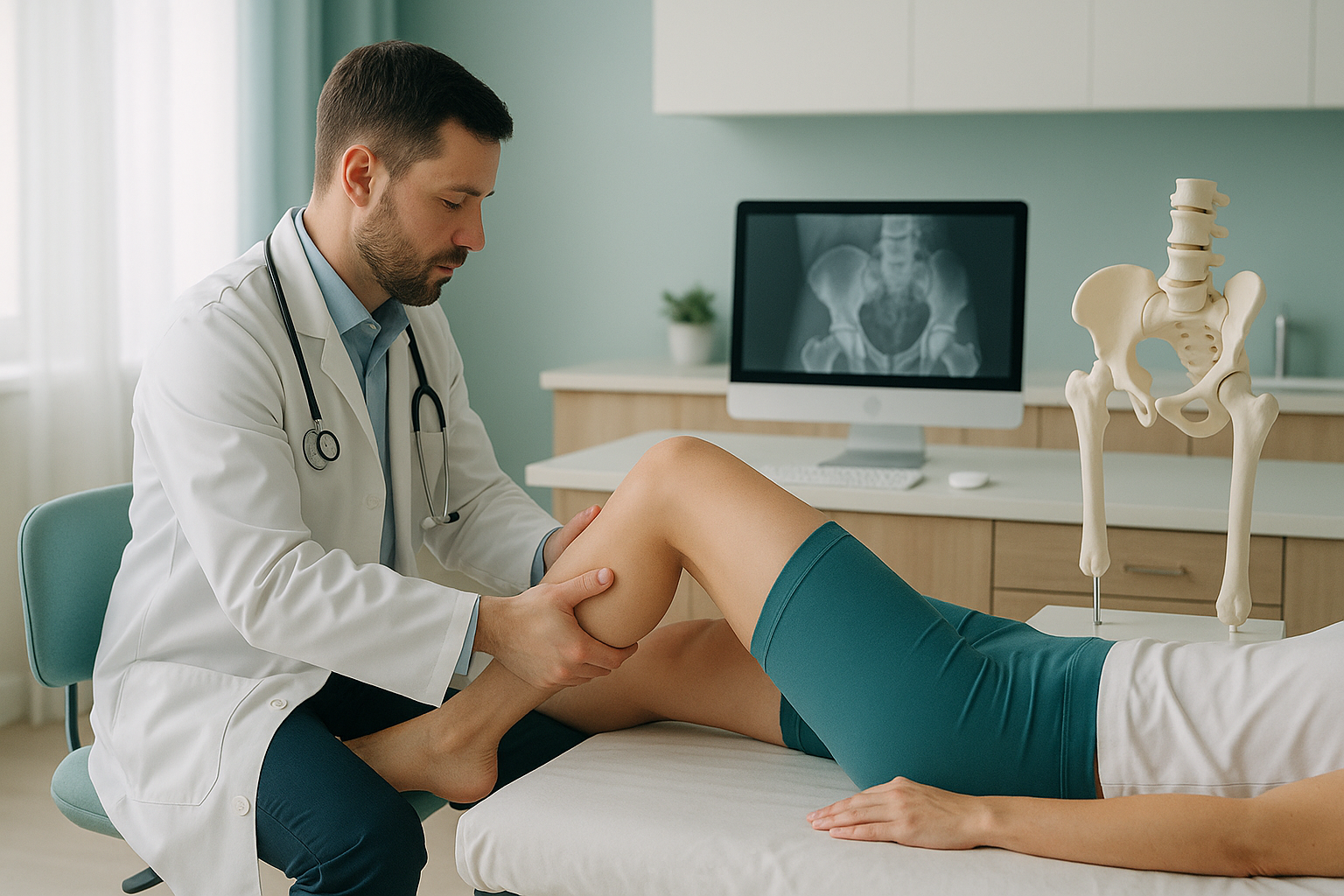
When you stand, your muscles engage and your pelvis settles into its functional position. The rotational relationship between the femur and the socket is captured as it truly works in daily life. A full-length view also shows how the knees and feet respond to that rotation, revealing the compensation chain in one image.
EOS uses about 90% less radiation than a standard X-ray, around ten times less. That matters because rotational assessments sometimes call for multiple views, and lower dose means less cumulative exposure.
Want to understand how your hip rotation affects the rest of your alignment? Speak with our team first, at no cost.
Book a free video consultationWhat can be done about abnormal anteversion or retroversion?
The right approach depends entirely on what the imaging shows, how the rotation interacts with the rest of your alignment, and whether it is causing symptoms. ScanAlign provides the diagnostic imaging, not the treatment. Your clinician, whether an orthopaedic surgeon, physiotherapist or sports medicine specialist, uses the data to decide next steps.
Common directions include targeted physiotherapy to strengthen the muscles around the hip, gait retraining, orthotic support, or, in more significant cases, surgical correction such as a derotational osteotomy. All of these benefit from precise rotational measurements taken under weight-bearing conditions.
When MRI is the better choice: EOS shows bones, joints and alignment clearly. For soft-tissue concerns such as labral tears, cartilage damage or nerve involvement, MRI is usually the better tool. If your clinician suspects a soft-tissue cause, they may recommend MRI alongside or instead of a standing bone assessment.
Frequently asked questions about anteversion and retroversion
Femoral anteversion is the forward twist of the top of your thigh bone relative to the knee. Everyone has some degree of it. When it is greater than the typical range, the whole leg tends to turn inward, which can affect how you walk and how your knee tracks.
Anteversion means a bone or socket faces further forward than average. Retroversion means it faces further backward. They are opposite ends of the same rotational spectrum, and both can change how the hip joint functions.
Yes. When the femur is rotated more than usual, the kneecap can track differently. This changes how force moves through the knee and can cause pain at the front of the knee, even when the knee itself has no structural damage.
The bony rotation itself usually stays stable once growth is complete. However, the symptoms it produces can worsen as joint wear increases or as muscle strength declines with age. That is why accurate measurement becomes more important over time.
When you lie down, your muscles relax and gravity pulls the leg into a resting position. This can mask the true rotational alignment. Standing engages the muscles and loads the joints, so the image captures how your skeleton actually functions during daily activities.
Acetabular anteversion describes how far forward the hip socket faces. Combined with femoral version, it determines how well the ball sits in the socket. A mismatch between the two can cause impingement or instability.
No. You can self-refer. The process starts with a free video consultation where our team discusses your situation, confirms that a standing scan is appropriate, and explains what the session involves.
EOS uses about 90% less radiation than a standard X-ray, around ten times less. This is particularly helpful when multiple views or follow-up scans are needed.
Pricing details are available on our FAQs and cost page. The free video consultation will also cover what is included.
The bone rotation itself cannot be changed without surgery. However, physiotherapy, strengthening and gait adjustments can often manage symptoms effectively. Accurate imaging helps your clinician decide whether conservative management is likely to be enough or whether a surgical opinion is worthwhile.
See how your alignment really works
A standing, whole-body image can reveal the rotational picture that single-area scans miss. Start with a free video consultation.
Book a free video consultation Learn more about EOS imagingSources
- Tönnis D, Heinecke A. "Acetabular and femoral anteversion: relationship with osteoarthritis of the hip." The Journal of Bone and Joint Surgery (American), 1999;81(12):1747-70.
- Dubousset J et al. "EOS: a new imaging system with low dose radiation in standing position for spine and bone & joint disorders." Journal of Musculoskeletal Research, 2010;13(1):1-12.
- NHS. "Hip pain in adults." NHS website, reviewed 2023. nhs.uk/conditions/hip-pain
Written by Abbas Dhami (Specialist Diagnostic Radiographer)
This page is general information and not a diagnosis.
ScanAlign is the trading name of CoreMed Solutions Ltd and operates under The Harley Street Hospital's CQC licence.