

Ischial Bursitis: What Causes Sit-Bone Pain and How Can You Find Relief?
Ischial bursitis is inflammation of the small fluid-filled sac (bursa) that sits over your ischial tuberosity, the bony point you sit on. It causes a deep, aching pain in the buttock that worsens with sitting on hard surfaces. Prolonged pressure, repetitive strain, or pelvic alignment issues are the most common triggers.
Key takeaways
- Ischial bursitis, sometimes called weaver's bottom or tailor's bottom, is inflammation of the bursa over your sit bone.
- Pain is usually worst when sitting on hard chairs and may radiate down the back of the thigh.
- Pelvic tilt and leg-length differences can overload one sit bone, making symptoms persist.
- A standing, weight-bearing scan can reveal alignment factors that lying-down imaging misses.
- EOS imaging uses about 90% less radiation than a standard X-ray, around ten times less.
You might know it as ischiogluteal bursitis, weaver's bottom, or tailor's bottom. The names date back to trades where people sat for long hours on hard benches. The problem is the same today for anyone who spends prolonged periods sitting, cycling, or running.
The bursa normally acts as a cushion between the bone and the tendons that attach around it. When it becomes irritated, every time you sit down you press directly onto the inflamed tissue. That is why the pain can feel so sharp and specific.
What does ischial bursitis feel like?
The hallmark is a well-localised, deep ache right on the sit bone. It often gets worse during prolonged sitting and eases when you stand or walk. Some people also notice pain when climbing stairs or stretching the hamstrings.
A sharp or burning ache centred on one buttock, right over the bony prominence.
Sitting on a wooden chair, bench, or bike saddle intensifies the discomfort noticeably.
The ache can spread along the back of the upper leg, mimicking hamstring problems.
Getting up after sitting for a while feels stiff, with the pain easing once you move around.
Because ischial bursitis and hamstring tendinopathy share such a similar location, they are often confused. Ischial tuberosity bursitis tends to hurt most with direct pressure on the bone, while hamstring tendinopathy is usually worse during active movement like running or lunging. A thorough assessment helps tell them apart.
What causes ischial bursitis?
Ischial bursitis develops when repeated friction or pressure irritates the bursa. Sitting for long periods on hard surfaces is the most common trigger, but alignment and activity patterns play a bigger role than many people realise.
Desk work, long drives, or sitting on hard benches presses the bursa against the bone for hours.
Cycling, rowing, or running can repeatedly load the ischial area and inflame the bursa.
An uneven pelvis shifts more weight onto one sit bone, overloading the bursa on that side.
Tight hamstrings or gluteal muscles increase friction across the bursa with every movement.
How does alignment affect sit-bone pain?
Your pelvis is the foundation of your seated posture. If it tilts or rotates even slightly, one ischial tuberosity bears more load than the other. Over weeks and months, that imbalance can keep the bursa inflamed no matter how many cushions you try.
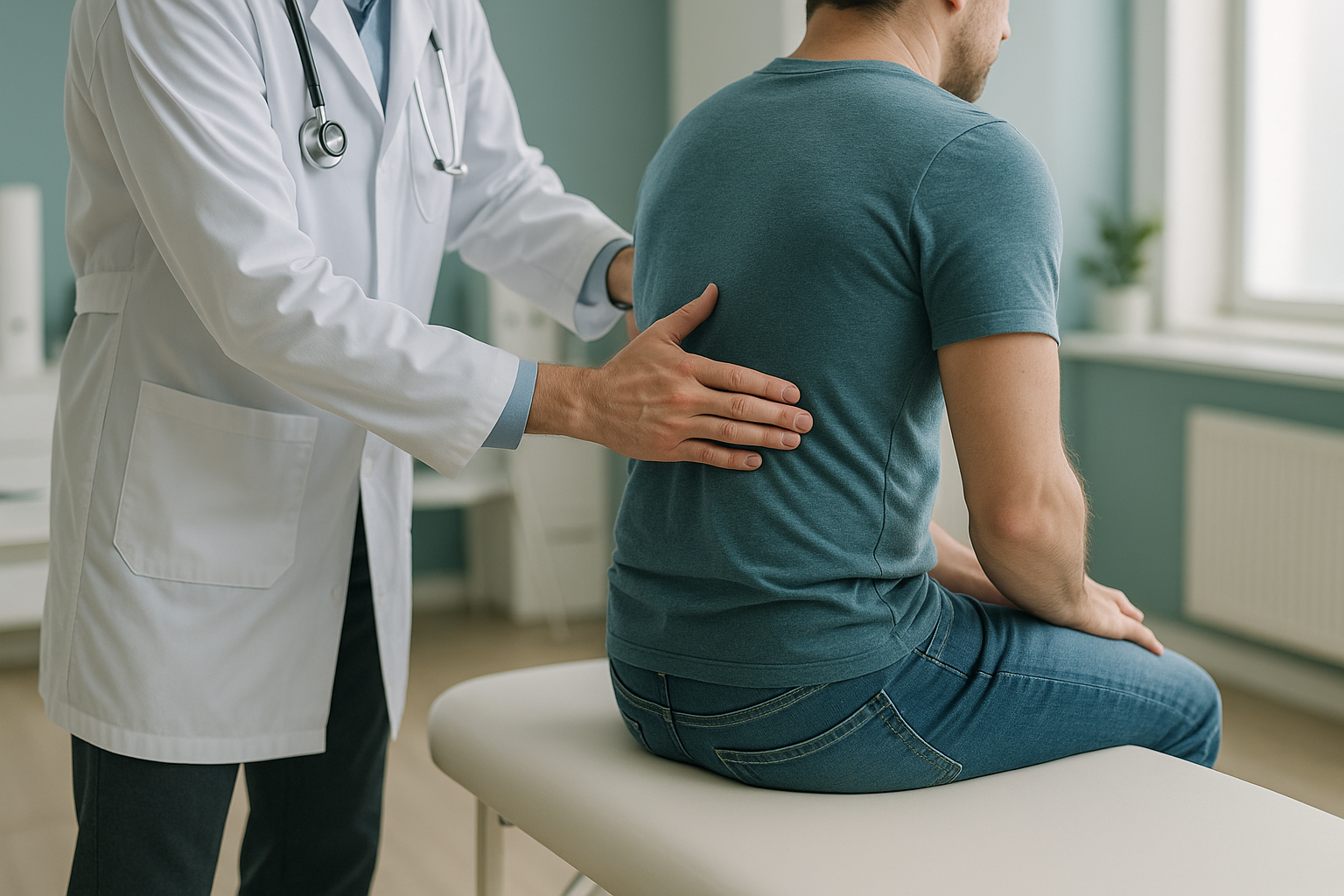
The body works as a connected chain from feet to head. A leg-length difference, a rotated hip, or a curve in the lower spine can all shift the pelvis out of balance. The pain shows up at the sit bone, but the root cause may be somewhere else entirely.
This is why standard imaging of just the pelvis does not always give the full picture. Seeing the whole chain, from your feet up through your spine, reveals compensations that a single-area scan would miss.
How can a standing EOS scan help with ischial bursitis?
A standing EOS scan captures your entire skeleton in the upright, weight-bearing position. This means it shows your pelvis, hips, legs, and spine exactly as they function when you are sitting and standing, not relaxed on a table.
Lying-down imaging, such as a conventional X-ray or CT, relaxes the muscles and lets the pelvis settle into a neutral position. Alignment problems that only appear under gravity can be invisible on those scans. A standing image captures what is really happening when your body bears its own weight.
EOS uses about 90% less radiation than a standard X-ray, around ten times less. It produces a full-length image in a single pass, so your clinician can measure pelvic tilt, leg-length differences, and spinal alignment all from one scan. That information helps explain why one side may be taking more pressure than the other.
Wondering whether your sit-bone pain could be linked to alignment? A short video call can help you decide if imaging is the right next step.
Book a free video consultationWhen MRI is the better choice: EOS shows bones, joints, and alignment clearly. If your clinician suspects a soft-tissue problem, such as hamstring tendon damage, a labral tear, or nerve irritation, MRI is usually the better tool for seeing those structures in detail.
What helps manage ischial bursitis?
Most people find relief through a combination of reducing direct pressure on the area and addressing any underlying causes. Your GP or physiotherapist can guide you on the best approach for your situation. Common strategies include:
- Cushioned seating. A pressure-relieving cushion takes load off the ischial tuberosity while you sit.
- Activity modification. Reducing time on hard surfaces and adjusting cycling or rowing technique can calm the inflammation.
- Stretching and strengthening. Gentle hamstring and gluteal exercises, guided by a physiotherapist, can reduce tension across the bursa.
- Alignment assessment. If a pelvic tilt or leg-length difference is contributing, identifying and addressing it may stop the problem returning.
ScanAlign is a diagnostic imaging clinic. It does not provide treatment, but the detailed alignment data from a standing scan can give your treating clinician the information they need to target the cause, not just the symptoms.
You can learn more about how standing whole-body imaging works on the EOS scan overview page.
Frequently asked questions about ischial bursitis
Ischial bursitis is inflammation of the bursa, a small fluid-filled cushion, that sits over the ischial tuberosity (your sit bone). It causes a deep ache in the buttock that is often worst when sitting on hard surfaces.
Yes. Weaver's bottom, tailor's bottom, and ischiogluteal bursitis are all names for the same condition. The terms come from occupations that involved long periods of sitting on hard surfaces.
Both cause pain at the sit bone. Ischial bursitis tends to hurt most with direct pressure, such as sitting. Hamstring tendinopathy is usually worse during active movements like running, lunging, or stretching. A clinical assessment can help distinguish between them.
Yes. If the pelvis tilts or rotates, one sit bone carries more weight than the other. That uneven load can irritate the bursa on the heavier side and keep symptoms going even after rest.
An EOS scan takes a full-length image of your skeleton while you are standing. This shows your pelvis, legs, and spine under real weight-bearing conditions. A standard X-ray usually captures only one region and is often taken lying down, which can mask alignment issues.
EOS uses about 90% less radiation than a standard X-ray, around ten times less. You can find more details on safety on the FAQs page.
No. ScanAlign accepts self-referrals. You can book a free video consultation directly to discuss whether imaging is appropriate for your situation.
Pricing information is available on the FAQs and cost page.
ScanAlign provides diagnostic imaging, not treatment. The scan report gives detailed alignment data that your treating clinician, whether a physiotherapist, osteopath, or orthopaedic surgeon, can use to guide your care.
If you notice numbness, weakness in the leg, or any loss of bladder or bowel control alongside your pain, seek urgent medical attention through your GP, NHS 111, or A&E. These symptoms need prompt assessment.
Still unsure what is causing your sit-bone pain?
A free video consultation lets you talk through your symptoms and find out whether a standing alignment scan could help.
Book a free video consultationWritten by Abbas Dhami (Specialist Diagnostic Radiographer)
Sources
- NHS, "Bursitis," nhs.uk, accessed 2024.
- Wisniewski SJ, Grogg B. "Ischial bursitis," UpToDate, Wolters Kluwer, accessed 2024.
- Dubousset J et al. "EOS stereo-radiography system: whole-body simultaneous anteroposterior and lateral radiographs with very low radiation dose," Revue de Chirurgie Orthopédique et Réparatrice de l'Appareil Moteur, 2005; 91(5 Suppl): 13-25.
This page is general information and not a diagnosis.
ScanAlign is the trading name of CoreMed Solutions Ltd and operates under The Harley Street Hospital's CQC licence.