
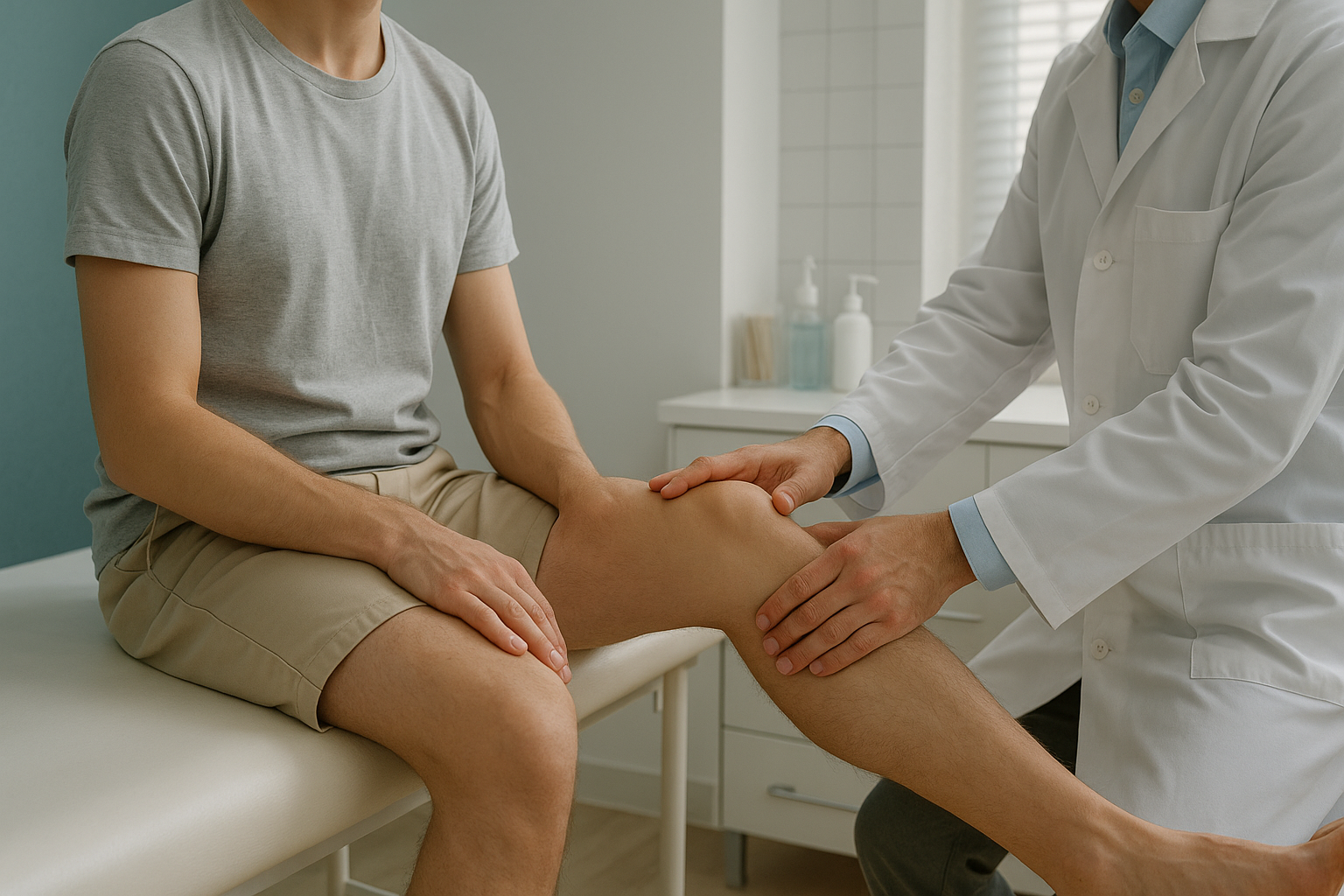
Joint Hypermobility: What Are the Signs, and Is Being "Double Jointed" a Problem?
Joint hypermobility means your joints move beyond the normal range. Many people live with it comfortably, but for some it causes pain, fatigue and repeated injuries. A standing whole-body scan can show how hypermobile joints affect your overall alignment, revealing compensations that lying-down imaging often misses.
Key takeaways
- Hypermobility is common in adults and usually inherited. It is not always a problem, but it can cause pain.
- The Beighton score is a simple clinical test used to assess how flexible your joints are.
- Pain from hypermobility often appears away from the joint that is too flexible, because other areas compensate.
- A standing whole-body EOS scan shows your skeleton under load, so compensation patterns become visible.
- Management focuses on strengthening, not stretching, and accurate imaging helps guide that plan.
What is joint hypermobility?
Joint hypermobility is the ability to move one or more joints past the range that most people have. You might know it as being "double jointed." Your ligaments, the tough bands that hold joints together, are more elastic than average. This lets the joint bend, straighten or rotate further than expected.
Hypermobility exists on a spectrum. At one end, a single bendy thumb causes no trouble at all. At the other, widespread looseness across many joints can lead to chronic pain, dislocations and fatigue. When symptoms become significant, clinicians may use the term hypermobility spectrum disorder (HSD) or, in more complex cases, consider conditions such as Ehlers-Danlos syndrome (hEDS).

What are the symptoms of joint hypermobility in adults?
The most common symptoms are joint pain, a feeling of instability and muscles that tire easily. Not everyone with flexible joints experiences problems. When symptoms do appear, they can affect daily life in ways that are easy to dismiss or misattribute.
Dull pain in knees, hips, back or shoulders, often worse after activity or at the end of the day.
Joints that feel wobbly or unsupported, sometimes buckling under load without warning.
Sprains, strains and tendon problems that keep recurring, even from minor activities.
Muscles work overtime to stabilise loose joints, leading to tiredness that rest alone does not fix.
Noisy joints that click, pop or crack frequently during normal movement.
A note about urgent symptoms. If you experience sudden numbness, weakness in a limb, or loss of bladder or bowel control alongside joint problems, please seek urgent medical attention through your GP, 111 or A&E. These symptoms need immediate assessment.
What causes joint hypermobility?
Joint hypermobility is usually inherited. The genes that build collagen, the protein giving ligaments, tendons and skin their structure, produce a slightly more elastic version. This is the most common cause by far.
Runs in families. Collagen variation makes connective tissue stretchier throughout the body.
Some people have shallower joint sockets, allowing a wider range of movement.
Low muscle tone means joints rely more on ligaments than muscles for support.
What is the Beighton score test?
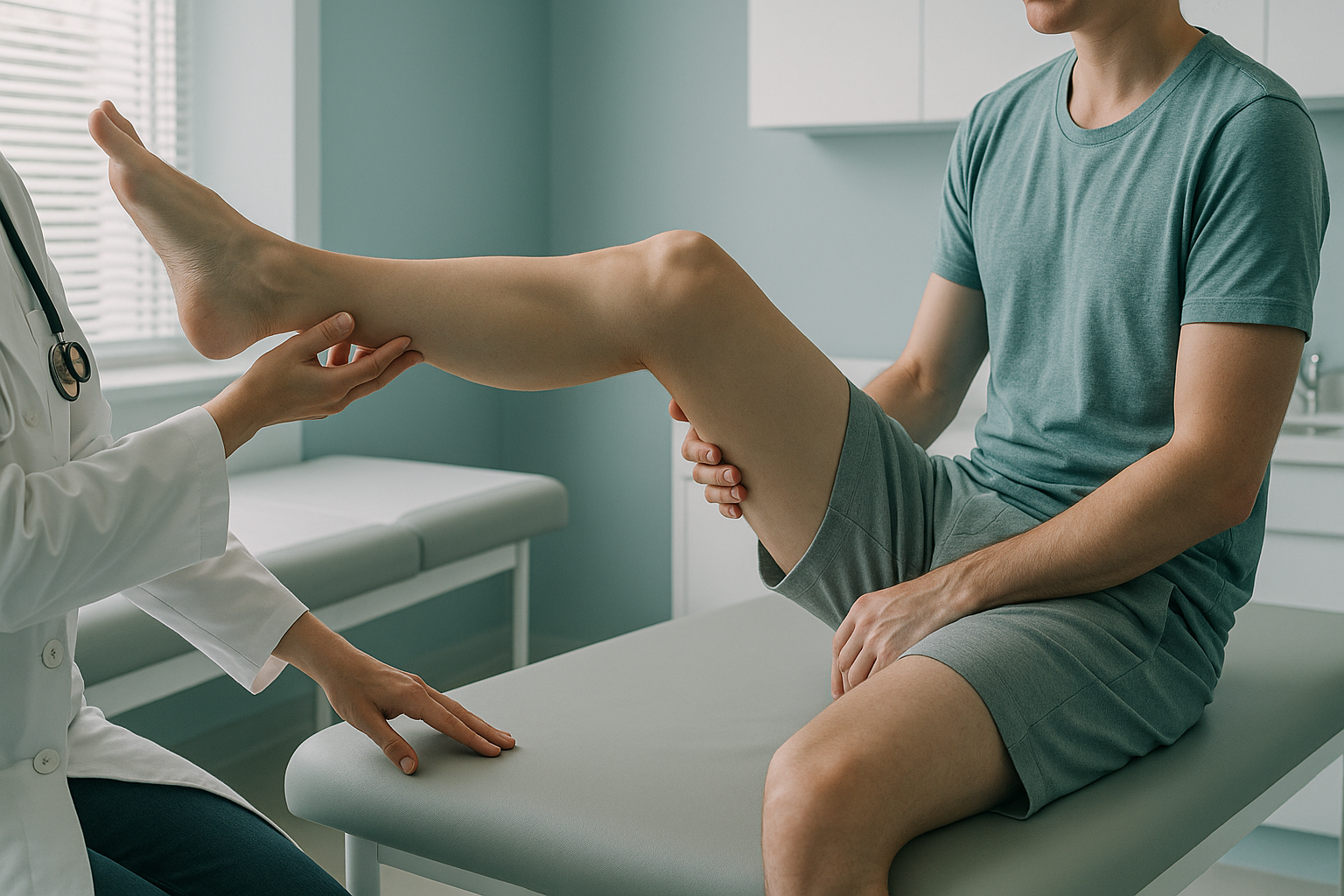
The Beighton score is a simple clinical screening tool. A clinician checks nine points across your body, such as bending your little finger back, touching your palms flat to the floor and hyperextending your elbows and knees. A score of five or more out of nine in adults suggests generalised hypermobility. It is a starting point, not a full diagnosis on its own.
How does standing imaging help assess hypermobile joints?
Standing whole-body imaging captures your skeleton while it is bearing your full weight. This matters because hypermobile joints behave differently under load than they do when you are lying down relaxed. On a couch, your muscles switch off and loose joints settle into a neutral position, hiding misalignment and compensations.
Your body is a connected chain from your feet to your head. If one joint is too loose, the joints above and below it adjust to keep you upright. A wobbly knee might cause your hip to tilt. A tilted hip might force your lower back into an extra curve. This is why pain in hypermobility often shows up in a different place from the joint causing the problem.
An EOS scan captures your entire skeleton, from your head to your feet, in a single standing image with about 90% less radiation than a standard X-ray, around ten times less. The result is a full picture of how your joints, spine, hips and legs line up together under real-world conditions. This gives your clinician the information to understand where the instability starts and what is compensating for it.
Wondering whether your joint pain could be an alignment problem? Talk it through at no cost.
Book a free video consultationHow is joint hypermobility managed?
Management focuses on building strength and stability around loose joints, not on stretching them further. The right approach depends on understanding exactly which joints are affected and how your body is compensating. That is why accurate imaging matters.
- Targeted strengthening. Physiotherapy programmes that build muscle support around hypermobile joints are the cornerstone of management.
- Pacing activity. Balancing rest and movement prevents flare-ups. Too much rest weakens muscles, while too much activity overloads joints.
- Understanding your alignment. Knowing where your skeleton is out of line helps your physiotherapist or specialist design a programme for your actual problem, not a guess.
- Pain management strategies. These may include load modification, supportive taping or working with a pain specialist.
ScanAlign does not provide treatment. It provides the diagnostic imaging that helps your treating clinician see the full picture. You do not need a GP referral, and you can bring your images to any specialist or therapist you choose.
When MRI is the better option. EOS excels at showing bones, joints and whole-body alignment. If your clinician suspects soft-tissue damage, disc problems or nerve involvement, MRI is usually the better tool for those structures. The two types of imaging often complement each other.
Frequently asked questions about joint hypermobility
Not necessarily. Many people with flexible joints have no pain or problems at all. It becomes a concern when looseness leads to pain, instability, fatigue or frequent injuries.
A clinician typically uses the Beighton score and takes a detailed history of your symptoms. They may also assess your skin elasticity and look for signs of related connective tissue conditions. Imaging helps reveal the structural consequences of hypermobility.
Yes. When joints in the spine are too flexible, the surrounding muscles work harder to keep you stable. This can cause aching in the lower back. Loose hips or knees can also shift spinal alignment, adding further strain. You can learn more about how spinal alignment is assessed.
Joint flexibility often decreases naturally with age. However, the effects of years of compensating, such as joint wear, muscle imbalances and posture changes, can become more noticeable over time.
When you lie down, gravity no longer pulls on your joints and your muscles relax. Misalignment and compensations that exist when you stand and walk disappear on the couch. A standing scan shows how your skeleton actually behaves under your body weight.
Yes. An EOS scan uses about 90% less radiation than a standard X-ray, around ten times less. You can find more detail on the safety and FAQs page.
No. ScanAlign accepts self-referrals. You can book directly without seeing your GP first. A free video consultation helps confirm whether a scan is appropriate for you.
Pricing information is available on the FAQs and cost page.
Absolutely. Hypermobility can affect any joint. The hips and knees are common problem areas because they bear so much weight. A whole-body standing scan shows how all these joints relate to each other. You can read more about hip alignment assessment or knee alignment.
Generally, no. Stretching joints that are already too flexible can make instability worse. The focus should be on strengthening the muscles around those joints. A specialist or physiotherapist can advise on the right programme for you.
See the full picture of how your joints line up
A free video consultation helps you understand whether a standing whole-body scan could explain your symptoms. No referral needed.
Book a free video consultationSources
- NHS. "Joint hypermobility." nhs.uk. Available at: nhs.uk/conditions/joint-hypermobility.
- Castori M, et al. "A framework for the classification of joint hypermobility and related conditions." American Journal of Medical Genetics Part C: Seminars in Medical Genetics, 2017; 175(1): 148–157.
- The Ehlers-Danlos Society. "What is HSD?" Available at: ehlers-danlos.com.
Written by Abbas Dhami (Specialist Diagnostic Radiographer)
This page is general information and not a diagnosis.
ScanAlign is the trading name of CoreMed Solutions Ltd and operates under The Harley Street Hospital's CQC licence.