
Developmental Dysplasia of the Hip: What Is It and Why Does It Still Cause Problems in Adults?
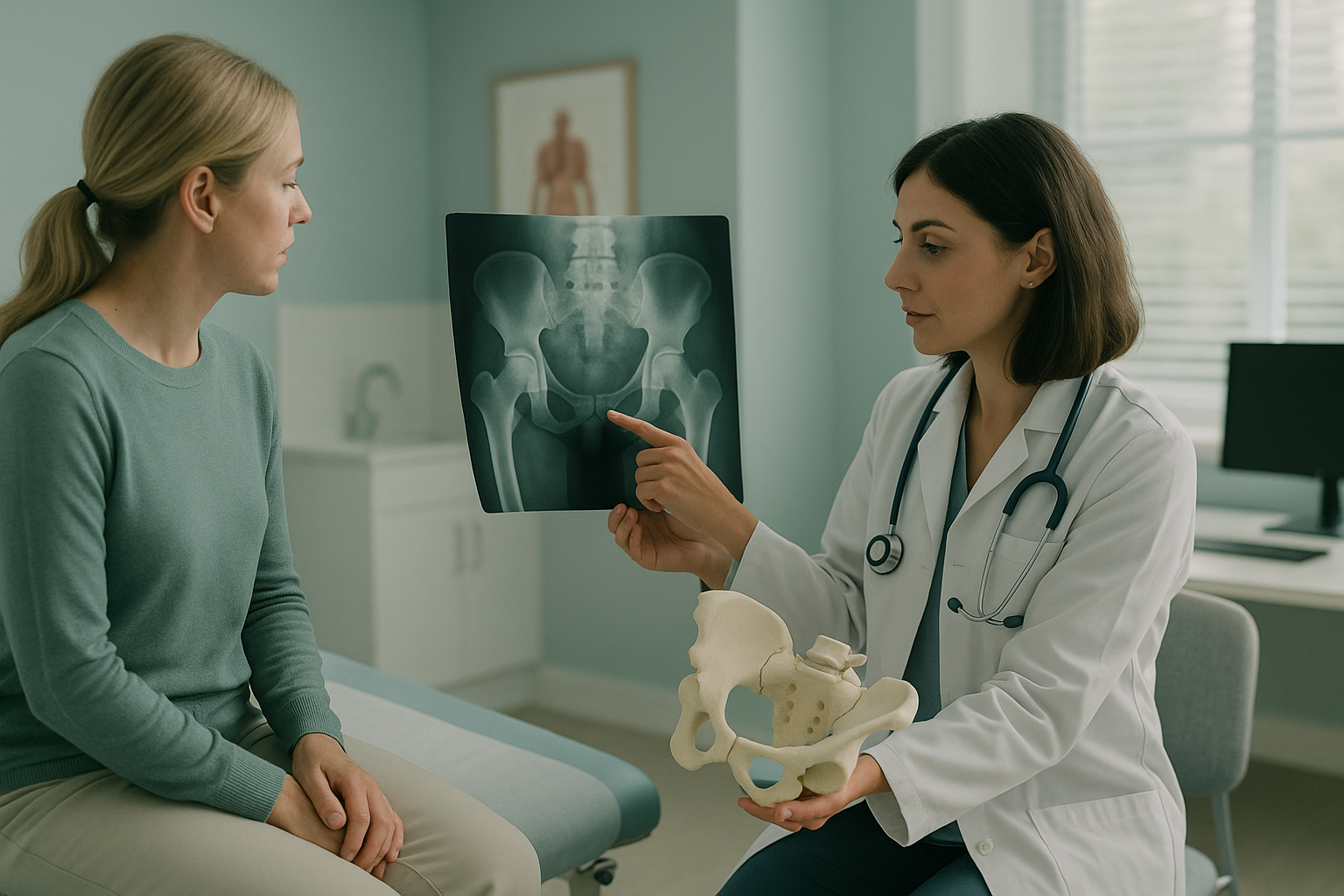
Developmental dysplasia of the hip (DDH) means the hip socket is too shallow to cover the ball of the thighbone properly. Many adults were never diagnosed as children. The resulting poor fit puts extra stress on the joint, leading to pain, stiffness and early wear. A standing, weight-bearing scan shows how the hip copes under real load.
Key takeaways
- DDH is a spectrum, from a mildly shallow socket to a fully dislocated hip.
- It is the most common structural cause of early hip arthritis in adults under 50.
- Lying-down scans can miss the way DDH affects alignment when you are standing and bearing weight.
- An EOS whole-body standing scan uses about 90% less radiation than a standard X-ray, around ten times less.
- ScanAlign provides the imaging that helps your surgeon or physiotherapist plan the right approach.
Developmental dysplasia of the hip is sometimes called congenital hip dislocation, though not every case involves a true dislocation. DDH sits on a spectrum. At one end the socket is just a little shallow. At the other the ball of the thighbone sits partly or fully outside the socket. Many people go through childhood without obvious symptoms, only to develop hip pain, a limp or stiffness in their twenties, thirties or later.
Because the socket does not contain the ball as well as it should, the cartilage wears unevenly and the labrum (the ring of cartilage around the rim) takes extra strain. Over time this leads to osteoarthritis, often decades earlier than would normally be expected.
What are the symptoms of developmental dysplasia of the hip in adults?
The most common symptom is a deep, aching pain in the groin or the front of the hip, especially after walking, standing for a long time or exercise. You might also notice clicking, catching, or a feeling that the hip is unstable.
A deep ache that worsens with activity and eases with rest.
You may tilt or lean to one side without realising it.
Difficulty crossing your legs, tying shoes or getting in and out of a car.
The hip may click or feel like it locks during certain movements.
Symptoms often develop gradually. Some people put up with a stiff hip for years before seeking help, assuming it is just the way their body is built. Because your body compensates, you may also develop pain in your lower back, knee or opposite hip. This compensation pattern is one of the main reasons a whole-body view matters.
When is MRI more useful? EOS shows bones, joints and overall alignment. If your specialist suspects a labral tear, cartilage damage or other soft-tissue problems, MRI is usually the better tool. The two types of imaging often work well together.
What causes developmental dysplasia of the hip?
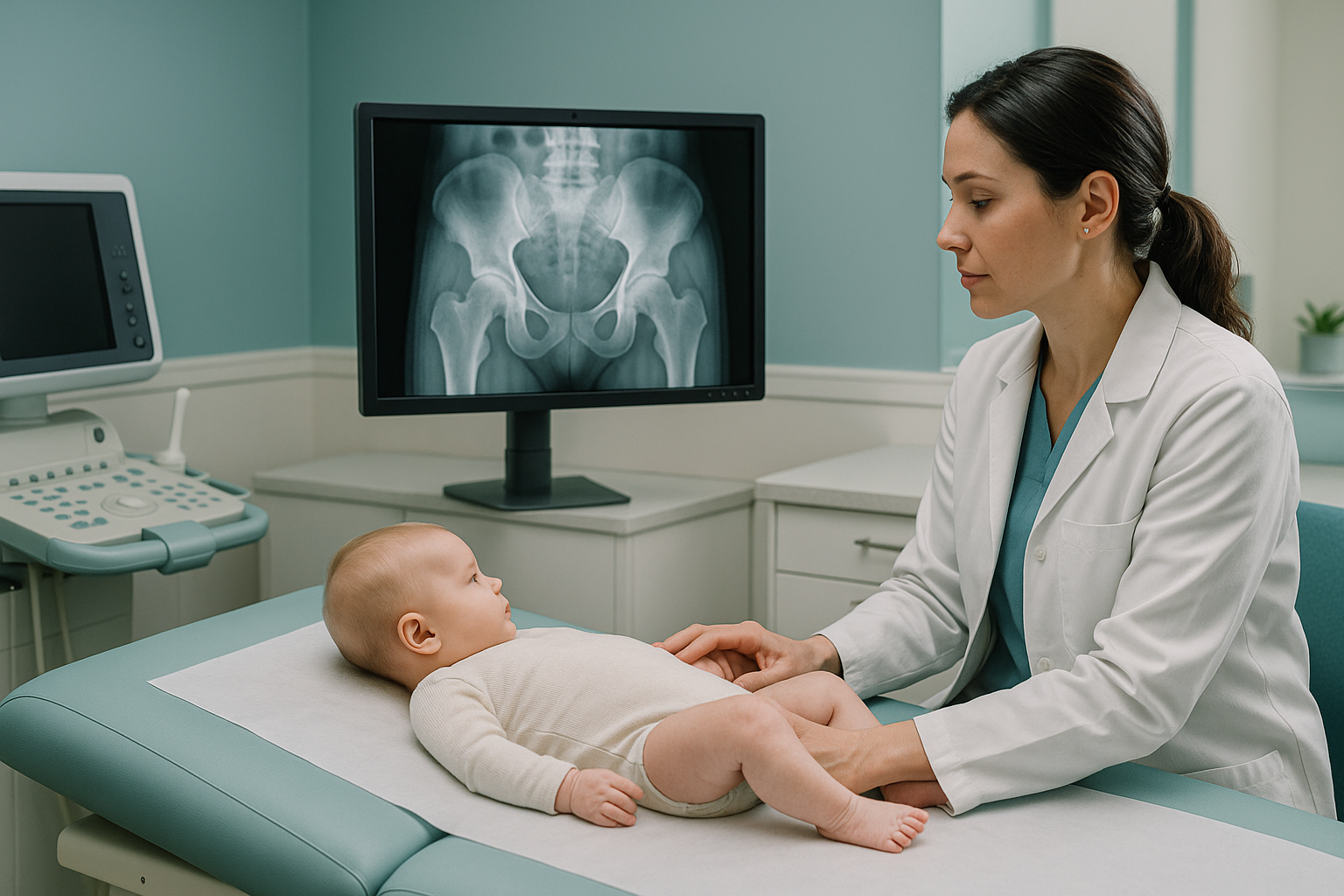
DDH develops because the hip joint does not form properly during pregnancy or early infancy. The exact cause is not fully understood, but several factors raise the risk.
DDH tends to run in families, suggesting a genetic component.
Babies who sat bottom-down in the womb are more likely to develop DDH.
DDH is more common in first-born babies and is several times more common in females.
Many adults with DDH were simply never picked up by screening as babies. UK screening programmes have improved over the decades, but milder cases still slip through. If you have always felt your hip was a bit stiff or clicky, and especially if hip problems run in your family, it is worth investigating.
How does a standing EOS scan help with DDH?
A standing EOS scan captures your entire skeleton in one image while you are upright and weight-bearing. This is important for DDH because it shows the true relationship between your hip socket, pelvis and spine under real-world load.
Standard hip imaging is usually taken lying down. When you lie flat, your muscles relax, the pelvis settles into a neutral position, and the hip may look less abnormal than it really is. Standing up changes everything. Gravity, muscle tension and your natural posture all come into play, revealing how the shallow socket actually performs when you walk, stand and go about your day.
Your body is a connected chain from your feet to your head. If one hip socket is shallow, your pelvis tilts. Your spine curves to compensate. Your knee takes extra load on the other side. A single-area scan of just the hip misses this chain reaction. An EOS whole-body image captures it all, giving your surgeon or physiotherapist the complete picture they need.
Want to understand how your hip alignment looks under real weight-bearing conditions?
Book a free video consultationThe EOS system uses about 90% less radiation than a standard X-ray, around ten times less. That is particularly helpful if you need repeat scans over time to monitor the joint or plan surgery.
What can be done about DDH in adults?
Treatment depends on how shallow the socket is, how much wear has already occurred, and what your symptoms are. ScanAlign is a diagnostic imaging clinic, so we do not provide treatment, but the imaging we produce helps specialists decide the right path for you.
For milder cases, physiotherapy focused on strengthening the muscles around the hip can help stabilise the joint and manage symptoms. For more significant dysplasia, surgical options may include a periacetabular osteotomy (a procedure to reposition the socket) or, if arthritis is already advanced, hip replacement. Accurate alignment data from a standing scan is valuable for planning either approach.
Getting the right imaging early matters. The sooner the true shape and alignment of your hip is understood, the sooner the right specialist can advise you on managing it well. If you are living with unexplained hip pain, stiffness or a limp that has never been properly explained, a whole-body standing assessment can be a useful starting point. Learn more about hip alignment and imaging on our dedicated hip page.
Frequently asked questions about DDH
Yes. Many adults with DDH were never picked up by screening as babies, especially milder cases. Symptoms often appear gradually in the twenties, thirties or later as the cartilage wears down.
Congenital hip dislocation is the older term. DDH is now preferred because it covers the full spectrum, from a mildly shallow socket to a fully dislocated hip. Not everyone with DDH has an actual dislocation.
An EOS scan captures your entire skeleton while you are standing, showing the true alignment of your hip, pelvis and spine under weight-bearing conditions. A standard X-ray is usually taken lying down, which can make the hip look more normal than it is. Learn more about how EOS imaging works on the ScanAlign homepage.
EOS uses about 90% less radiation than a standard X-ray, around ten times less. Full details on safety and what to expect are on the FAQs page.
No. ScanAlign is a private, self-pay clinic. You can book directly without a referral. We start with a free video consultation to make sure the scan is right for your situation.
Yes. When the hip socket is shallow, the pelvis often tilts, which changes the loads through the spine and the opposite leg. This compensation chain means pain can show up in the lower back, knee or opposite hip rather than the affected hip itself.
Pricing details are available on the FAQs and cost page.
Not necessarily. The outcome depends on the severity of the dysplasia and how much cartilage damage has occurred. Milder cases may be managed with physiotherapy and activity modification. More significant dysplasia may require corrective surgery. Accurate imaging helps specialists plan the most appropriate approach.
Yes. Surgeons planning a periacetabular osteotomy or hip replacement benefit from seeing the full alignment picture under weight-bearing conditions. The whole-body data helps them understand how the pelvis sits, how the spine compensates, and how the legs are loaded.
ScanAlign is at 19 Harley Street, London. The first step is a free video consultation to discuss your symptoms and check that an EOS scan is the right next step for you.
Understand your hip alignment
A free video consultation is the first step. We will discuss your symptoms and explain whether a standing whole-body scan is right for you.
Book a free video consultationSources
- NHS. Hip dysplasia. nhs.uk. Available at: https://www.nhs.uk/conditions/developmental-dysplasia-of-the-hip/
- Gala L, Clohisy JC, Beaulé PE. Hip Dysplasia in the Young Adult. Journal of Bone and Joint Surgery. 2016;98(1):63-73.
- International Hip Dysplasia Institute. Adult Hip Dysplasia. hipdysplasia.org.
Written by Abbas Dhami (Specialist Diagnostic Radiographer)
This page is general information and not a diagnosis.
ScanAlign is the trading name of CoreMed Solutions Ltd and operates under The Harley Street Hospital's CQC licence.