
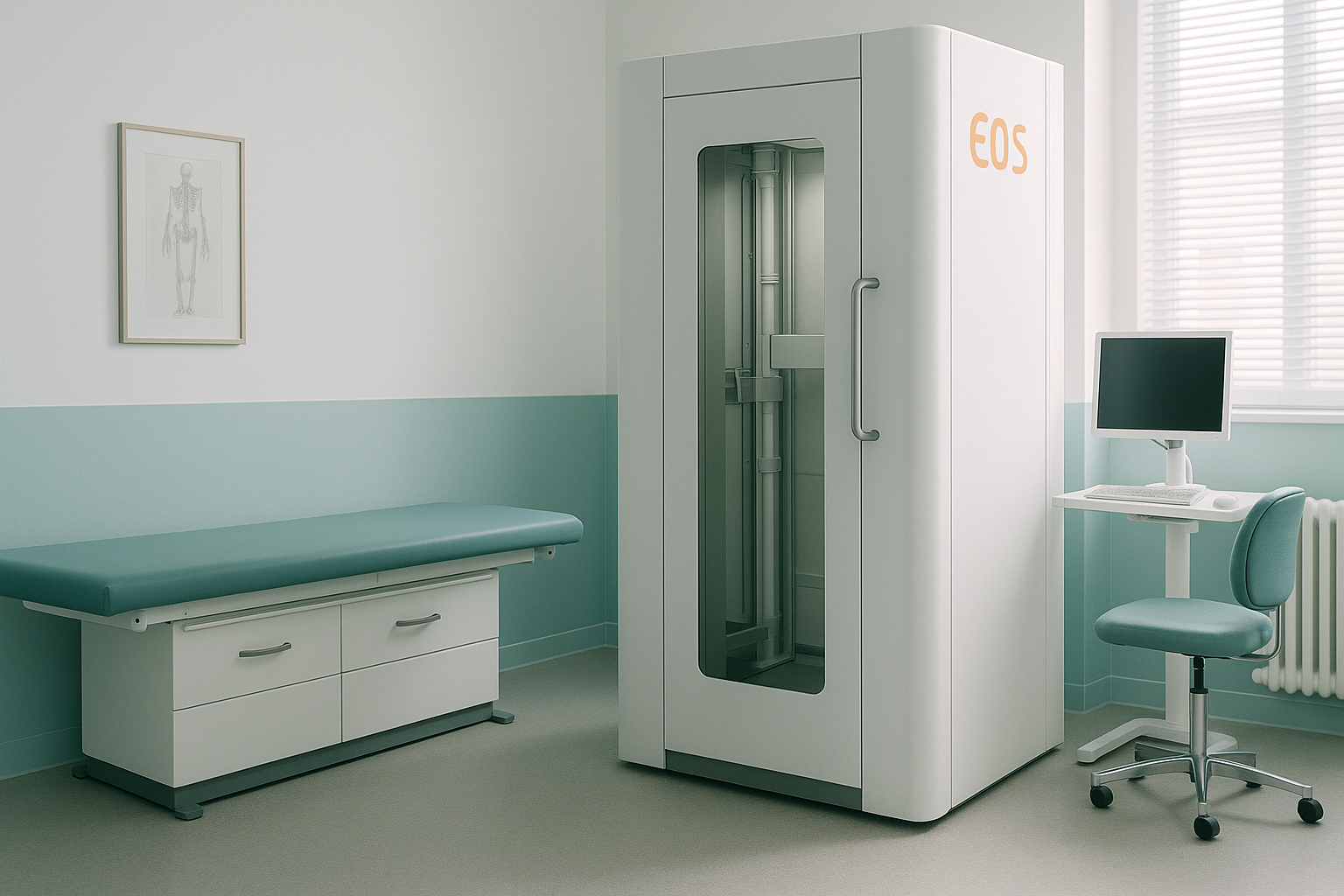
How Much Does an EOS Scan Cost in the UK?
The cost of a private EOS scan depends on the body areas you need imaged. ScanAlign does not publish prices on this page, but you can find current pricing on the FAQs and cost page. Every scan includes a detailed radiologist report and a free video consultation beforehand, so you know exactly what you are paying for before you commit.
Key takeaways
- Current EOS scan prices are listed on the ScanAlign FAQs page.
- Every scan includes a specialist radiologist report, not just raw images.
- A free video consultation is offered before any scan, so there is no upfront cost to explore your options.
- No GP referral is needed. You can self-refer as a private patient.
- EOS uses about 90% less radiation than a standard X-ray, around ten times less.
When you search for "EOS scan cost" you are probably already aware that this type of imaging is uncommon in the UK. That can make it hard to compare prices or understand what you are actually getting. This page explains what is included in the price, why standing imaging offers different value from a standard scan, and how to find out the exact cost for your situation.
What is included in the price of an EOS scan?
An EOS scan at ScanAlign is more than just an image. The price covers the full imaging and reporting process, from the moment you arrive at 19 Harley Street to the delivery of your results.
Before you book, a specialist discusses your symptoms and confirms whether EOS imaging is appropriate for you.
Your images are reviewed by a consultant radiologist who produces a detailed written report of the findings.
Full-length, weight-bearing images that capture your skeleton as it actually functions when you are upright.
You can self-refer. No GP letter is needed, which saves you time and avoids extra appointments.
You receive your images and report digitally. These can be shared with your GP, consultant, physiotherapist or surgeon to guide your next steps.
Why does a standing scan cost differently from a standard X-ray?
A standard X-ray is typically taken lying down or focused on one small area. An EOS scan images your whole body while you stand, which means it captures your alignment under real weight-bearing conditions. This difference matters.
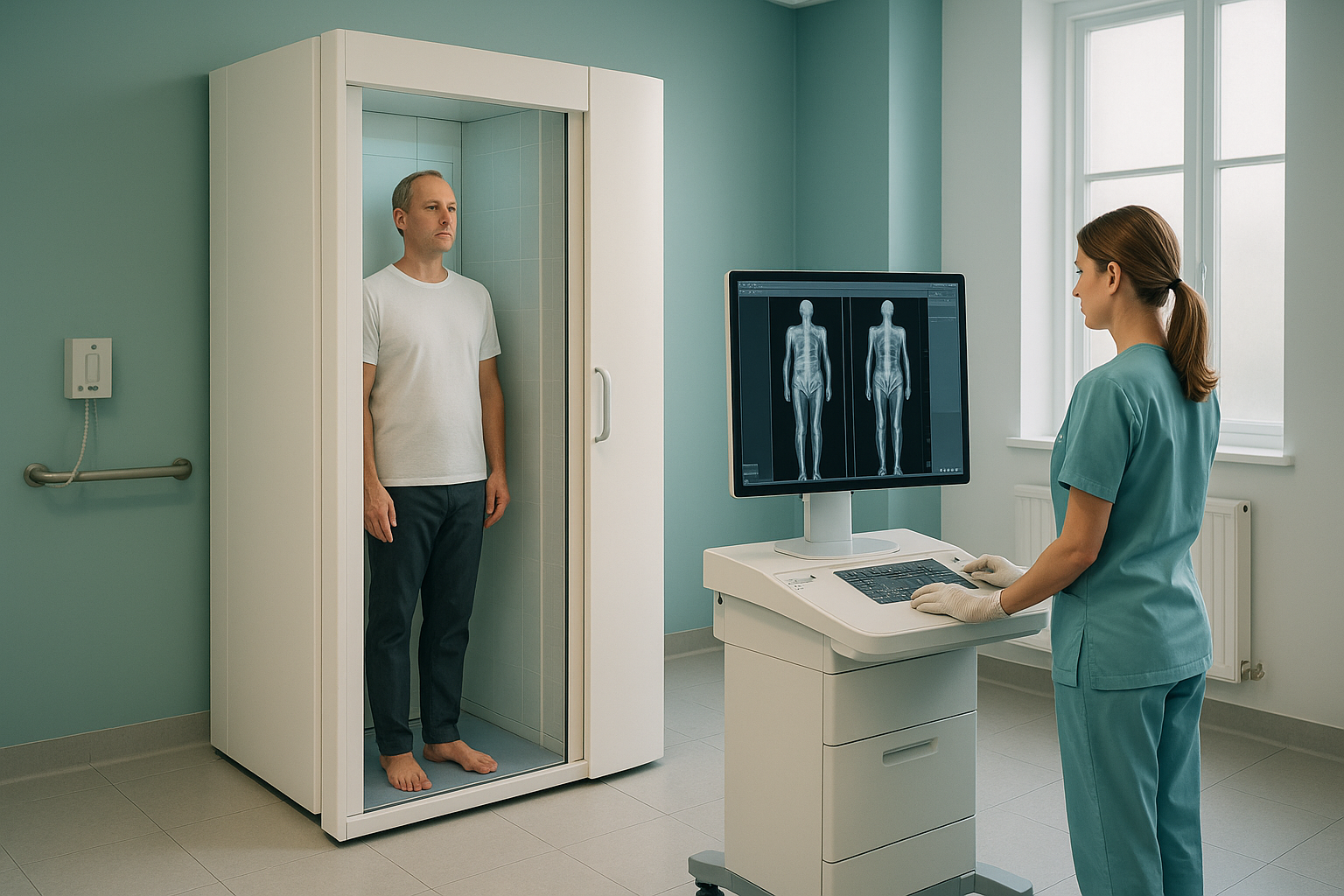
When you lie down, your muscles relax and your joints shift. Problems like a pelvic tilt, a leg-length difference, or a compensatory curve in your spine may flatten out and disappear from the image. Your body is a connected chain from your feet to your head. A problem in one area often forces another area to compensate, so the place that hurts may not be the place where the problem started.
Standing EOS imaging captures this full picture in a single scan, which is why it provides different information from a series of standard lying-down images.
Is a private EOS scan worth the cost?
That depends on your situation. If you have been through rounds of standard X-rays, physiotherapy or consultations without a clear answer, a standing whole-body scan can reveal alignment issues that single-area, lying-down imaging simply cannot show.
Many people come to ScanAlign after months or years of unexplained back pain, hip pain, or knee pain. They have had scans of individual areas that came back "normal", yet they are still in pain. A whole-body standing image often shows why, because it reveals how the areas relate to each other under gravity.
EOS also uses about 90% less radiation than a standard X-ray, around ten times less. This is particularly relevant if you have already had multiple imaging sessions and want to minimise further exposure.
Not sure if EOS is right for you? The initial video consultation is free and carries no obligation. A specialist will review your history and let you know whether standing imaging is likely to add useful information.
Book a free video consultationIs an EOS scan covered by private health insurance?
Some private health insurance policies may cover diagnostic imaging, but coverage for EOS specifically varies between providers and policies. ScanAlign operates as a self-pay clinic, meaning you pay directly for the scan.
If you have private health insurance, it is worth checking with your insurer before booking. Ask whether they cover "EOS imaging" or "standing whole-body X-ray" and whether they require a consultant referral for the claim. ScanAlign can provide an invoice and report documentation that you can submit to your insurer.
Can I get an EOS scan on the NHS?
EOS scanners are not widely available on the NHS. Some NHS hospitals do have EOS machines, but access is typically limited to specific clinical pathways, often in orthopaedic or spinal surgery departments. You would usually need a consultant referral within that hospital's system.
If you want a standing whole-body alignment scan without waiting for an NHS referral, a private self-pay scan is the most straightforward route. You do not need a GP letter to book with ScanAlign.
A note on what EOS does and does not show. EOS is excellent for imaging bones, joints and overall alignment. If your doctor suspects a soft-tissue problem such as a disc bulge, nerve compression or ligament damage, MRI is usually the better tool. The two scans answer different questions and sometimes both are needed.
Frequently asked questions about EOS scan cost
Current prices for EOS scans at ScanAlign are listed on the FAQs and cost page. The cost depends on which body areas are imaged.
No. ScanAlign accepts self-referrals. You can book directly without a GP letter.
The price includes a free video consultation before the scan, the standing whole-body EOS imaging itself, and a detailed report from a consultant radiologist.
Yes. The video consultation before your scan is free and carries no obligation. It is designed to check whether EOS imaging is appropriate for your symptoms.
Coverage depends on your policy. ScanAlign is a self-pay clinic, but you can request an invoice to submit to your insurer. Check with your provider whether they cover EOS imaging or standing X-ray.
EOS scanners are not widely available on the NHS. Access is usually limited to specific hospital departments and requires a consultant referral within that pathway.
EOS uses about 90% less radiation than a standard X-ray, around ten times less. This makes it a lower-dose option, especially if you have had multiple previous scans.
They answer different questions. EOS shows bones, joints and whole-body alignment under weight-bearing conditions. MRI is better for soft tissue such as discs, nerves and ligaments. Sometimes both are needed.
A standing EOS scan captures full-length, weight-bearing images of your whole skeleton and includes a specialist radiologist report. It provides information about overall alignment that standard single-area X-rays cannot, which is why the process and pricing differ.
The scan itself is quick. It takes place at ScanAlign's clinic at 19 Harley Street, London. You can find more practical details on the FAQs page.
Find out if an EOS scan is right for you
The first step is a free video consultation. A specialist will review your history and let you know whether standing imaging could help explain your symptoms.
Book a free video consultationExplore related topics
Author: Abbas Dhami (Specialist Diagnostic Radiographer)
Sources
- Deschênes S, Charron G, Beaudoin G, et al. "Diagnostic imaging of spinal deformities: reducing patients' radiation dose with a new slot-scanning X-ray imager." Spine, 2010; 35(9): 989-994.
- NHS. "X-ray." NHS website, accessed 2024. nhs.uk/conditions/x-ray
- The Royal College of Radiologists. "iRefer: Making the best use of clinical radiology." RCR guidelines, 8th edition.
This page is general information and not a diagnosis.
ScanAlign is the trading name of CoreMed Solutions Ltd and operates under The Harley Street Hospital's CQC licence.