
Degenerative Disc Disease: What Is It and Why Does Your Back Still Hurt?
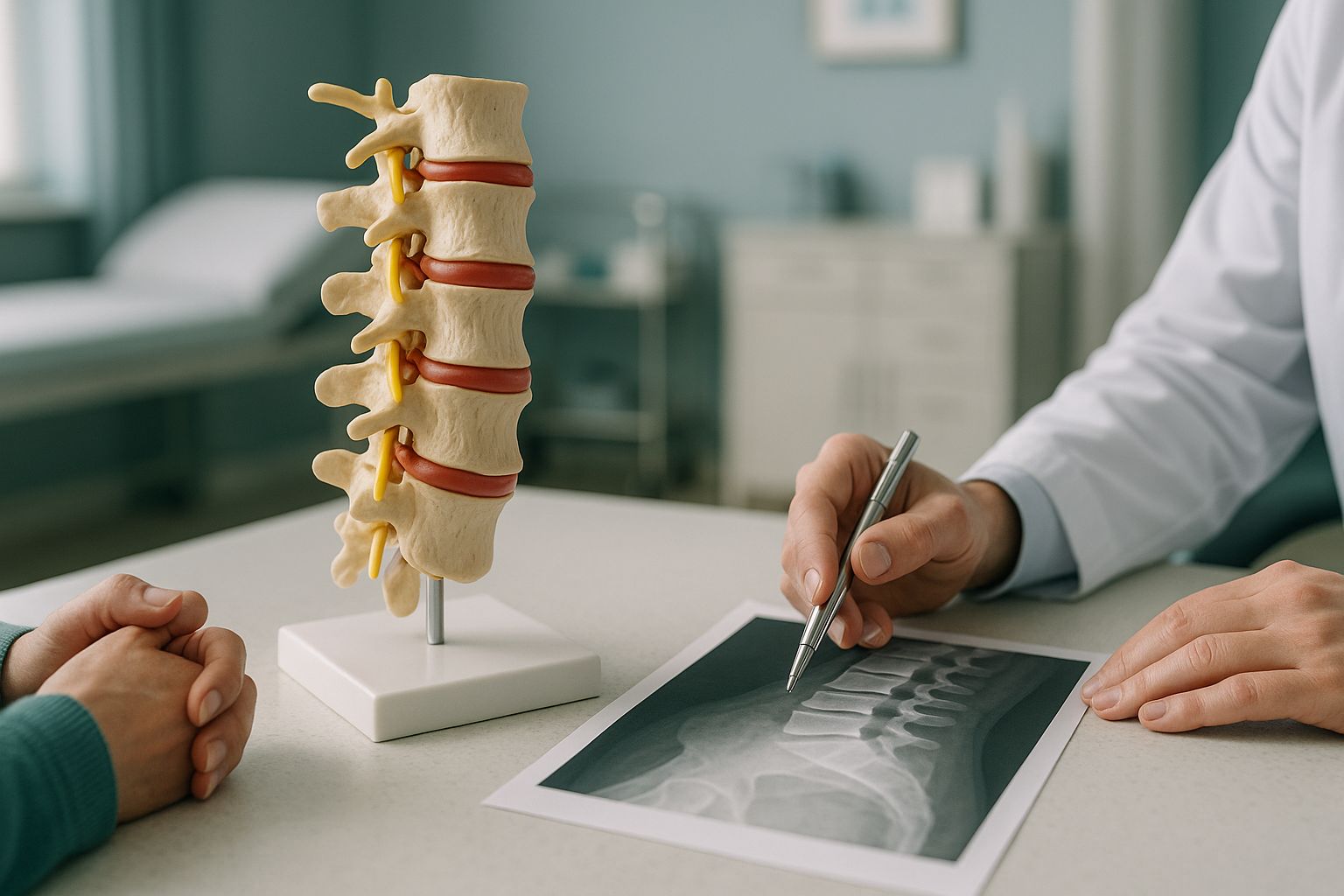
Degenerative disc disease is the gradual wearing down of the cushioning discs between your vertebrae. It is a normal part of ageing, not a true "disease." Most people have some disc wear by their 40s, but not everyone gets symptoms. Pain often appears because the disc changes shift your spinal alignment, and standing imaging can reveal those shifts.
Key takeaways
- Degenerative disc disease is wear and tear on spinal discs, not a progressive illness.
- Pain often comes from alignment changes, not just the disc itself.
- Lying-down scans can miss the alignment shifts that standing imaging reveals.
- Most people manage symptoms well without surgery.
- EOS standing imaging shows the full chain from head to feet so your clinician can see the bigger picture.
What is degenerative disc disease?
Degenerative disc disease is the gradual loss of height, hydration and flexibility in one or more spinal discs. Think of each disc as a tough, rubbery cushion sitting between two vertebrae. Over time, the disc dries out and becomes thinner. The vertebrae move closer together, and the joints around them may stiffen or shift.
Despite the name, it is not really a disease. Doctors use the term to describe a spectrum of age-related disc changes. Almost everyone over 40 shows some signs of disc wear on imaging. Many people have no pain at all.
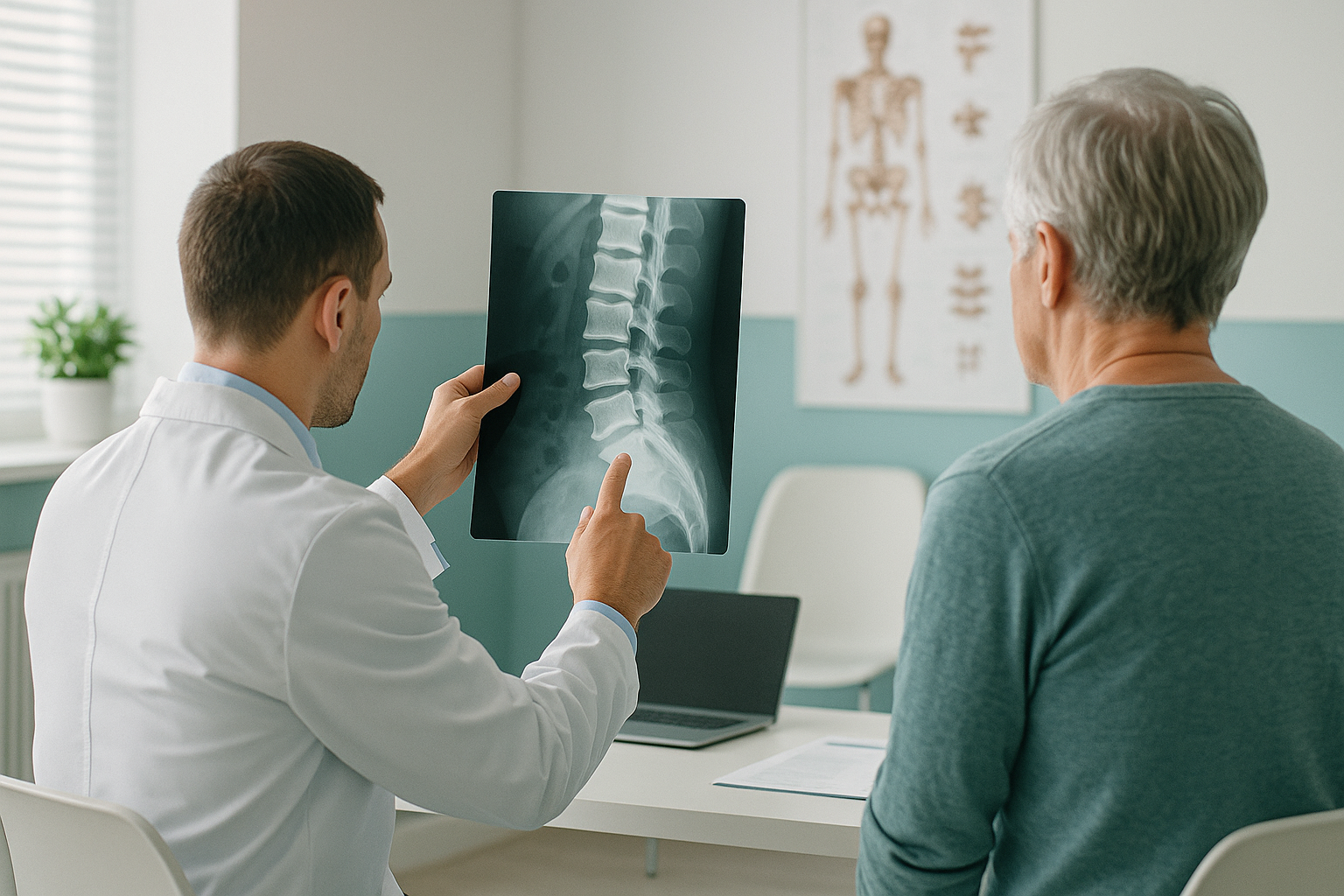
The important thing to understand is that when a disc loses height, it changes the spacing and angle of the joints above and below it. Your body compensates by shifting your posture, which can put strain on areas far from the worn disc itself.
What does degenerative disc disease feel like?
Symptoms vary widely. Some people feel nothing. Others experience persistent, nagging discomfort that flares up with certain activities. The lumbar spine (lower back) and cervical spine (neck) are the most common areas affected.
Red flag warning. If you experience sudden numbness or weakness in your legs, or any loss of bladder or bowel control, seek urgent medical attention. Contact your GP, call 111, or go to A&E. These symptoms are rare but need immediate assessment.
What causes degenerative disc disease?
The main cause is time. As you age, the water content inside your discs drops, making them thinner and less flexible. But several factors speed up the process or make symptoms more likely.
Previous injuries matter too. A disc that was damaged years ago may wear down faster than its neighbours. Over time, the uneven wear shifts how weight is distributed through your spine, and that is where alignment becomes important.
How does standing imaging help with degenerative disc disease?
Standing imaging shows how your spine actually behaves under your body weight, which lying-down scans cannot do. When you lie flat for a conventional X-ray, CT, or MRI, gravity is removed. Your muscles relax, your curves change, and the true loading pattern through your worn discs is hidden.

An EOS scan captures your full skeleton from head to feet in a single standing image, using about 90% less radiation than a standard X-ray, around ten times less. Because you are upright and weight-bearing, the image shows the real spacing at each disc level, plus how your pelvis, hips and knees are positioned in response to any changes higher up.
Your body is a connected chain. If a lumbar disc has lost height, your pelvis may tilt, your hips may take on uneven load, and your knees may compensate. Pain often shows up away from the actual cause. A standing full-body image lets your clinician trace the whole chain and find the source, not just the symptom.
Want to understand how your disc changes affect your whole alignment? A standing EOS scan can show the full picture.
Book a free video consultationWhat helps manage degenerative disc disease?
Most people with degenerative disc disease manage their symptoms without surgery. The right approach depends on your individual alignment and how the disc changes are affecting the rest of your body. Common strategies include staying active, targeted physiotherapy, and maintaining a healthy weight.
Gentle, regular movement is usually better than rest. Strengthening the muscles around your spine supports the joints and can reduce flare-ups. Your GP or physiotherapist can guide you on exercises that suit your situation.
What matters most is getting an accurate picture first. If you have been told you have "wear and tear" on a lying-down scan but your symptoms have not improved with standard treatment, a standing alignment assessment may explain why. ScanAlign is a diagnostic imaging service, not a treatment provider. The imaging and report give you and your treating clinician the information you need to decide on next steps.
When is MRI the better choice? EOS shows bones, joints and alignment beautifully. For soft tissue detail, such as individual discs, nerves or the spinal cord itself, MRI is usually the better tool. In many cases, both types of imaging work together to give a complete picture.
Frequently asked questions about degenerative disc disease
In most cases, it is not. It is a normal part of ageing and many people live with disc wear without ever experiencing significant symptoms. However, if it causes persistent pain or affects your mobility, it is worth getting a proper assessment to understand how it is influencing your alignment.
Degenerative disc disease refers to the disc drying out and losing height over time. A herniated (or "slipped") disc is when the soft centre of the disc pushes through a tear in the outer layer. A worn disc may be more prone to herniation, but they are separate things. MRI is usually the best tool for seeing a herniation.
Gentle, regular exercise generally helps rather than hinders. Strong core and back muscles support the spine and can reduce symptoms. High-impact activities may aggravate things for some people, so it is best to get personalised advice from a physiotherapist.
MRI is done lying down, which removes gravity and relaxes the muscles. Alignment problems that only appear when you are standing and weight-bearing will not show on a lying-down scan. A standing EOS image can reveal shifts in balance that a supine MRI misses.
No. ScanAlign is a private, self-pay clinic and you can refer yourself. Your first step is a free video consultation to check that a standing scan is the right investigation for your situation.
Pricing details are on the ScanAlign FAQs and cost page.
Yes. The EOS system uses about 90% less radiation than a standard X-ray, around ten times less. It captures a full-body image in a single low-dose exposure. More details are on the safety and FAQs page.
It can, indirectly. When a disc loses height, your spinal alignment shifts. Your pelvis may tilt to compensate, which changes the load on your hips and knees. This is why whole-body standing imaging is valuable. It shows the full chain of compensation, not just the spine in isolation.
Disc wear is gradual and tends to progress slowly. That does not mean your symptoms will necessarily get worse. Many people find that with the right support, their symptoms stabilise or improve even as the disc continues to change on imaging.
You stand still inside the EOS machine for about 15 to 20 seconds while it captures a full-body image from head to feet. It is quick, painless, and there is no enclosed tunnel. You can learn more about what to expect on the ScanAlign overview page.
See how your spine really stands
If you have been living with back pain and lying-down scans have not given you answers, a standing alignment assessment may help. Start with a free video consultation.
Book a free video consultationRelated pages
Written by Abbas Dhami (Specialist Diagnostic Radiographer)
Sources
- NHS. "Back pain." nhs.uk. Accessed 2024.
- Brinjikji W, Luetmer PH, Comstock B, et al. "Systematic literature review of imaging features of spinal degeneration in asymptomatic populations." American Journal of Neuroradiology, 2015;36(4):811-816.
- Illés T, Somoskeöy S. "The EOS imaging system and its uses in daily orthopaedic practice." International Orthopaedics, 2012;36(7):1405-1411.
This page is general information and not a diagnosis.
ScanAlign is the trading name of CoreMed Solutions Ltd and operates under The Harley Street Hospital's CQC licence.