

Facet Joint Arthropathy: What Is It and Why Does Your Back Feel So Stiff?
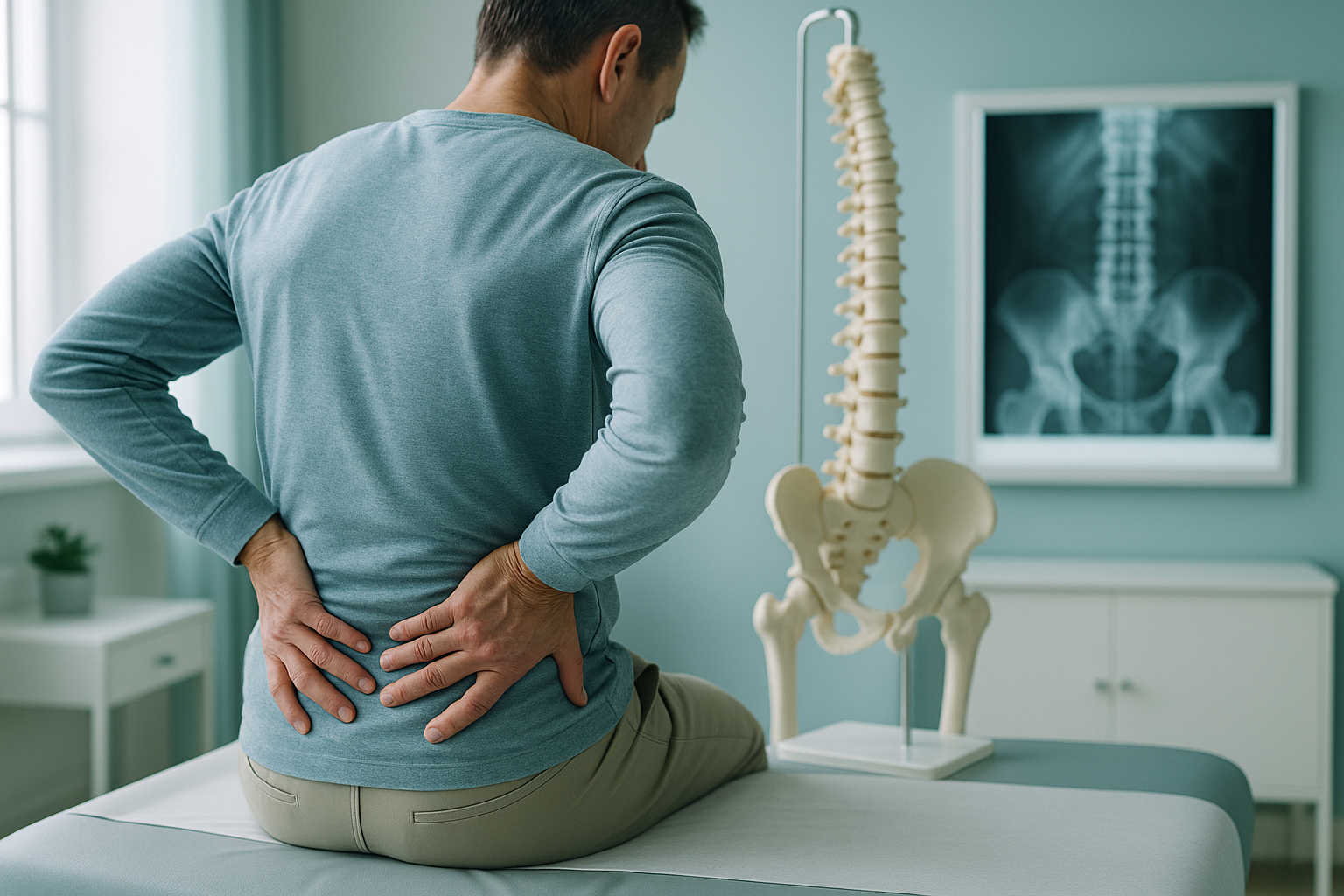
Facet joint arthropathy is wear and tear of the small joints that link each vertebra in your spine. It causes stiffness, aching and sometimes sharp pain, most often in the lower back or neck. Symptoms tend to be worse when you arch backwards, twist, or stand for a long time. It is one of the most common causes of ongoing back pain in adults.
Key Takeaways
- Facet joints are small paired joints at the back of each spinal segment that guide movement and bear load.
- Arthropathy here means the cartilage wears down over time, causing inflammation, stiffness and pain.
- Lying-down scans can miss the way load affects these joints. Standing imaging shows your spine under real weight.
- Pain from facet joints often appears away from the actual problem because of how the spine compensates.
- ScanAlign is a diagnostic imaging clinic. It does not treat facet joint arthropathy, but its imaging helps clinicians plan the right next steps.
You have two facet joints at every level of your spine, one on each side. They sit just behind the main disc and act like hinges, guiding how far you can bend and twist. When the cartilage inside these joints wears thin, the joint surfaces rub together. The bone may thicken (a process sometimes called facet hypertrophy), and the surrounding tissues become inflamed. This is facet joint arthropathy.
It is essentially the same process as arthritis in a knee or hip, just happening in a much smaller joint. The lumbar spine (lower back) is the most common area affected, followed by the cervical spine (neck). It can happen at one level or several.
What does facet joint arthropathy feel like?
Facet joint pain is usually a deep, dull ache on one or both sides of the spine, often worse first thing in the morning or after sitting for a long time. It tends to ease with gentle movement and return with prolonged standing or arching backwards.
A dull, deep pain close to the spine, often on one side of the lower back or neck.
The back feels locked up after sleep or sitting, then loosens once you start moving.
Arching backwards or twisting loads the facet joints directly, often triggering a sharp catch.
Lumbar facet problems can send pain into the buttock or thigh. Cervical facet pain may spread across the shoulder or up to the head.
A note on nerve symptoms. Facet joint arthropathy does not usually cause numbness, tingling, or weakness in the legs. If you experience any of these, or any loss of bladder or bowel control, please seek urgent medical attention from your GP, call 111, or go to A&E. These could signal a different, more serious problem.
What causes facet joint arthropathy?
The main driver is cumulative load over years. The more stress a facet joint bears, the faster the cartilage wears. Several things increase that stress.
Cartilage thins naturally over decades. Most people over 50 show some facet changes on imaging.
Extra weight increases the compressive force through the lumbar facet joints with every step.
A pelvic tilt, scoliosis, or uneven leg length can overload one side of the spine more than the other.
When a disc loses height, the facet joints above and below have to take more of the load.
This is where the compensation chain matters. Your body is a connected structure from feet to head. If one area is out of line, the spine adjusts elsewhere. A subtle pelvic tilt, for example, may overload the facet joints on one side of the lumbar spine for years before pain appears. The pain shows up in the facet joint, but the real driver is the alignment problem below.
How is facet joint arthropathy assessed when standing?
A standing, weight-bearing image shows your spine the way it actually works, under the pull of gravity with your muscles active. Lying-down scans (standard X-rays, CT, MRI) let your muscles relax, which can flatten curves and hide the alignment shifts that are overloading your facet joints in real life.
An EOS scan captures your entire skeleton from head to feet in a single standing image, using about 90% less radiation than a standard X-ray, around ten times less. Because the whole body is in one frame, a specialist can trace the alignment chain and spot whether a pelvic tilt, a leg-length difference, or a shift in your spinal balance is putting extra stress on specific facet joints.
This matters because treating a painful facet joint without understanding why it is overloaded often provides only short-term relief. The imaging does not replace treatment. It gives your treating clinician the full picture so they can target the underlying cause, not just the symptom.
Wondering whether your back pain could be related to whole-body alignment? A free video consultation can help you decide if standing imaging is a useful next step.
Book a free video consultationWhen MRI is the better choice. EOS shows bones, joints and alignment clearly. For soft tissue problems like disc bulges, nerve compression or inflammation inside the facet joint itself, MRI is usually the better tool. In many cases, the two types of imaging complement each other.
What helps manage facet joint arthropathy?
Management depends on the severity and the underlying cause. Your GP, physiotherapist or spinal specialist will recommend options based on your specific situation. Common approaches include the following.
- Physiotherapy and exercise. Strengthening the core and improving spinal mobility are usually the first steps. A programme tailored to your alignment findings can be more effective than a generic routine.
- Activity modification. Avoiding sustained arching or heavy overhead lifting may reduce flare-ups.
- Pain management. This can range from simple over-the-counter options to facet joint injections guided by imaging, depending on what your clinician recommends.
- Addressing the alignment cause. If a pelvic tilt, scoliosis or leg-length difference is driving the overload, correcting it (sometimes with something as simple as a shoe insert) can reduce ongoing wear.
ScanAlign does not provide any of these treatments. It provides the diagnostic imaging that helps your treating clinician understand the full alignment picture and choose the right approach. You can learn more about how standing spinal imaging works on our spine page.
Frequently asked questions about facet joint arthropathy
It is arthritis of the small hinge joints at the back of each spinal segment. The cartilage inside the joint wears down over time, causing stiffness, inflammation and pain. It is very common and most often affects the lower back.
Most people describe a dull ache close to the spine, sometimes on one side. It is usually worse when arching backwards, twisting, or standing for a long time, and tends to ease with gentle movement. Pain may spread into the buttock, thigh, or shoulder depending on which level is affected.
Facet hypertrophy means the joint has enlarged, usually because the bone has thickened in response to extra stress. It is one feature of facet joint arthropathy, which is the broader term covering cartilage loss, inflammation and bony changes.
Lumbar facet problems can refer pain into the buttock and the back of the thigh, but they do not usually cause true nerve pain below the knee, numbness or weakness. If you have those symptoms, see your GP promptly as there may be a different cause.
An MRI gives excellent detail of the soft tissues inside and around the joint. A standing scan shows how the joint behaves under your body weight with gravity pulling on the spine. The two serve different purposes. A standing EOS scan is particularly useful for revealing alignment problems that overload the joint, which a lying-down MRI cannot show.
Yes. EOS uses about 90% less radiation than a standard X-ray, around ten times less. You can find more detail on safety, preparation and what to expect on our FAQs page.
No. ScanAlign is a self-referral clinic. You can book directly without a GP letter. The scan is a private, self-pay service.
Current pricing is listed on our FAQs page.
It can progress, particularly if the underlying mechanical cause is not addressed. This is why understanding your full spinal and pelvic alignment matters. Targeted management based on good imaging can slow the process and reduce symptoms.
Disc problems affect the soft cushion between the main bodies of the vertebrae. Facet joint arthropathy affects the smaller joints at the back of the spine. The two conditions often coexist because a worn disc shifts load onto the facet joints. Pain patterns differ too: disc pain is usually worse bending forward, while facet pain is usually worse arching backwards.
Find out what is driving your facet joint pain
A free video consultation with our specialist radiographer can help you understand whether standing whole-body imaging is the right next step for you.
Book a free video consultationWritten by Abbas Dhami (Specialist Diagnostic Radiographer)
Sources
- Kalichman, L. & Hunter, D.J. (2007). Lumbar Facet Joint Osteoarthritis: A Review. Seminars in Arthritis and Rheumatism, 37(2), 69-80.
- NHS. (2023). Back pain: Causes. NHS.uk. Available at: nhs.uk/conditions/back-pain.
- Illés, T. & Somoskeöy, S. (2012). The EOS imaging system and its uses in daily orthopaedic practice. International Orthopaedics, 36(7), 1395-1402.
This page is general information and not a diagnosis.
ScanAlign is the trading name of CoreMed Solutions Ltd and operates under The Harley Street Hospital's CQC licence.