
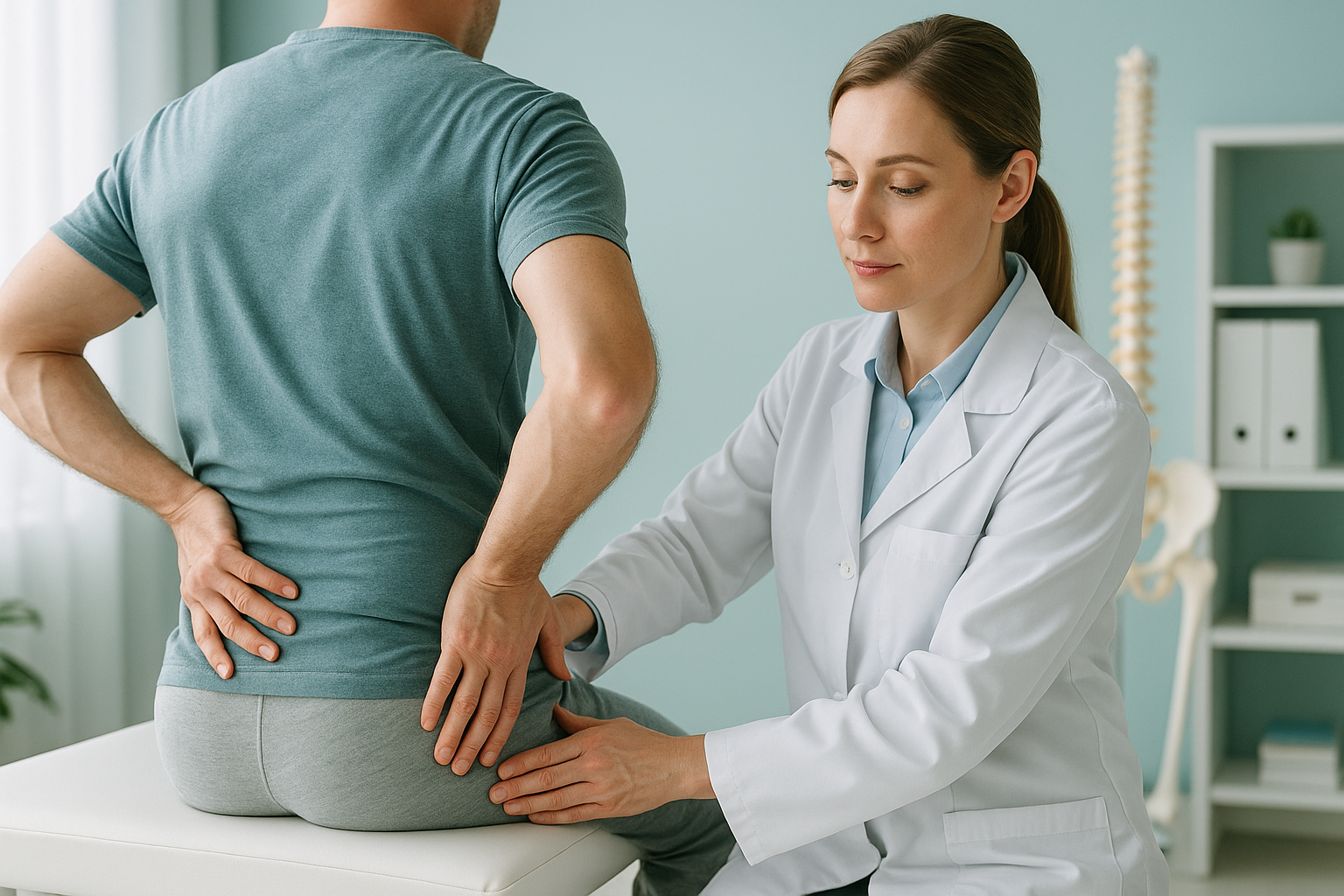
Radiculopathy: What Is It and Why Does It Cause Pain Away from Your Spine?
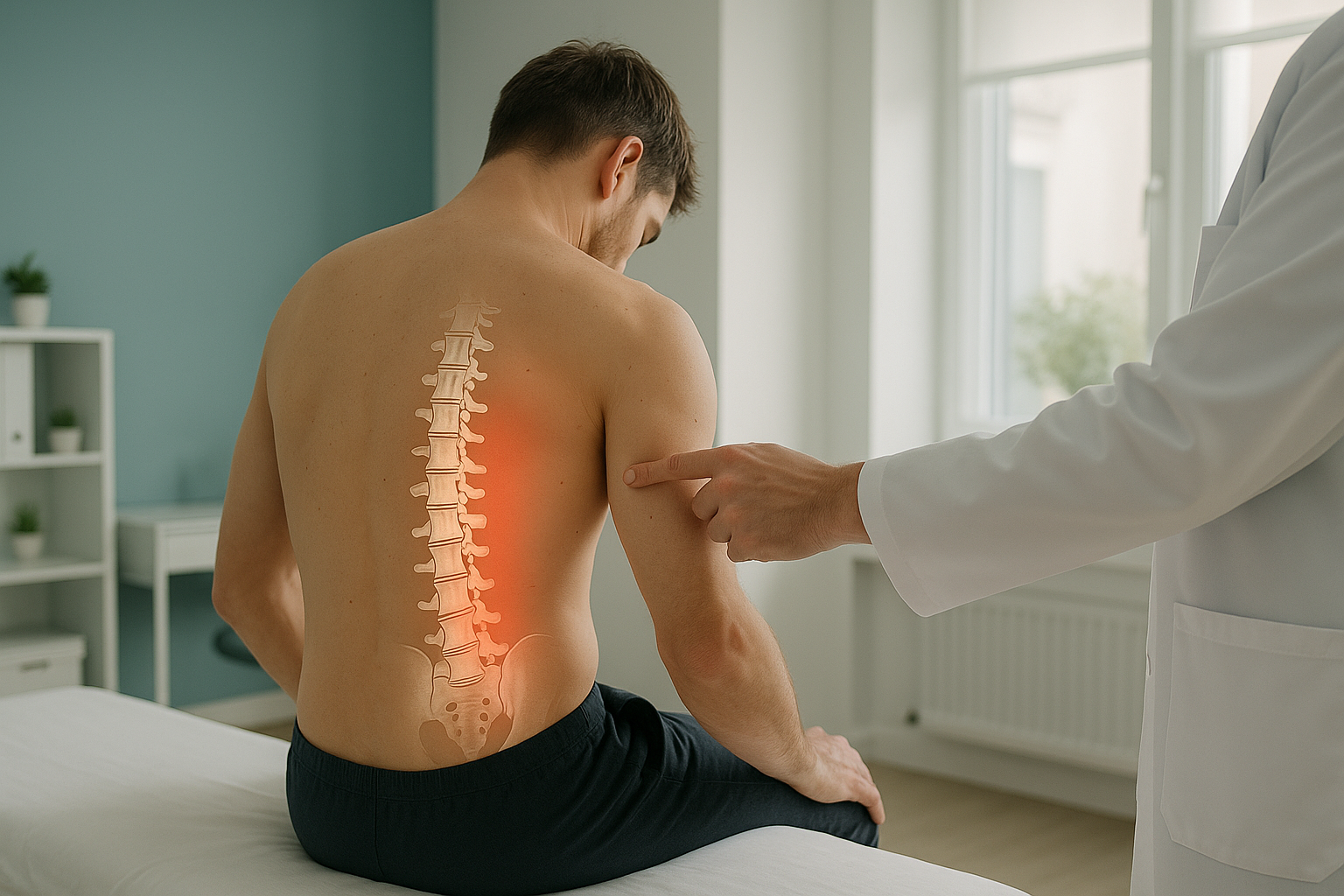
Radiculopathy is irritation or compression of a nerve root where it exits the spine. It causes pain, tingling or weakness that travels along that nerve into an arm or leg. The symptoms often appear far from the actual problem in the spine, which is why whole-body standing imaging can be valuable in tracing the true source.
Key takeaways
- Radiculopathy is a pinched nerve root in the spine, not a disease in the arm or leg where you feel symptoms.
- It can occur in the neck (cervical), mid-back (thoracic) or lower back (lumbar) regions.
- Lying-down scans can miss alignment problems that only appear when you stand under your own body weight.
- EOS standing imaging shows the full spine and pelvis in one low-radiation image, helping identify the structural cause.
- If you have sudden loss of bladder or bowel control, or rapidly worsening weakness, seek urgent medical help (GP, 111 or A&E).
If you have been told you have radiculopathy, or you are experiencing shooting pain, pins and needles, or weakness down an arm or leg, you are not alone. It is one of the most common reasons people seek specialist spinal imaging.
The challenge is that the pain you feel in your hand, foot or calf is usually caused by a problem higher up in the spine. Standard imaging of the painful area alone can come back looking normal, leaving you without answers.
What are the different types of radiculopathy?
Radiculopathy is classified by which part of the spine is affected. Each type produces symptoms in a different area of the body.
Affects the neck. Symptoms travel into the shoulder, arm, hand or fingers. Often caused by a disc bulge or bony spur narrowing the nerve exit.
Affects the mid-back. Less common, but produces a band of pain or numbness around the chest or abdomen. Sometimes mistaken for heart or abdominal problems.
Affects the lower back. Symptoms travel into the buttock, thigh, calf or foot. This includes what many people call sciatica.
What does radiculopathy feel like?
Radiculopathy typically produces a pattern of symptoms that follow the path of the affected nerve. You might experience some or all of the following.
Pain that travels from the spine into an arm or leg, sometimes described as electric or sharp.
Tingling, prickling or loss of feeling in a specific patch of skin supplied by that nerve.
Difficulty gripping, lifting, or walking normally because the nerve is not sending full signals to the muscle.
Turning the head, coughing or sitting for long periods can increase the pain because these movements change the pressure on the nerve root.
Important: If you experience sudden loss of bladder or bowel control, numbness around your groin, or rapid weakness in both legs, this could be a serious condition called cauda equina syndrome. Seek urgent medical attention immediately by calling 111 or going to A&E.
What causes radiculopathy?
Radiculopathy happens when something presses on or irritates a nerve root as it leaves the spinal canal. Several structural issues can be responsible.
The soft centre of a spinal disc pushes outward and presses against a nearby nerve root.
Extra bone growth from wear and tear narrows the space where the nerve exits the spine.
The spinal canal gradually narrows with age, squeezing the nerve roots within it.
Poor alignment or curvature of the spine shifts weight unevenly, increasing pressure on specific nerve roots.
Your body is a connected chain from your feet to your head. A tilt in the pelvis, a curve in the spine, or an imbalance in the legs can all shift the mechanical load onto areas that were not designed to bear it. Over time, this uneven pressure can narrow nerve exits and contribute to radiculopathy. The pain you feel in your leg may start with an alignment issue much higher up.
How does a standing scan help find the cause of radiculopathy?
A standing, weight-bearing image captures your spine under the same gravity and muscle forces it experiences every day. This reveals alignment problems that lying-down scans can miss.
When you lie down for a standard X-ray, CT or MRI, your muscles relax. Your spine settles into a different position. A disc that bulges under load may look normal. A curve that worsens when you stand may flatten out. The nerve compression you feel all day can effectively disappear from the image.
EOS whole-body imaging takes a single standing picture from your head to your feet using about 90% less radiation than a standard X-ray, around ten times less. Because the entire skeleton is captured in one shot, your clinician can measure how your spine, pelvis, hips and legs align as a connected system, and trace the mechanical chain that leads to nerve compression.
Want to understand how your alignment relates to your symptoms? A free video consultation can help you decide whether standing imaging is the right next step.
Book a free video consultationWhen MRI is the better tool: EOS is excellent for seeing bones, joints and alignment. For soft tissue detail such as discs, nerves or the spinal cord itself, MRI is usually the better choice. Many people benefit from both types of imaging for a complete picture.
What helps with radiculopathy?
Most radiculopathy improves with time and the right support. The key is understanding exactly where the nerve is being compressed and why, so any treatment can be properly directed.
Common approaches include physiotherapy to strengthen the muscles around the spine, activity modification, and pain management guided by your GP or specialist. In persistent cases, injections or surgery may be considered. All of these depend on accurate imaging that shows the true structural picture.
ScanAlign is a diagnostic imaging clinic. We do not provide treatment. What we do is give you and your clinician the detailed standing alignment data needed to make informed decisions about your care. You can learn more about spinal imaging and how alignment is assessed.
Frequently asked questions about radiculopathy
Radiculopathy specifically refers to a problem at the nerve root where it exits the spine. Neuropathy is a broader term for any nerve damage, which can occur anywhere in the body and has many causes including diabetes. The symptoms can overlap, so accurate imaging and clinical assessment are important to tell them apart.
Sciatica is a type of lumbar radiculopathy. It describes the pain that travels along the sciatic nerve from the lower back into the buttock and leg. Not all radiculopathy is sciatica, because radiculopathy can also affect the neck or mid-back.
Many cases improve within weeks to months, especially with appropriate physiotherapy and activity modification. However, persistent or worsening symptoms should be investigated with imaging to understand the underlying cause and guide treatment.
A standard X-ray usually covers one area and is often taken lying down. A standing EOS scan captures your entire skeleton under natural weight-bearing forces, revealing alignment problems that disappear when you lie flat. This is particularly useful when symptoms have not been explained by previous imaging.
Yes. EOS uses about 90% less radiation than a standard X-ray, around ten times less. You can find more detail about safety and what to expect on our FAQs page.
No. ScanAlign accepts self-referrals. You can book a free video consultation directly to discuss whether standing imaging is appropriate for your situation.
We do not list prices on individual pages. Please visit our FAQs page for the latest information on costs.
EOS is designed to show bones, joints and overall alignment. It does not show soft tissue structures like discs in detail. For disc problems, MRI is usually the better tool. However, EOS can reveal the spinal alignment issues that may be contributing to disc stress.
Cervical radiculopathy affects nerves in the neck, sending symptoms into the shoulders, arms and hands. Lumbar radiculopathy affects nerves in the lower back, sending symptoms into the buttocks, legs and feet. The underlying mechanism is the same: a compressed nerve root.
Seek urgent medical attention (GP, 111 or A&E) if you experience sudden loss of bladder or bowel control, numbness around your groin or inner thighs, or rapidly worsening weakness in one or both legs. These can be signs of a condition that needs immediate treatment.
Understand what is behind your symptoms
A free video consultation lets you discuss your symptoms with a specialist radiographer and decide whether standing whole-body imaging is the right step for you.
Book a free video consultationSources
- NHS. "Sciatica." nhs.uk, 2023. Overview of lumbar radiculopathy causes, symptoms and management.
- Iyer S, Kim HJ. "Cervical Radiculopathy." Current Reviews in Musculoskeletal Medicine, 2016;9(3):272-280.
- Illés T, Somoskeöy S. "The EOS imaging system and its uses in daily orthopaedic practice." International Orthopaedics, 2012;36(7):1375-1386.
Written by Abbas Dhami (Specialist Diagnostic Radiographer)
This page is general information and not a diagnosis.
ScanAlign is the trading name of CoreMed Solutions Ltd and operates under The Harley Street Hospital's CQC licence.