

Abbas Dhami
Specialist Diagnostic Radiographer
You know the feeling. A sharp pain that fires down your leg, or a deep ache in your lower back that simply won't let go. Maybe someone told you it was "sciatica" and left it there. Yet weeks later you're still sore, still stiff, and still asking the same question: what is actually causing this?
Here's what rarely gets said out loud. The real trouble might not be the nerve at all. It could be the way your spine and posture line up. Sciatica and a spinal alignment problem can feel almost identical, but they call for very different fixes and getting the cause right changes everything.
What Is Sciatica? Understanding the Pain Behind the Symptom
Let's clear up the biggest myth first. Sciatica isn't a disease, and it isn't really a diagnosis. It's a symptom, or a way of describing pain that runs along one particular nerve.
That nerve, the sciatic nerve, is the longest in your body. Picture a cable that begins in your lower back, passes through your buttock, and travels right down the back of your leg to your foot. Pinch it or irritate it anywhere along that route, and you'll feel it.
Most people describe sciatica as one or more of these:
- A burning or shooting pain down the back of one leg
- Tingling, like pins and needles
- Patches of numbness in the leg or foot
- A heavy, weak feeling, as if the leg won't quite do what you ask
Often the leg hurts more than the back. Some people have no back pain at all. And because it's only a symptom, the real puzzle never changes: what's pressing on that nerve?
What Is a Spinal Alignment Problem?
A healthy spine isn't ramrod straight. It curves gently in and out, and those curves help you balance, bend and soak up the bumps of everyday life. Alignment is just a word for how neatly your bones sit and stack over your hips and legs.
When that stacking goes off, you've got an alignment problem. It can show up as:
- A sideways curve, known as scoliosis
- Curves in the back that are too deep or too flat
- A vertebra that has drifted forward out of line, which doctors call spondylolisthesis
- A pelvis that tilts or twists to one side
- One leg that's a little longer than the other
The tricky part? These changes creep in slowly, sometimes over decades. You rarely notice them as an "alignment problem." You feel the knock-on effects instead: a tired, achy back, lopsided posture, or pain that seems to come from nowhere. And every so often, that pain shoots down a leg. Which is exactly where sciatica walks into the story.
Can a Spinal Alignment Problem Cause Sciatica?
Yes. And this overlap is what trips so many people up.
Sciatica, remember, comes down to a squeezed or irritated nerve. An alignment problem is more than capable of doing the squeezing. When your spine curves, tilts or slips, the small gaps where nerves exit can shrink. Narrow one of those gaps enough, and a nerve gets pinched and your leg starts to complain.
A longer leg or a tilted pelvis does its damage in a different way. It throws more weight onto one side of your back, day after day, and that lopsided strain can keep nagging at the same nerve. The leg pain feels like textbook sciatica. The real trigger, though, is sitting higher up in how your body is built and balanced. If you already suspect uneven loading, ScanAlign's guide to EOS scans for leg length discrepancy explains why small differences can matter.
It's why two people can describe identical leg pain yet have nothing in common underneath. One has a bulging disc. The other has an alignment issue that's been quietly simmering for years. Give them the same treatment, and only one of them gets better.
Sciatica or Back Pain: How to Tell the Difference
At first glance, ordinary back pain and sciatica can look like twins. They even turn up together a fair bit of the time. Look a little closer, though, and the differences start to show.
Plain back pain, the mechanical kind, tends to stay put. It sits in the back as a dull ache or a stiff, locked-up feeling, and it flares when you lift something awkward or sit hunched for hours. Sciatica behaves differently. It doesn't stay in one spot. It travels down the leg, and it usually drags tingling or numbness along with it.
This quick comparison sums it up:
| Feature | Sciatica | Everyday Back Pain |
|---|---|---|
| Where you feel it | Travels down one leg, often past the knee | Stays in the lower back, maybe the upper buttock |
| Type of pain | Sharp, burning or shooting | Dull ache or stiffness |
| One side or both | Usually one side | Often across the whole lower back |
| Tingling or numbness | Common | Rare |
| What makes it worse | Sitting, coughing, sneezing, bending | Lifting, twisting, standing too long |
Rule of thumb: Pain that stays in the back leans towards ordinary back pain, while pain that fires down the leg leans towards sciatica. Just don't forget the twist in the tale: both can trace right back to how your spine lines up. For a broader look at posture-related symptoms, you may also want to read what EOS imaging can reveal about back pain and poor posture.
How to Identify the Source of Your Pain: A Simple Self-Check
No, you can't diagnose yourself from the sofa. But you can gather some handy clues before you sit down with a professional. Run through these questions and be honest with your answers:
- Where does it hurt most, your back, or down your leg?
- Is it a dull ache and stiffness, or more of a burn with tingling?
- Does standing or walking wind it up? Or is sitting the thing that sets it off?
- Take a look in the mirror. Is one shoulder or hip higher than the other? Does one leg seem longer?
- Check your shoes. Is one side wearing down faster?
Jot it all down. Patterns tend to jump out once they're on paper. Pain that gets worse the longer you're on your feet, for example, hints that your alignment might be in the mix. And your notes will save your clinician a lot of guesswork, too.
Why Does Your Lower Back Hurt When You Stand?
Here's a clue people often miss: pain that flares when you stand or walk, then settles the moment you sit, is trying to tell you something.
Standing means your spine carries a lot of your whole body weight, stacked on top of itself. If your alignment is off, or there's already a bit of crowding around your nerves, that extra load can tip things into pain. The longer you're upright, the worse it creeps. It's no accident that so many people feel a wave of relief the second they lean on a shopping trolley.
That pattern often points towards a narrowed nerve channel, a slipped vertebra, or a spine that doesn't balance well under weight. And here's the frustrating bit. These are some of the hardest problems to catch on a scan taken lying down. Flat on a bed, your body simply doesn't behave the way it does on its feet. This is why weight-bearing imaging compared with traditional imaging matters so much for alignment-related pain.
What Causes Sciatica and Sciatica-Like Pain?
Sciatica-style pain can be traced to a handful of usual suspects. Knowing them makes it clearer why picking the right test matters so much.
Coming from the spine itself:
- A disc that's bulged or herniated and is leaning on a nerve
- Spinal stenosis, where the space around the nerves gets too tight
- Plain old wear and tear in the discs as the years stack up
- A vertebra that has slipped forward, also known as spondylolisthesis
Coming from your alignment:
- Scoliosis, or a spine that's simply out of balance
- A pelvis tilted to one side
- A leg length difference loading one side harder than the other
Coming from outside the spine altogether:
- The sacroiliac joint, low down where the spine meets the pelvis
- A tight, cranky muscle deep in the buttock pressing on the nerve
And one fact that brings a lot of relief: how loud the pain feels doesn't always match how big the problem is. A nerve can scream while it's only irritated, not damaged. That's genuinely good news, because plenty of people recover well once the cause is sorted.
What If Your MRI Is Normal but the Pain Persists?
Few things are more maddening than this one. The MRI is done, the report comes back saying nothing's seriously wrong, and yet the pain shows up faithfully every single day. So what gives?
Don't get me wrong, an MRI is a superb scan. It shows discs, nerves and soft tissue in fine detail. But it has one quiet blind spot: you're lying down while it's taken. Lie flat, and the load lifts off your spine. If your trouble only wakes up when you're standing or moving, a lying-down scan can sail straight past it.
Alignment is the classic example. A curve, a tilt, a small slip — any of them can look mild, or vanish completely, once gravity stops doing its job. Stand back up, and the whole picture can shift. That's how people end up still sore after a "clear" result, and why a standing test so often supplies the missing piece. If this sounds familiar, the guide on why back pain can remain even when MRI shows nothing is a useful next read.
Note: A "normal" scan doesn't mean you're imagining the pain. More often it means the test never caught the cause, usually because you were lying down for it. The next move is a test that studies your spine while it's actually under load.
How a Standing EOS Scan Reveals the Real Cause of Your Pain
A standing EOS scan flips the usual approach on its head. It images your spine while you're upright and bearing weight, in other words, the way you spend your actual day.
Rather than zooming in on the one sore spot, it takes in your whole body, head to toe, from the front and the side, all in a single pass. A specialist can then see the bigger picture: how your spine, pelvis, hips and legs line up as one connected system.
For back and leg pain, that brings a few real advantages:
- It captures your true alignment standing up, not flattened on a table
- It measures the things that count: spinal curves, pelvic angles, leg length
- It builds a clean 3D view, so nothing's left to guesswork or stitched-together images
- The radiation is tiny, well below a standard X-ray, and the whole thing takes seconds
Here's what surprises people most. The trouble often isn't where it hurts. You feel it in the leg, but the root might be a pelvis that tilts or a spine that curves. A standing scan joins those dots, so treatment can aim at the actual source instead of forever chasing the symptom. For a simple breakdown of the scan itself, read ScanAlign's guide on what an EOS scan is.
Do You Need a Spine Scan for Sciatica?
Straight answer? Not everybody does. Most sciatica calms down within a few weeks, given a bit of rest, gentle movement and the right exercises. If that's the road you're on, you may never need a scan.
A standing spine scan starts to earn its place when:
- The pain has dragged on for ages, or keeps boomeranging back
- You've put the work into treatment and it's just not shifting
- Your MRI came back clear, but you're still hurting
- You can see posture issues, a leg length gap, or pain that bites harder when you stand
- You want the full picture before you commit to treatment or surgery
A scan, though, is a way of finding the cause, not a cure by itself. The payoff comes from the next step: a clinician taking those results and shaping a plan around your body. If alignment turns out to be part of the picture, seeing it plainly is where the fixing begins. If you are unsure whether EOS is the right next step, this article on when doctors recommend an EOS scan gives helpful context.
Where to Get a Spine Alignment Scan in London
Based in London and itching for some clarity about your back or leg pain? ScanAlign runs standing EOS imaging at The Harley Street Hospital. It's fast, it's low in radiation, and you stay on your feet throughout so it catches your alignment as it really is.
No flights abroad, no joining a long queue for a rare hospital slot. And since the whole point is finding the cause, ScanAlign teams up with trusted specialists who can take your results and steer your treatment from there. You can also read more about posture assessment in London and when to consider an EOS scan.
If your pain refuses to budge, or nobody's managed to explain it yet, a standing scan might just be the piece you've been missing.
Conclusion
Sciatica and a spinal alignment problem can feel like the same beast, but they're not. Sciatica is the symptom of pain marching down your leg, while an alignment issue is so often the hidden hand behind it. Sorting one from the other genuinely matters, because the right cause is what unlocks the right fix. And the clues, more often than not, are sitting in plain sight.
So if your pain keeps circling back, or a scan comes up clear while you carry on hurting, don't give up. Sometimes the answer is just a test that looks at your spine the way you actually live it: on your feet. Get that right, and real relief stops being a maybe.
Get a Clear Answer with a Standing EOS Scan in London
Stop guessing about your pain. A standing EOS scan with ScanAlign, based at The Harley Street Hospital, can show you the real reason behind your back and leg symptoms safely, fast, and with very little radiation. To understand what happens after imaging, you can also read what an EOS scan report shows.
Book yours today, and take the first real step towards understanding what's going on and getting the care that fits.
FAQs
- 1. Can a spinal alignment problem cause sciatica? It can, yes. A spine that curves, tilts or slips can narrow the space your nerves pass through and press on the sciatic nerve. The result is pain down your leg even though the real culprit is your alignment, not the leg itself.
- 2. Can bad posture cause sciatica? Posture alone rarely flips the switch, but it adds up. Slouch or load one side for long enough, and you pile extra strain onto your spine and nerves, which makes nerve irritation and leg pain more likely down the line.
- 3. Can a leg length difference cause sciatica? It can certainly play a hand. When one leg runs longer than the other, your pelvis tips and one side of your back takes the brunt. That uneven load can niggle the sciatic nerve and send pain into the leg.
- 4. Why does my lower back hurt only when I stand? Standing drops your full body weight onto your spine. If your alignment's off, or the space around your nerves is tight, that pressure can set the pain going. Pain that fades as soon as you sit usually points to a load-related cause.
- 5. My MRI was normal. Do I still need a scan? Maybe. An MRI is done lying down, so it can miss anything that only shows itself when you're upright. If the pain hangs around after a clear MRI, a standing scan can reveal how your spine behaves once it's carrying you.
- 6. Is an EOS scan safe? Very. An EOS scan uses far less radiation than a standard X-ray, and it's safe for adults and children alike. You stay standing the whole time, and it's over in seconds. ScanAlign's full guide on EOS scan safety, radiation levels and risks explains this in more detail.
Continue reading
More articles
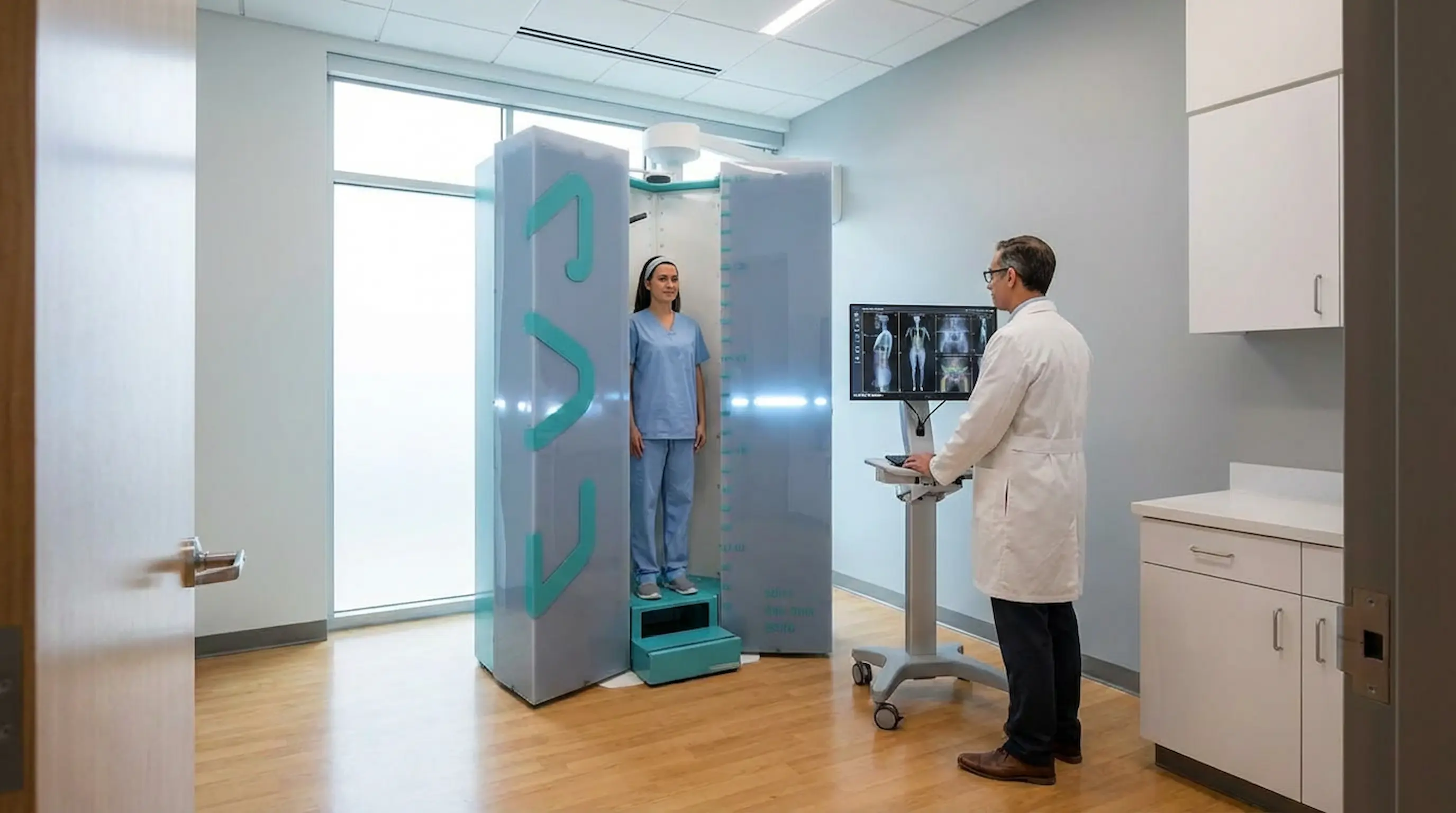
Is EOS Scan Safe? Radiation Levels, Risks, and FAQs
Discover if EOS imaging is safe, its radiation levels, risks, and benefits. Learn why it’s preferred for accurate, low-dose skeletal scans.

EOS Scan for Scoliosis: Why Standing Imaging Matters
Discover how EOS for scoliosis provides low-radiation imaging for accurate spinal alignment and better scoliosis diagnosis and monitoring.
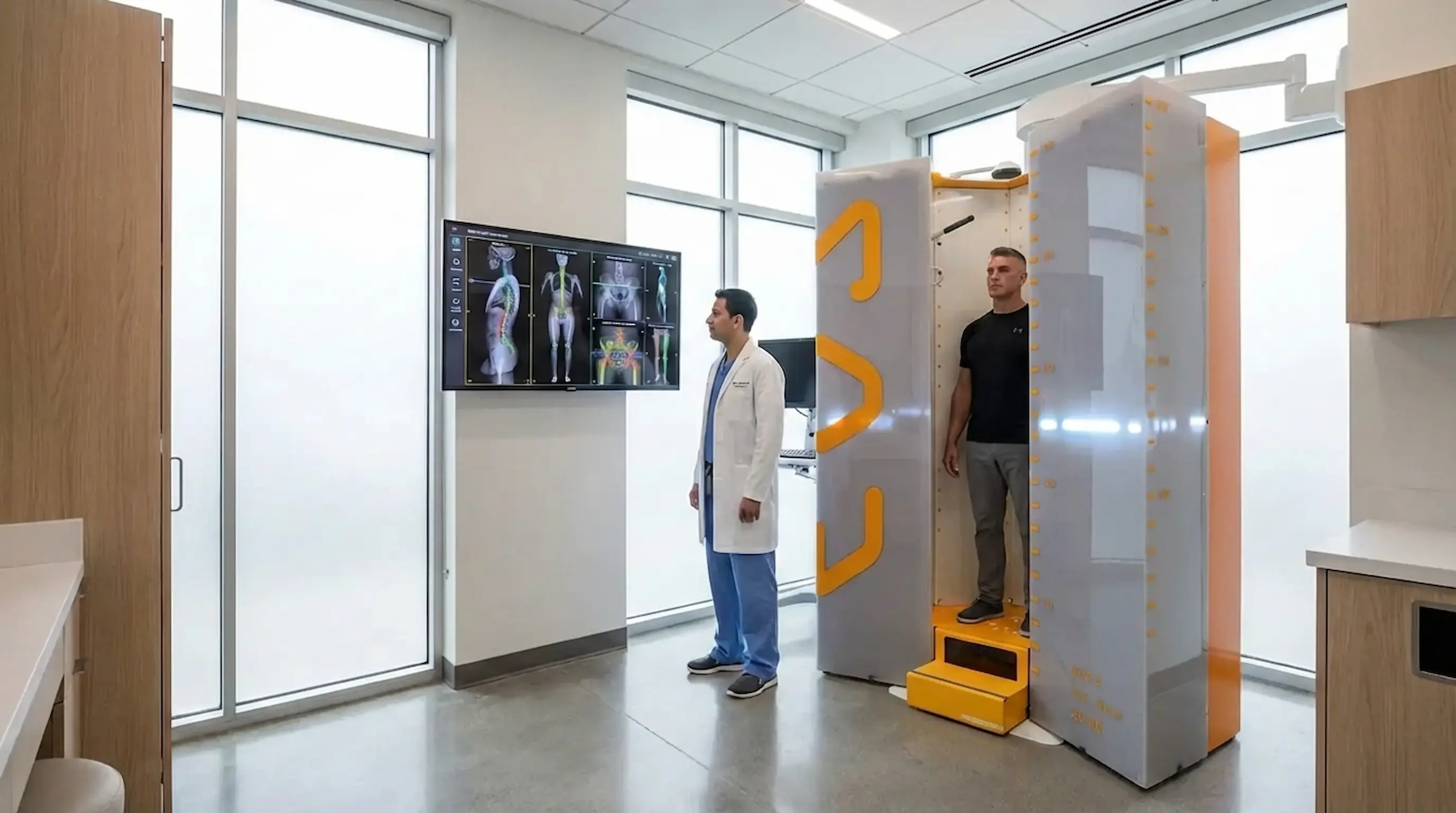
Hip Pain & Alignment: EOS Imaging for Better Diagnosis
EOS imaging for hip pain reveals pelvic tilt, leg length discrepancy & spinopelvic alignment that routine scans miss. Book Appointment now.